Gas release operations carry serious risks. When combustible or toxic gases escape from a mud gas separator during drilling, every second without ignition increases the danger. The Electronic Flare Ignition Device - Horizontal addresses this directly. By delivering a high-energy electronic spark to the flare tip through both remote and manual modes, it ensures immediate, controlled combustion of waste gases — including Hydrogen Sulfide (H2S) — before they accumulate. With an IP55-rated enclosure, a low-profile structure designed for open land drilling sites, and compatibility with high-yield gas well testing, this device is a frontline instrument for wellsite safety and regulatory compliance.
Understanding the Horizontal Flare Ignition Device and Its Safety Role
This machine was made to work with the mud gas separator and take care of the waste gas that comes out of drilling activities. It was made to solve a specific problem in the field: how to reliably light flare gases without putting people close to the ignition point.
Core Working Principle
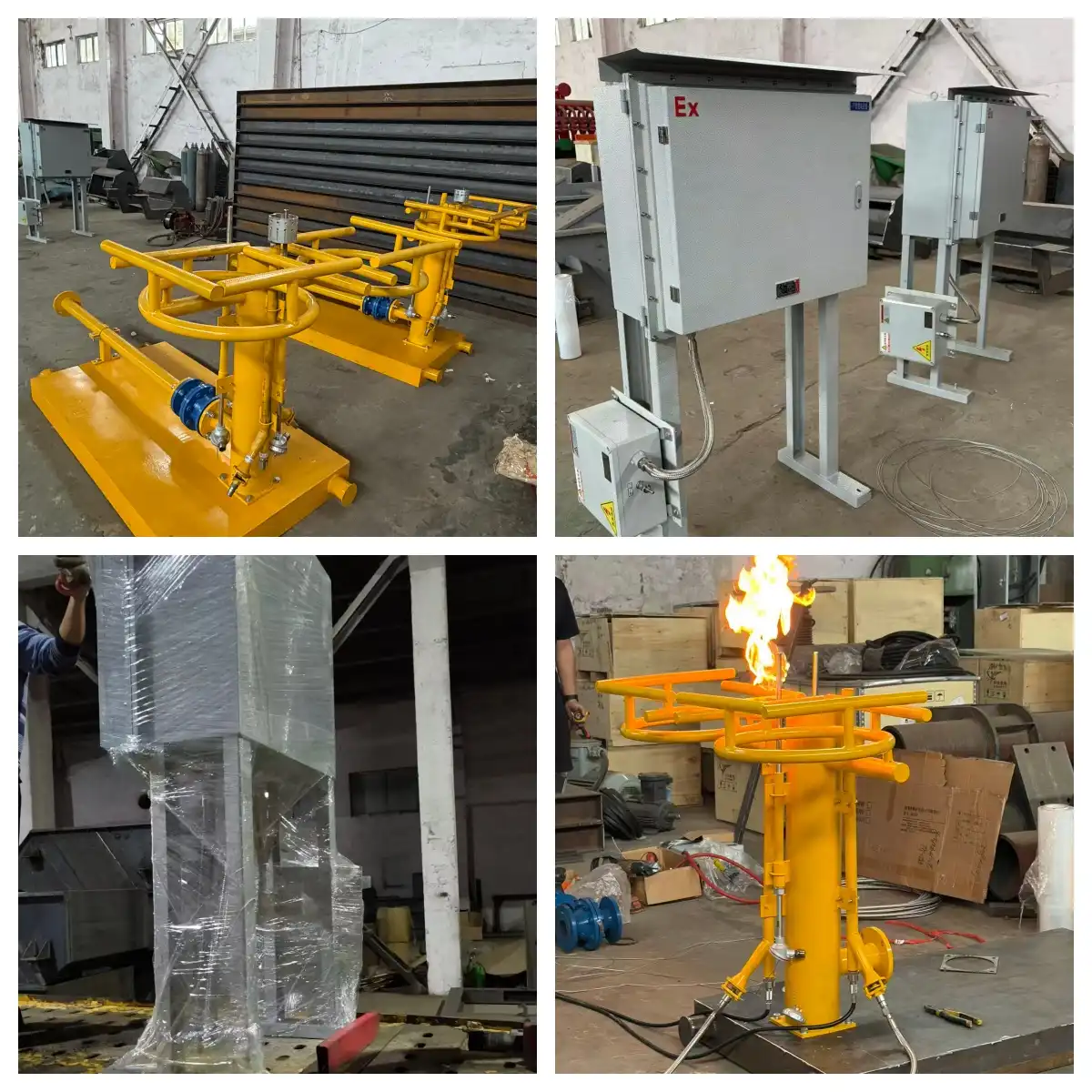
At the tip of the torch, the device creates a high-voltage spark that lights the gas stream coming out of the splitter. With 150mm and 200mm torch diameters and 2.5m and 3m torch lengths, the ignition point can stay away from people and things that could catch fire. The system can be activated by remote control or by hand, so operators can stay in charge no matter what happens in the field.
Horizontal vs. Vertical Configuration
The horizontal design of flare lighting units is lower to the ground than the vertical design. Its lower center of gravity comes from its shape, which makes it better at blocking wind in open areas. Wind-caused instability is a real operating risk on drilling sites in plains and during long-cycle venting tests for high-yield gas wells. The horizontal design lowers that risk without the need for structural anchoring that is common for higher vertical units.
H2S and Emergency Gas Handling
Toxic gases, especially H2S, can leak out quickly during pressure surges or well tests. Unlit H2S leaks are one of the most dangerous things that can happen in onshore drilling, according to a 2019 study released in the Journal of Loss Prevention in the Process Industries. The horizontal flare ignition device gets rid of this danger by making sure there is controlled combustion at the release point. This keeps the amount of dangerous chemicals below the safe exposure levels around the job.
Performance and Reliability: Horizontal Design Against Other Methods
A lot of drilling teams still use hand lighting, which puts people right in the zone where the fire starts. This risk is taken away by Electronic Flare Ignition Device - Horizontal systems, and the horizontal layout is better than both human methods and vertical electronic igniters in certain ways.
Here are the most important success factors to think about:
- Remote ignition range: The device supports remote activation, allowing operators to trigger ignition from a safe distance. This is especially relevant during high-pressure venting events where proximity to the flare tip carries risk.
- Wind resistance: The horizontal, low-profile structure performs consistently in open-land environments where vertical units may experience flame instability or arc disruption under lateral wind loads.
- Transport efficiency: Because the unit lies flat and maintains a low center of gravity, it loads onto vehicles without heavy lifting equipment. This supports drilling teams that relocate frequently between well sites.
- IP55 electrical protection: The enclosure rating of no less than IP55 ensures resistance to dust ingress and water jets, keeping the electrical components functional in harsh field environments.
Unplanned downtime, equipment damage during transport, and safety incidents near the flare point are some of the operational problems that drilling contractors have to deal with. These performance factors directly address these problems. Teams that are moving ZJ30 to ZJ90 rigs across open land need a device that can be set up quickly and work well in bad weather.
Installation, Maintenance, and Troubleshooting
How well a flare lighting system works when it matters most depends on how well it is set up and maintained. ZHONGCHENGJIXIE offers installation help, commissioning support, and full technical documentation to make sure the right deployment in the field from the start.
Installation Best Practices
The device needs to be lined up with the gas exit of the mud gas separator, and the torch needs to be safely stretched away from the body of the separator. Before they are put into service, electrical lines should be checked against the IP55 safety standard. When setting up the site, the ground's steadiness and the direction of the wind should be taken into account so that the torch release is kept away from people.
Routine Maintenance Schedule
Before each placement, the state of the electrodes and the strength of the connections should be checked. The torch tip and ignition head need to be cleaned every so often to get rid of carbon deposits. This is especially important after high-H2S operations, where sulfur buildup speeds up corrosion. The full warranty lasts for one year and covers both production flaws and failed parts. During the warranty period, the after-sales support team can be reached for replacement parts.
Troubleshooting Common Issues
Most of the time, an ignition failure in an Electronic Flare Ignition Device - Horizontal is caused by dirty wires, water in the high-voltage lead, or a link between the control unit and the torch that has become weak. When the car is out in the field, a functional check using manual ignition mode can tell you if the problem is with the remote triggering circuit or the ignition tip itself. Most problems reported in the field can be fixed by replacing electrode tips that are corroded and re-sealing wire entry points.
Procurement Considerations for Horizontal Flare Ignition Equipment
There's more to buying this kind of gear than just comparing prices. Before committing to a seller, drilling contractors and procurement managers need to look at how reliable they are, how many certifications they have, and how well they back their customers after delivery.
Certifications and Compliance Standards
The horizontal flare ignite device made by ZHONGCHENGJIXIE is certified by ISO 9001, ISO 14001, and ISO 45001, and it also meets HSE standards and is approved by TÜV & BV. In the United States, these credentials are important for oilfield operators who have to follow HSE audit rules or EPA flare management rules.
Customization and Delivery
There are two torch diameters (150mm and 200mm) and two torch lengths (2.5m and 3m) for the device to fit different rig configurations and site needs. Logistics partnerships with Tianjin and Shanghai ports help procurement managers find an Electronic Flare Ignition Device - Horizontal supplier with flexible lead times. ZHONGCHENGJIXIE ships in-stock units within 3 days and custom orders within 15 days.
Packaging and Logistics
For transport, we use plastic film, tarps that don't get wet, and strapping. If needed, we can also use boxes or wooden crates. This keeps the integrity of the equipment safe while it's being shipped internationally, which is important for wholesalers and EPC companies who are in charge of buying things for multiple sites.
Future Direction in Flare Ignition Technology
The next step in the development of flare ignitions is to add remote tracking and upkeep that can be planned ahead of time. IoT-connected ignition systems can send information about the state of the ignition, the health of the electrodes, and fault alerts to a central control system. This means that people don't have to physically check the systems in dangerous areas as often. The EPA's 2016 Oil and Gas New Source Performance Standards (NSPS OOOOa), which were updated as part of the 2022 Methane Emission Reduction Program, are still putting pressure on operators to use automated, electronically verified flare ignition systems. As the technology gets better, these features will be added to horizontal format devices, which are already good for quick rollout.
Conclusion
An Electronic Flare Ignition Device - Horizontal does more than just light gas on fire. It keeps people out of the ignition zone, works in windy areas, doesn't need big tools to set up, and stays within the limits of HSE and environmental compliance for flare operations. The horizontal format is a useful and tried-and-true method for drilling contractors and oilfield service teams that are in charge of gas release safety on open-land sites and high-yield wells. It works with a mud gas separator to make a full waste gas handling system that keeps people and the environment safe.
FAQ
How does a horizontal flare ignition device differ from a vertical unit in terms of safety?
The horizontal shape keeps the torch level with the ground, making it less likely that wind or an unstable surface will cause it to fall over. Its lower center of gravity also makes repositioning safer without heavy tools, which is important in drilling settings with limited room.
What causes ignition failure and how can it be prevented?
Electrodes that have rusted, water getting into the high-voltage circuit, and connections that are too loose are the most common reasons. Most failures can be avoided by checking the electrodes before each use and keeping the IP55 seal intact at the points where cables enter the device.
Can this device handle long-duration gas venting?
Yes. Long-cycle venting tests are done at high-yield gas wells with this device, which is built to work reliably with fire for long periods of time.
Is customization available for different rig configurations?
There are 150mm and 200mm torch sizes and lengths of 2.5m and 3m from ZHONGCHENGJIXIE. There are more configuration options based on the type of rig and the needs of the site.
What certifications should I verify before purchasing?
Check that the company has ISO 9001, 14001, 45001, HSE compliance, and TÜV or BV approval. These show that the company makes oil and gas equipment that meets international standards for quality, safety, and the environment.
Get Your Horizontal Flare Ignition Solution from ZHONGCHENGJIXIE
ZHONGCHENGJIXIE makes Electronic Flare Ignition Device - Horizontal horizontal flare ignition devices that are approved and made to work in real fields. We work with drilling contractors, oilfield service companies, and EPC teams all over the world. We have direct factory prices, over 30 years of experience with drilling tools, and stock units that can be shipped in 3 days. Get in touch with our team right away to get product details, large order prices, or a quote for a custom setup. You can email us at oliver@zcgukong.com or go to zcsolidscontrol.com.
References
1. Journal of Loss Prevention in the Process Industries — Toxic Gas Release Risk Assessment in Onshore Drilling, 2019.
2. SPE Health, Safety, Security, Environment, & Social Responsibility Conference Proceedings — Flare System Design and Safety Standards in Gas Drilling Operations, 2021.
3. U.S. Environmental Protection Agency (EPA) — Oil and Natural Gas Sector: Emission Standards for New, Reconstructed, and Modified Sources (NSPS OOOOa), 2016 (Updated 2022).
4. American Petroleum Institute (API) Standard 537 — Flare Details for General Refinery and Petrochemical Service, 3rd Edition, 2017.
5. International Journal of Pressure Vessels and Piping — Ignition Reliability and Flame Detection in Industrial Flare Systems, 2020.
6. Oil & Gas Journal — Field Performance of Electronic Ignition Systems in Remote Drilling Applications, 2022.