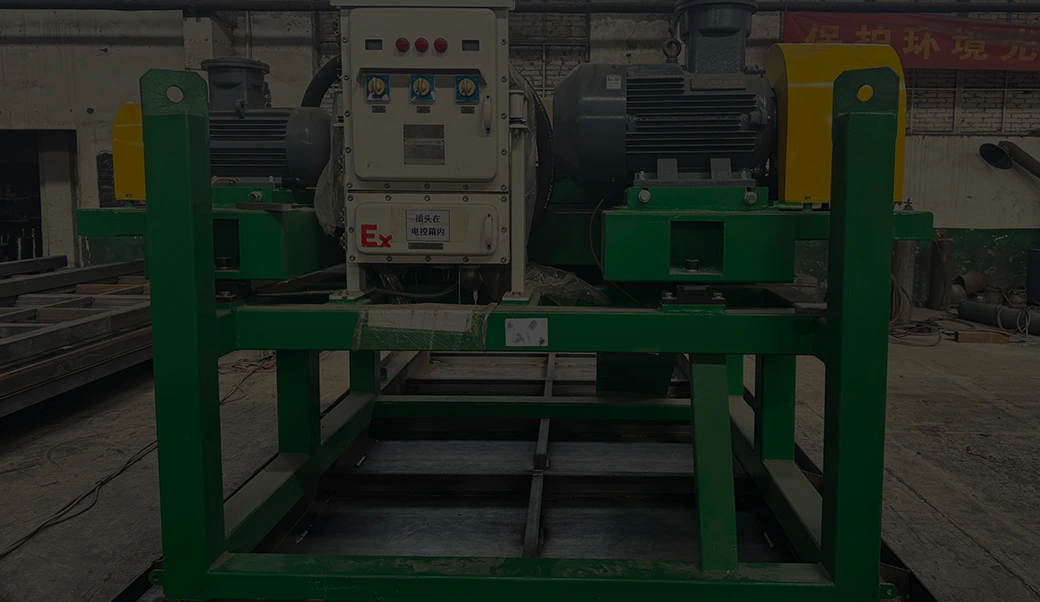
Mud agitators are mechanical devices mounted on drilling mud tanks to keep drilling fluid in constant motion, preventing solid particles such as barite and drill cuttings from settling at the bottom. In oil and gas operations, an idle or poorly mixed tank creates uneven fluid density, inconsistent hydrostatic pressure, and costly sludge buildup. By maintaining a homogeneous suspension throughout the active mud system, a well-specified mud agitator protects fluid rheology, reduces waste, and keeps the entire solids control circuit running without interruption.
Understanding Mud Agitators and Their Role in Drilling Mud Tanks
At the top of a mud tank is an agitator that moves the mud around. It does this by sending torque down a vertical shaft through a gear reducer and to one or more impeller blades that are submerged in the mud. Because of this, there is a controlled axial or radial flow pattern that keeps the whole tank in the air.
Core Components and How They Work Together
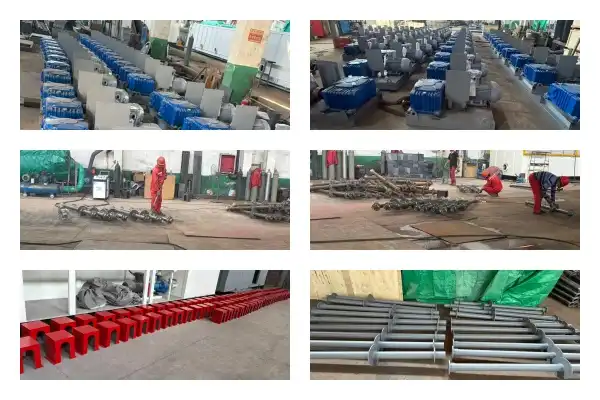
The set includes an explosion-proof motor, an industrial-grade gear reducer (worm or helical-bevel type), a dynamically balanced drive shaft, and impellers with canted blades that have a diameter between 600 mm and 1,100 mm. The output speed is usually between 60 and 90 RPM, and the motor power ranges from 3 kW to 22 kW. It is necessary to dynamically balance both the shaft and the impeller as a quality step. ISO 1940 limits are used to get rid of vibrations that would wear out the gears after months of continuous use.
Drilling Fluid Rheology and Why It Matters
Drilling fluid, or "mud," moves cuttings to the surface, keeps the wellbore stable, and manages the pressure in the rock. When solids settle, the stream loses the density and viscosity characteristics that were planned for it. A kick can occur, or the wellbore can become unstable with even a small drop in mud weight. So, making sure that weighting agents like barite are evenly spread out is not just a nice-to-have; it is a safety requirement for every rig.
Impeller Types and Their Influence on Mixing Efficiency
Flat-blade impellers create strong radial flow that works best in shallow, wide tanks. On the other hand, canted or pitched blades create axial flow that moves fluid from the tank floor up, which works better in tall or narrow sections. One of the most common reasons for "dead zones"—areas where sedimentation stays even though the agitator is running—is choosing the wrong blade geometry for the tank geometry.
Key Applications of Mud Agitators in Oil and Gas Drilling Operations
Mud agitators are used for more things than buyers think. There are different speed requirements for each of the three main deployment situations.
Oil and Gas Drilling Fluid Circulation Systems
A normal active mud system on a ZJ50 or ZJ70 rig has several agitators spread out between the suction, active, and backup tanks. Each unit has to continuously handle fluid densities of up to 2.4 SG without getting too hot. In this case, helical-bevel gear reducers are better than worm-gear alternatives because they offer up to 95% transmission efficiency and produce less heat during long runs.
Trenchless and HDD Mud Storage Tanks
For Horizontal Directional Drilling, thick bentonite slurries that settle quickly when the flow stops are used. When the agitator is the right size, sediment that could stop pipes doesn't build up in the disposal tank during tool changes or pull-back breaks. Vertical shaft units can be used on HDD mixing skids with limited space because they don't take up much room.
Geothermal and Water Well Drilling
Geothermal wells often work in hot environments and may use drilling fluids that are sensitive to temperature changes. In these settings, agitator units need shaft seals that can handle high temperatures and gearbox oils that can handle higher service temperatures. Regularly mixing fluids also keeps the special ingredients mixed into geothermal muds safe from chemical stratification.
All of these uses have one thing in common: downtime costs a lot of money, and a broken stirrer can stop a whole drilling program. That's why the quality of the materials used and the way they were built are just as important as the power rating on the box.
How to Choose the Right Mud Agitator for Your Drilling Operation
The shape of the tank and the density of the mud are the first things that affect the choice of the right unit. Next come environmental and legal requirements.
Matching Impeller Diameter to Tank Dimensions
As a general rule, the propeller diameter should be about 35–45% of the tank width in order to get enough circulation without making too many vortices. A common way to start a 100-barrel tank section with 2.0 SG mud is with a 15 kW motor and an 800 mm impeller. If the impeller is too big, it loses energy, and if it's too small, it leaves dead spots at the sides of the tank.
Vertical vs. Horizontal Agitator Configurations
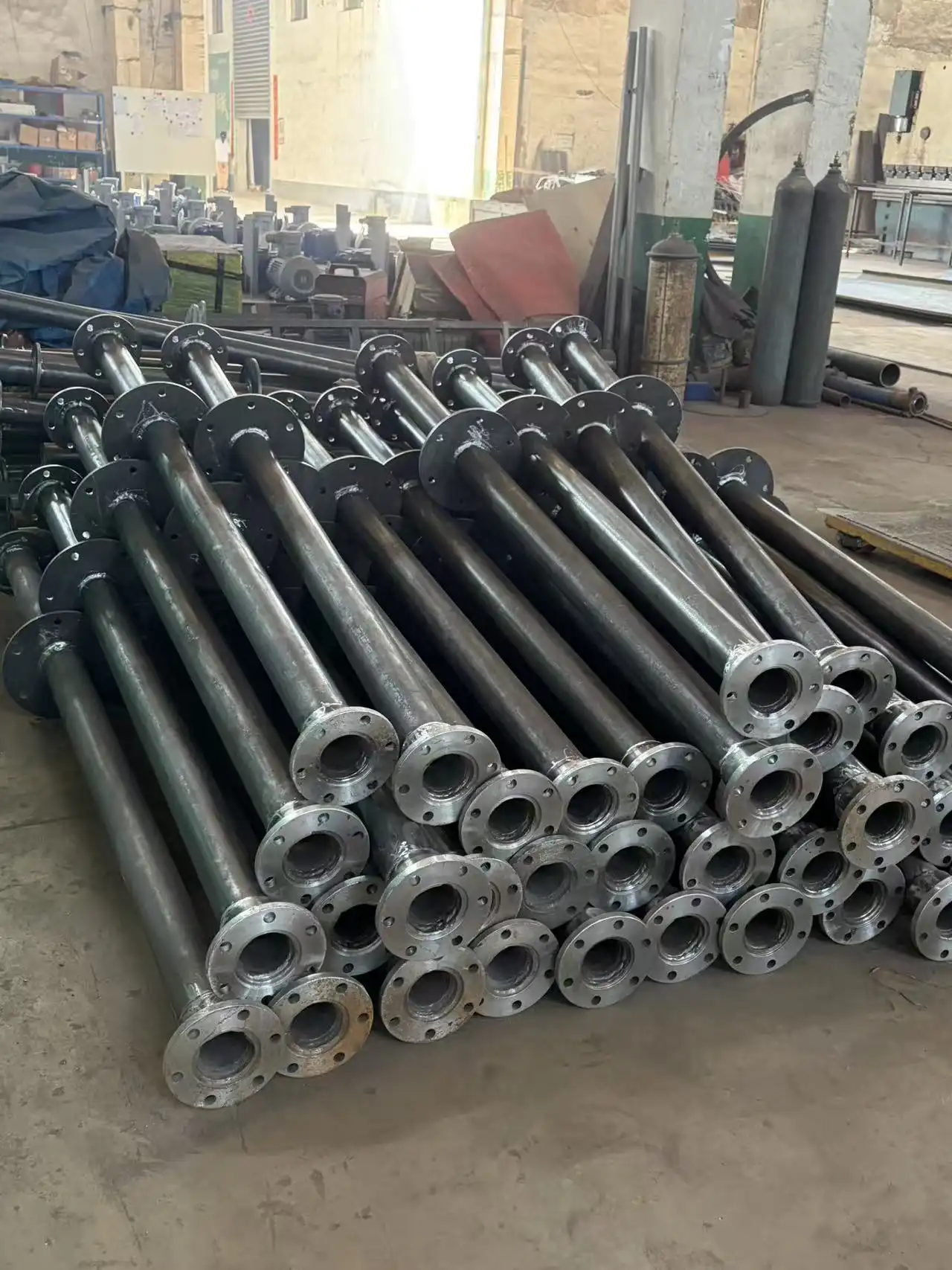
Most mud tanks use a vertical-shaft mud agitator because this configuration is easy to install, requiring only a top-mounted flange on the tank lid, while the shaft length can be adjusted to match the tank depth. Although horizontal mud agitator units are less common in oilfield mud tanks, they can be used in specialized mixing skid designs where the layout requires a different configuration. For most ZJ-series rig configurations, a vertical mud agitator is straightforward to connect to existing tank structures and can provide effective mud mixing with minimal installation changes. Selecting the appropriate mud agitator configuration according to tank dimensions and rig layout also helps simplify installation and maintenance.
Material Selection and Certification Requirements
Shafts and impellers made of alloy steel that is resistant to wear and corrosion last a lot longer in mud that is high in chloride or acid. For use in offshore or other dangerous places, the motor must have a well-known explosion-proof rating, like ATEX or CNEX for Zone 1 or Zone 2 settings. Third-party approvals from TÜV and Bureau Veritas (BV), along with ISO 9001/14001/45001, HSE standards, and compliance with them, show that the manufacturer's quality system meets international standards.
Best Practices for Mud Agitator Maintenance and Troubleshooting
A strict repair plan is what makes the difference between an equipment's 12-month life and its 5-year life. The following methods are based on what the industry has learned from both land and offshore drilling sites.
Routine Inspection and Lubrication Schedule
The oil in the gearbox should be changed every 2,500 hours of use or once a year, whichever comes first. Check the oil seals for leaks, measure the backlash of the gears to find wear, and look for grinding in the shaft connection at every service. Noise level tracking is a useful first warning: a unit running above 80 dB at one meter usually means that the bearings are worn or misaligned before any damage can be seen.
Troubleshooting Common Field Problems
Most complaints from the field are about three things. A bent shaft, an impeller that isn't submerged enough, or loose top-mount bolts are often to blame for excessive vibration. Gearboxes that get too hot are usually caused by the wrong thickness of the grease or a lack of airflow. If the seal fails too soon in acidic muds, it means that the original sealing requirement, which is usually marine-grade epoxy at 250–300 microns, was not met during production.
Extending Equipment Service Life Proactively
Replacing worn impeller blades before they break, checking the shaft runout every three months, and keeping the explosion-proof junction box in good shape are all low-cost things that can be done to avoid expensive shutdowns. As part of every yearly maintenance, the shaft-to-impeller welds should be checked using either magnetic particles or ultrasound waves for Non-Destructive Testing (NDT).
Future Trends and Innovations in Mud Agitators for Oil and Gas Industry
The next version of mixing tools will have better condition monitoring and leave a smaller carbon footprint.
IoT-Enabled Condition Monitoring
Vibration and temperature monitors installed on the gearbox housing of a mud agitator can send real-time data to the rig's control systems, allowing operators to identify potential problems hours before they cause drilling operations to stop. For an existing mud agitator installation, adding sensor kits can provide continuous condition monitoring and help maintenance teams detect abnormal vibration or temperature trends early. Several oilfield managers in North America have reported fewer unplanned repair events after sensor kits were added to existing mud agitator installations. Integrating these monitoring capabilities into a mud agitator system can therefore support more proactive maintenance and improve equipment reliability.
Advanced Materials and Energy Efficiency Standards
Older designs are being replaced with composite rotor blade materials and high-efficiency IE3 motors, which cut energy use per unit by 10–15% for similar mixing jobs. As the US oilfield sector has to follow stricter rules for reporting emissions to the EPA, lower-energy supporting equipment directly leads to better operational efficiency.
Evolving Procurement Priorities
As part of qualifying equipment, more and more B2B buyers are asking manufacturers for full lifecycle documentation. This includes data on energy use, guarantees that spare parts will be available, and plans for shutting down the machine. Over the next five years, suppliers who can offer full technical packages with engineering drawings, flowcharts, operation and maintenance manuals, and training support will clearly have an edge in competitive procurement reviews.
Conclusion
One easy way to protect well control, lower fluid costs, and extend the life of solids control equipment further downstream is to make sure that the drilling fluid is properly mixed throughout the active mud system. Those results can be achieved every day with little work if the mud agitator is properly matched to the tank shape, the density of the mud, and the classification of the site. The rules for good agitation are the same whether your business is on a ZJ70 onshore rig, an HDD recycle skid, or a geothermal research site. The smartest thing for a buying or drilling engineering team to do is to buy an approved unit that was well-built and comes from a company with a good track record.
FAQ
What is the difference between a mud agitator and a mud mixer?
A mud agitator maintains suspension of solids already present in the active tank through continuous low-speed impeller rotation. A mud mixer (or jet mixer) introduces new additives or water into the system through a high-velocity nozzle. Both devices serve the mud system but address different process steps.
How often should I service the gearbox on a mud agitator?
Change the gearbox oil every 2,500 operating hours and inspect seals, backlash, and mounting hardware at the same interval. In high-temperature or high-humidity environments, shorten the oil change interval to 1,500 hours.
Can I customize the shaft length and motor power for my specific tank?
Yes. Reputable mud agitator manufacturers accommodate custom shaft lengths, impeller diameters (600–1,100 mm), and motor power ratings (3–22 kW) to match specific tank depths and mud density requirements.
Are mud agitators suitable for hazardous classified areas on drilling rigs?
Properly rated units carry explosion-proof motor certifications (ATEX / CNEX / IECEx) for Zone 1 and Zone 2 environments, meeting Class I Division 1 requirements common on US drilling sites.
What causes dead zones in a mud tank even when the agitator is running?
Dead zones result from mismatched impeller diameter relative to tank width, incorrect blade pitch for the tank depth, or insufficient motor power for the mud density. Recalculating the impeller-to-tank ratio and verifying power against mud SG usually resolves the problem.
Get a Custom Mud Agitator Quote from ZHONGCHENGJIXIE
The ZHONGCHENGJIXIE company plans and makes mud agitators for all ZJ-series drilling rigs, HDD systems, and geothermal uses. We are a direct manufacturer of mud agitators and have ISO 9001/14001/45001, TÜV, and BV certifications. We can ship stocked units in 3 days and finish custom orders in 15 days. To get specs, drawings, or a project-specific RFQ, email our expert team at oliver@zcgukong.com or go to zcsolidscontrol.com right now.
References
1. American Petroleum Institute. API RP 13C: Recommended Practice on Drilling Fluids Processing Systems Evaluation. API Publishing Services, 2019.
2. Bourgoyne, A. T., Millheim, K. K., Chenevert, M. E., & Young, F. S. Applied Drilling Engineering (SPE Textbook Series, Vol. 2). Society of Petroleum Engineers, 1986.
3. Caenn, R., Darley, H. C. H., & Gray, G. R. Composition and Properties of Drilling and Completion Fluids (7th ed.). Gulf Professional Publishing, 2017.
4. International Organization for Standardization. ISO 1940-1: Mechanical Vibration — Balance Quality Requirements for Rotors in a Constant (Rigid) State. ISO, 2003.
5. Mitchell, R. F., & Miska, S. Z. (Eds.). Fundamentals of Drilling Engineering (SPE Textbook Series, Vol. 12). Society of Petroleum Engineers, 2011.
6. Skalle, P. Drilling Fluid Engineering. Bookboon Academic, 2011.