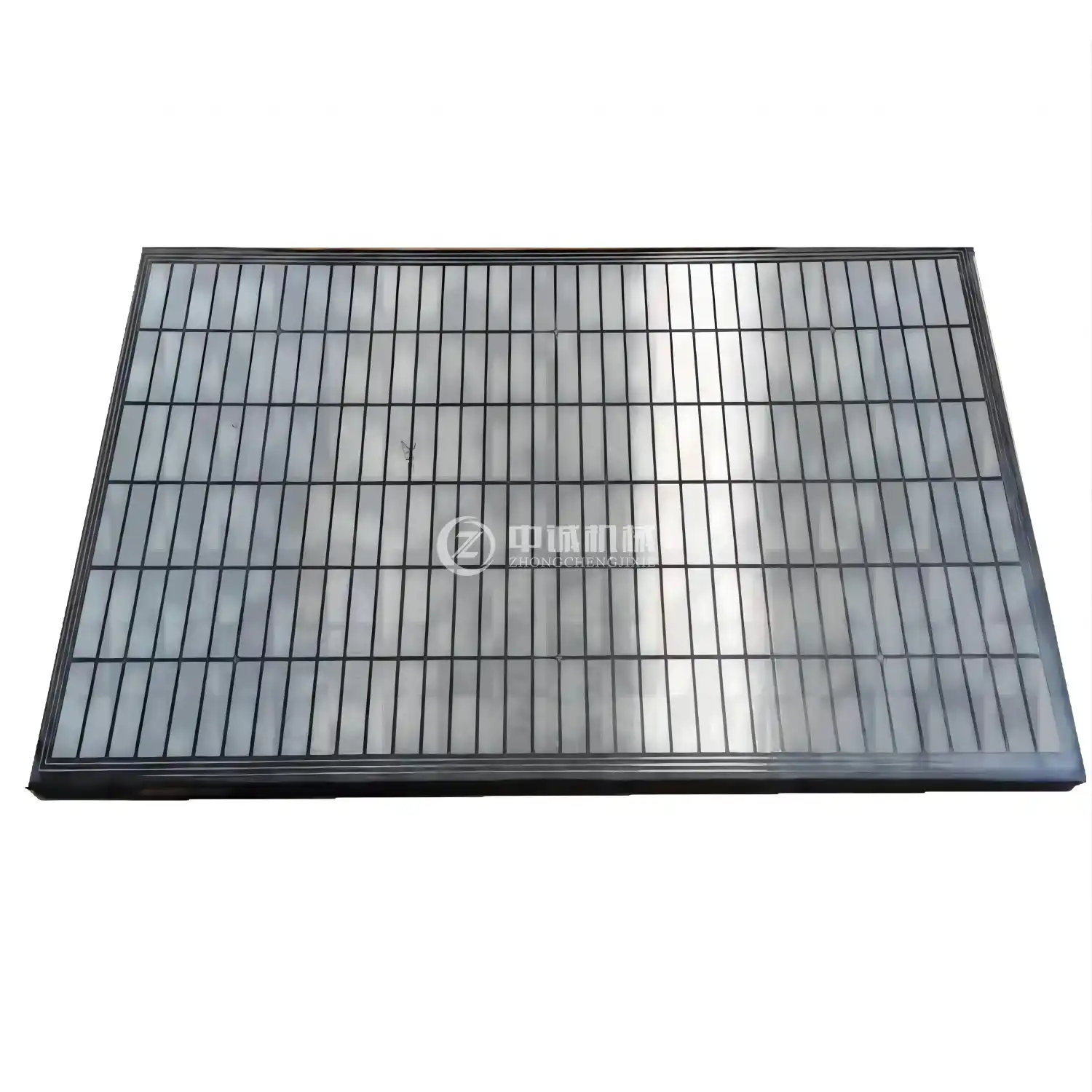
To choose a Accessories/composite-frame-shaker-screen">Composite Frame Screen for an oilfield shale shaker, start with your shaker model, panel size, mud type, and solids load. Next, check mesh opening, conductance, and cut point against API RP 13C data. Then compare the frame, bonding, and mesh as one assembly, and weigh weight, corrosion resistance, and service life against total cost, not unit price. Finally, test a sample on your rig and confirm lead time and support. I wrote this guide for drilling contractors, service companies, EPC teams, and distributors who want fewer screen changes and steadier fluid recovery.
Start With Your Shale Shaker and Drilling Conditions
Confirm the Shaker's Operating Requirements
Start with the machine instead of the book. The shale shaker is the first thing that needs to be checked for solids. The screen tells the machine how many cuts to make and how much fluid to send back to the tanks. You should write down the type of shaker, the panel size, whether it will be clamped or wedged, the mud type, the solids loading, the working temperature, and how many times you plan to change the shaker before you ask for quotes.
The conditions of the site are also important. A rig in the desert with rough dust, an ocean platform with salty air, and an onshore high-throughput pad in the Permian Basin all put different amounts of pressure on a screen. Your team can fairly compare offers if they know what's most important to them, such as speed of supply, fluid recovery, rust protection, handle weight, and protection against corrosion.
Understand What a Composite Frame Screen Is
A Composite Frame Screen is made up of four layers of stainless steel mesh that are glued to a strong polymer plastic frame. There are support ribs on the frame and an edge profile that locks the panel into the shaker deck. The mesh is what sets them apart. Polymers made of glass fibers are often used in this design because they don't rust and are lighter than steel.
Yet, how long it lasts is up to the whole group. Make sure you pick the right mesh, resin, support, and way to join them. So, when people buy something, I tell them to look at the panel as a whole, not just the frame.
Evaluate the Key Technical Specifications
Get fit first. The shaker deck needs to have the same frame profiles, panel sizes, and attachment gaps. The next step is to read the facts on separation. The usual way for the business world to test and label shaker screens is with API RP 13C. An area that isn't blank, the name of the screen, and a D100 cut point are all on each label.
Talk to your partner about these values. A finer cut point gets rid of smaller things, but it can slow down the machine and make it more likely that someone will get hurt. The screen also has to deal with being hit all the time, vibrating, changing temperatures, chemicals in the drilling fluid, and rough wear. For that reason, you can tell the difference between a real product and a copy. Ask the seller for test records, drawings, and information on how much it can work.
Compare Designs and Match Them to the Job
Compare Composite Frames With Steel and Aluminum
Every frame material is good at some things. Composite Frame Screens are easier for crews to move and lift because they don't rust and are lighter than steel frames. Also, panels that have rust on them are less likely to get stuck in the deck. Steel is tough and can handle a lot of damage. Iron is very light, but when it comes into contact with other metals, it can bend, react with some poisons, or rust.
Most of the time, a composite panel is best for places that are remote, far away, or toxic and cost a lot to handle and rust. If a composite provider can't show proof of chemical and structural performance, steel or aluminum may still work for designs that need to be strong enough to handle bumps or shaking.
Match the Screen to Your Mud System and Solids Profile
The drilling fluid and the rock tell the screen what it needs to do its job. Rust-proof and stable mesh performance are two things that a water-based mud needs to have. It's important to check that resin- and oil-based muds work well with fuels, glues, seals, and other materials used for sealing. Get this in writing from the seller to be sure.
Mud that is thick, solid, and dense puts a lot of pressure on the screen, so it needs to have more open space, be less likely to vibrate, and be able to handle more. It is important to separate fine cuttings the right way and keep big, rough objects from being pushed too hard. Fewer mistakes happen when the process is clear. Composite Frame Screens are also used in quarries, sand mines, and special rotating screen systems. This helps buyers who need to do more than one kind of project.
Use a Practical Decision Process
Find out who made the shaker, what kind it is, how it will be installed, the part number from the original, and a picture or two of the installation. Second, set goals that can be tracked for things like the weight of the panels, how long they last, how much solids they remove, the size of the openings, and how often they need to be replaced.
Third, make a list of the things that are most important to you, like color protection, size, shipping, customization, cost, and so on. Fourth, check to see how complete the quotes are and how much it will cost to run them all together. Before you place a big order, try out a taste or a field trial. Write down how much fluid was recovered, how much was blinded, how much was damaged, how long it took to handle, and how long it will really last. With this information, making a purchase is a smart move.
Avoid Mistakes and Judge Procurement Value
Avoid Common Purchasing Mistakes
When screens break, it's not always because of bad materials; sometimes the specs aren't clear. You might get the wrong size, weak tensioning, bad bonding, or leaking around the screen if you only look at the unit price. Before comparing mesh numbers, you should check the real hole size, wire diameter, and open area.
Split the frame strength into two groups: glue strength and mesh strength. This is because the screen is a single piece. Check the temperature, mud chemistry, cleaning agents, and impact conditions before you place your order. Lastly, make sure that there are enough replacements, that production can keep up, and that there are export papers, packaging, and support after the sale in case you need it. This way, you can keep drilling even if you run out of supplies.
Assess Cost and Procurement Value
A quote is more than just the mesh and frame size. The price depends on the kind of resin that is used, how it is made, glued, checked for quality, personalized, ordered, packed, and sent. Instead, find out what the total cost of ownership is. This includes things like emergency orders, downtime, replacement labor, service life, freight, and inventory.
Wholesalers, OEM buyers, and people who own more than one rig can often get better prices and more of what they need through forecast buying and standing supply deals. Standard panel and mesh sizes also make it easier to keep track of supplies and get replacements for shakers that work with them more quickly. If a panel lasts longer and recovers more fluid, it may cost less per drilled foot.
Select a Dependable Manufacturer or Supplier
Find a supplier that has real experience with oilfield shale shaker screens, composite molding, reinforcement, getting mesh, and making sure things are the right size. If you have questions about engineering, a straight manufacturer can answer them without going through a third party. Ask for drawings, details about the materials, records of how they were made, examples of how they've been used in other situations, and clear instructions on how to use them.
When it comes to business for a Composite Frame Screen, you should look at the capacity, wait time, Incoterms, payment terms, guarantee, and help with repairs. Before you place an order, make sure you have a sample, test results, and proof that the two will work together. Check with the supplier to see if they can handle buying in bulk, through distributors, or from more than one place. This is important because customers who buy from you again expect the same quality and lead time every time.
ZHONGCHENGJIXIE Composite Frame Screen Overview
Structure and Corrugated Design
Our Composite Frame Screen is made up of a strong PU frame and a multi-layer stainless steel mesh. The frame is shaped by combined molding, which makes the structure stable. The special curved shape makes the filtering area bigger, the separation better, and the screen less likely to get clogged, even when the fluid is thick or has a lot of solids in it.
The panel is designed to fit flat composite frame shaker screen decks and standard shale shakers. Better mesh that doesn't wear down easily and stronger bonding technology make screens last longer and need to be replaced less often. People who buy things most often complain about blindness, short panel life, and weak bonds. This mix fixes them all.
Core Advantages for Field Use
When our buyers compare the panels, these are the things they think are the best things about each one.
- Lightweight and affordable: The screens are lighter than normal metal frame screens because they have a mixed design. This makes them cheaper to ship and handle. Workers on the rig move smaller panels when the panels need to be changed. When people buy a lot of screens, they pay less to have them moved to the rig site, the yard, or a warehouse in their area.
- Corrosion resistance: The frame is resistant to chemical corrosion and harsh drilling settings. This means that it can be used for work in high-salinity and underwater environments. In salty air and muddy water, steel frames rust, but polymer frames don't. So it will be easier to take panels off the deck, and your maintenance staff will not have to fix as many things that are rusty.
- Strength and rigidity: The Composite Frame Screen structure is stronger and less likely to bend when it's under a lot of stress because it is more rigid and difficult to hit. The multilayer mesh and frame are made as one piece, so the panel stays in place on the deck. This also makes it possible to watch in the same way over long runs.
In the field, problems like heavy panels, rust, and screens that bend when they're loaded happen a lot.
Applications, Customization, and Compliance
In both onshore and underwater drilling, it can be used to screen drilling fluids that are thick and have a lot of solids in them. You can pick the size and mesh count that you want. We ship straight from the factory and offer technical support before and after the sale. The screen is up to code with API RP 13C and ISO 9001.
Our company has ISO 9001, ISO 14001, and ISO 18001 certifications. We also have more than a dozen patents and have worked in this field for more than 30 years. It only takes three days to ship items that are in stock, and fifteen days to ship special orders, since it's easy to get to the ports of Tianjin and Shanghai. Along with the help, there is training for the industry, drawings, operation and maintenance instructions, and a warranty that lasts for one year.
Installation, Inspection, and Final Checks
Install, Inspect, and Replace Correctly
The right installation protects both how well the separation works and how long it lasts. Clean the deck, support rails, seals, clamps, wedges, and parts that hold the machine together after taking it apart. Make sure the panel is facing the right way and connect or tension it the way the maker tells you to. Do not leave any gaps or twist it. Do not hit the plastic frame with metal tools.
During use, keep an eye out for cracks, delamination, broken mesh, blindness, leaks, and strange noises. Record the run times and failure types so that you can compare groups. You should get a new screen if the structure is broken, there is steady leakage, throughput is going down, or solids aren't separating well.
Final Selection Checklist
First, you should go over the order one last time with engineers, purchasing, and upkeep. The technical things that you need to think about are the shaker's compatibility, the panel's size, the frame's shape, the mounting system, the mesh hole, the flow, the solids load, the temperature, the chemical exposure, the vibration, the impact, the corrosion, and the tolerances.
The full cost of ownership, field test results, lead time, minimum order quantity, volume pricing, emergency replacement, export packaging, warranty, and service after the sale are some of the business things that are looked at. They separate things well, last a long time, are easy to handle, last a long time, and provide a reliable supply. You should never choose a composite panel based on how much it costs or how heavy it is. Your team will know what to do again for the next order if they have a written list.
Plan Spares and Storage
Keep extra panels flat somewhere cool and dry that isn't in the sun. Things made of polymer can lose their flexibility after being in UV light for a long time. Don't guess about how many spares you need; instead, use the number of hours they've been used and how they've broken down to figure it out. Also, make sure that deliveries don't interfere with the drilling schedules.
All rigs have screens that are the same size, which makes this easy to plan. Talk to your provider about what's coming in and what's already in stock if you have more than one place. This way, freight won't have to wait for a deck change. For the next price, it will also help to keep good records and a steady stock.
Conclusion
First, think about the driller and the drilling conditions, such as the model, panel size, mud type, material load, and the site's surroundings. Then, choose a Composite Frame Screen. Because API RP 13C rates things like mesh opening, conductance, and cut point, buyers can compare items in a fair way. Composite Frame Screens are lighter and don't rust as quickly as steel frames. But steel and metal frames can still be used for things that need to be very strong or shaken. Frame, glue, and mesh should all be looked at as a whole, matched to the mud system. A sample should be tried, and the total cost of ownership should be thought about instead of the unit price. The panel should last as long as it's meant to if it's put in properly, checked often, and has a final checklist.
FAQ
How do I confirm a Composite Frame Screen fits my shaker?
As well as the brand and model of the shaker, as well as pictures of the deck and clamping system, please send the size or part number of the current panel. Before we put these into production, our engineers check to make sure they work with our flat composite frame shaker screens. Then, you get a sample order or a field trial to see how well your rig fits and how well it gets fluids back.
Can I order a custom mesh count and size?
Yes. You can pick your own size and mesh count. The pieces can also be made smaller or bigger to fit your deck. You can choose a mesh layout if you tell us the type of drilling fluid, the amount of solids, and where you want to cut. Both of our goals are discussed with your mud engineer. A tighter mesh can get rid of smaller solids, but it will take longer to do so.
Which standards does the screen meet?
The screen complies with API RP 13C and ISO 9001 standards. By API RP 13C, each screen is marked with its cut point and conductance, which lets you compare them in the same way. Bring models and directions with your price and ask us about the paperwork for the mesh you want.
Request a Composite Frame Screen Quote From ZHONGCHENGJIXIE
Are you ready to find a panel for your shaker? The company ZHONGCHENGJIXIE has been making straight Composite Frame Screens for more than 30 years. You can choose your own mesh and size, and they follow API RP 13C and ISO 9001 standards. They ship stocked items in 3 days, and they offer a warranty for 1 year. You can email oliver@zcgukong.com or visit zcsolidscontrol.com to learn more about our shakers, panels, and mud. We'll get back to you with a price quote and a proposal that fits your needs.
References
1. API RP 13C: Recommended Practice on Drilling Fluids Processing Systems Evaluation, 2019
2. Drilling Fluids Processing Handbook (ASME Shale Shaker Committee), 2005
3. Composition and Properties of Drilling and Completion Fluids (Caenn, Darley, and Gray), 2011
4. Applied Drilling Engineering (Bourgoyne et al., SPE Textbook Series), 1986
5. IADC Drilling Manual, 2015
6. ISO 9001: Quality Management Systems – Requirements, 2015