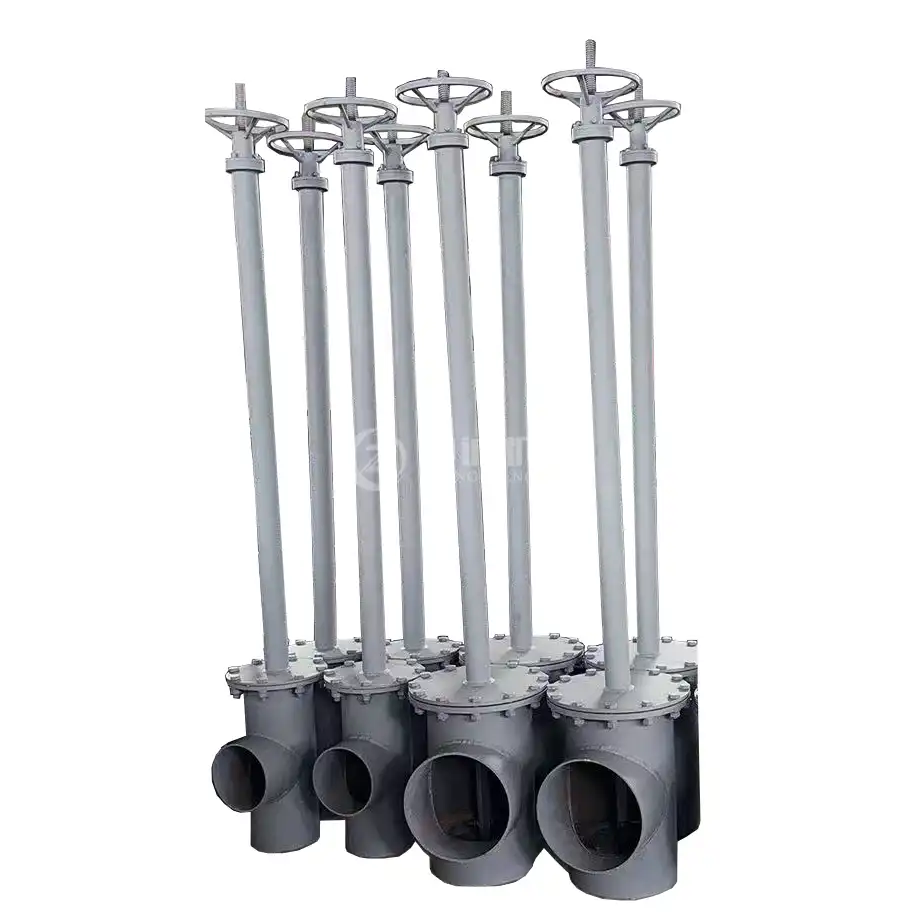
When managing drilling fluid circulation or chemical slurry storage, the valve at the bottom of your tank is not a secondary component — it is where process safety begins. The Tank Bottom Valve is a manual flow control device installed at the lowest point of a mud tank or storage vessel, designed to govern discharge, prevent backflow, and enable clean tank switching. With nominal diameters ranging from 200 to 400 mm and a self-locking screw-drive mechanism, this valve type gives operators direct, tactile control over one of the most risk-sensitive points in any fluid handling system.
How Does a Tank Bottom Valve Handwheel Type Work?
Knowing how this valve works mechanically helps purchase engineers decide if it meets the needs of their system.
Manual Screw Drive Mechanism
A vertical screw head moves up or down when the handwheel is turned. This straight-line motion opens or closes the valve seat directly. The transmission ratio between turning the handwheel and moving the stem is big enough that one person can open the valve without any mechanical help, even when there is some back-pressure from the fluid column above.
Self-Sealing Conical Design
The valve core usually has a cone shape and a sealing surface made of rubber or synthetic material. As the pressure inside the tank rises, so does the sealing force at the valve seat. The valve doesn't need to be tightly tightened by hand all the time because of this pressure-assisted closing. The fluid helps hold it shut.
Vertical Long-Stem Configuration
You can change the length of the stem to fit the depth of the mud tank. The handwheel is on the working platform at the top of the tank. This lets the user control the point at which the water flows out of the bottom from a safe place on the surface. People shouldn't be near the base of the tank during fluid transfer operations because of how it's set up.
Key Benefits of Using Handwheel Type Tank Bottom Valves in Drilling and Chemical Storage
This valve's design solves a number of problems that keep coming up in the oilfield and in industrial storage settings.
In terms of performance, these are the main benefits of this device:
- Pressure-reinforced sealing: The conical valve core tightens against its seat as internal tank pressure builds, which means the seal integrity improves during high-load conditions rather than degrading — a behavior opposite to many standard gate valve designs.
- Tank Bottom Valve - Handwheel Type self-locking against vibration: The manual screw structure provides inherent mechanical self-locking. At active drilling sites where rig vibration is constant, this prevents unintended valve movement that could cause uncontrolled fluid release or cross-contamination between tanks.
- Wear-resistant material construction: The valve seat and core are manufactured from wear-resistant alloys or special synthetic rubber. The valve stem uses chrome-plated carbon steel, which resists the abrasive effect of sand particles, debris, and chemical additives present in drilling mud.
- Intuitive position feedback: Operators can judge the valve's open or closed state by counting handwheel rotations or observing stem travel height — no sensor or indicator panel is required.
Because of these features, the handwheel-type bottom valve works especially well for controlling the suction manifold in a mud tank, dumping waste slurry, and cleaning the tank. In these situations, the process must be reliable, and the user must be safe.
Comparison: Handwheel Type vs Other Tank Bottom Valve Types
To choose the right valve type, you need to know what the pros and cons of each control method are.
Handwheel vs Lever Type
Bottom valves with levers can be opened quickly, but they don't give you much control over where they are. The flow can't be precisely slowed down because a lever moves between fixed open and closed stops. The type with a handwheel lets operators control the amount of opening, which is helpful when switching between tanks slowly to avoid a pressure surge.
Handwheel vs Pneumatic or Motorized Valves
Automated devices require more electricity or pneumatic equipment, which makes installation harder and upkeep more important. Handwheel-type valves don't need an outside power source to work in rural digging sites where power isn't readily available. Also, there is no chance that an electrical problem will cause an emergency valve to lock in the wrong place.
Handwheel vs Ball and Butterfly Valves
When there is sludge, solid particles can scratch the ball surface and make closing less effective, so ball valves are not the best choice. Butterfly valves have a disk that blocks flow even when the valve is open. This makes corrosion more likely in fluids with a lot of solids. With its flexible stem-and-cone form, the handwheel bottom valve completely blocks the sealing element from the flow path when it is open. This greatly reduces wear.
Designing, Installing, and Maintaining Handwheel Type Tank Bottom Valves
How long the Tank Bottom Valve - Handwheel Type works at its maximum capacity is directly related to how well it is maintained and the right specifications are followed.
Material and Size Selection
In oilfield mud systems, the body and insides of the valve must be able to handle both rough solids and chemical agents at the same time. Standard features include alloy seats that don't wear down and synthetic rubber sealing elements. The nominal width should be between 200 mm and 400 mm so that it fits the tank exit and the flow rate needed by the connected suction pump. If the valve is too small, it stops flow, and if it's too big, it lowers the sealing contact pressure.
Installation Requirements
The valve is put in place in the mud tank's suction pipe at the base of the tank. When the flanges are lined up correctly and the bolt pressure is even across the closing face, the gasket doesn't fail too soon. You need to make sure the vertical stem is straight and not under any horizontal load. This means that the fixing flange should be level and within ±1° of vertical. If there are any extra tracking links, the IP55 electrical safety grade is used.
Maintenance Schedule
The state of the rubber sealing surface, the lubrication of the stem threads, and the resistance to force on the handwheel should all be checked on a regular basis. When drilling in places with a lot of solids, the most common cause of seal failure is sand building up at the valve seat. During tank cleaning processes, flushing the valve from closed to open several times gets rid of particles that get stuck before they get into the seating surface.
Procurement Guide: Buying and Partnering with Trusted Suppliers
Comparing unit prices is not the only way to choose a bottom valve supplier for a multi-tank mud system.
In the oilfield and construction industries, purchasing managers should look at suppliers based on the following factors:
- Certifications: ISO 9001, ISO 14001, ISO 45001, HSE compliance, TÜV and BV approval confirm that the manufacturer operates under verified quality management and safety protocols.
- Customization capability: Stem length, nominal diameter, sealing material, and flange standard all vary by rig type. A supplier able to configure these parameters within a 15-day production window reduces project schedule risk.
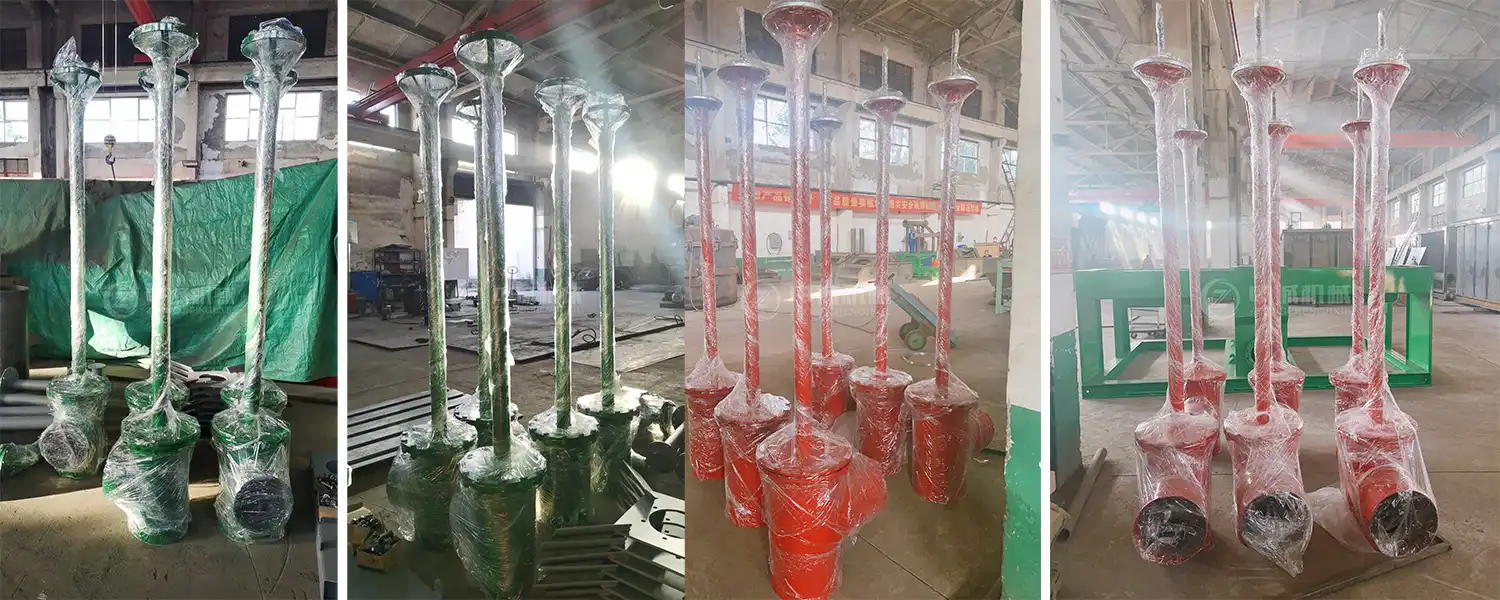
- Packaging and logistics: Transport-safe packaging — including plastic film, rainproof tarpaulins, strapping, and optional wooden crates — protects valves during long-distance shipping to remote sites.
- After-sales support: A 1-year warranty backed by installation guidance, commissioning support, and accessible spare parts reduces total ownership cost over a multi-year rig contract.
Support after the sale: A 1-year warranty that includes installation help, commissioning help, and easy access to spare parts lowers the total cost of ownership over a multi-year rig contract.
Conclusion
The Tank Bottom Valve - Handwheel Type provides a physically reliable, operator-controlled discharge point for drilling and storing operations. It works even when the tank is constantly vibrating, the fluid is rough, and the pressure in the tank changes. Its self-sealing cylindrical shape, self-locking stem, and wear-resistant construction all address the main ways that bottom valves fail in busy field settings. When purchasing mud tank suction manifold parts, this type of valve strikes a good balance between initial cost, ease of maintenance, and process safety—all of which are important throughout the entire lifecycle of a drilling project.
FAQ
Can the valve stem length be customized for deep tanks?
Yes. The depth of the mud tank can change the length of the upright stem. This means that the handwheel can stay where the operator works on the surface platform, no matter what size tank is being used.
What sealing materials are available?
The valve seat and core are made of metals that don't wear down easily or a special kind of synthetic rubber that is chosen based on the fluid's chemical make-up and temperature.
How does the valve prevent accidental opening from rig vibration?
The structure for the manual screw drive locks itself on purpose. The handwheel and stem thread are mechanically connected and stay in place without a separate closing device. This keeps the machine from moving without being supposed to even when it is vibrating continuously.
What is the nominal diameter range?
This set of valves has a nominal width of 200 mm to 400 mm and can be used with the suction manifold connections on ZJ30 through ZJ90 drilling rig systems.
Is a 1-year warranty standard?
Yes. There is a full warranty for one year, and the manufacturer's technical team will help with installation and commissioning.
Get a Direct Quote from ZHONGCHENGJIXIE for Tank Bottom Valve Solutions
Since 2015, ZHONGCHENGJIXIE has been making drilling fluid control tools for oil and gas projects. They have many patents and are certified by ISO 9001, 14001, 45001, TÜV, BV, and HSE. Our Tank Bottom Valve supplier list has valves with sizes from 200 mm to 400 mm and stem lengths and sealing materials that can be changed to fit your needs. In-stock units are sent out within three days, and special designs take fifteen days to make. You can email our engineering team at oliver@zcgukong.com or go to zcsolidscontrol.com to get pricing, specifications, or drawings in bulk.
References
1. Petroleum Equipment & Technology — "Valve Selection for Drilling Fluid Circulation Systems," 2021.
2. Journal of Petroleum Technology (SPE) — "Solid Control System Design and Mud Management Practices," 2020.
3. Chemical Engineering Progress (AIChE) — "Manual Valve Control in Hazardous Fluid Storage Applications," 2019.
4. Drilling Contractor Magazine — "Mud System Reliability and Equipment Standards for Onshore Rigs," 2022.
5. International Journal of Pressure Vessels and Piping — "Sealing Performance of Conical-Seat Valves Under Cyclic Loading," 2020.
6. Oil & Gas Journal — "Procurement Criteria for Oilfield Process Valves: Safety, Certification, and Cost Analysis," 2023.