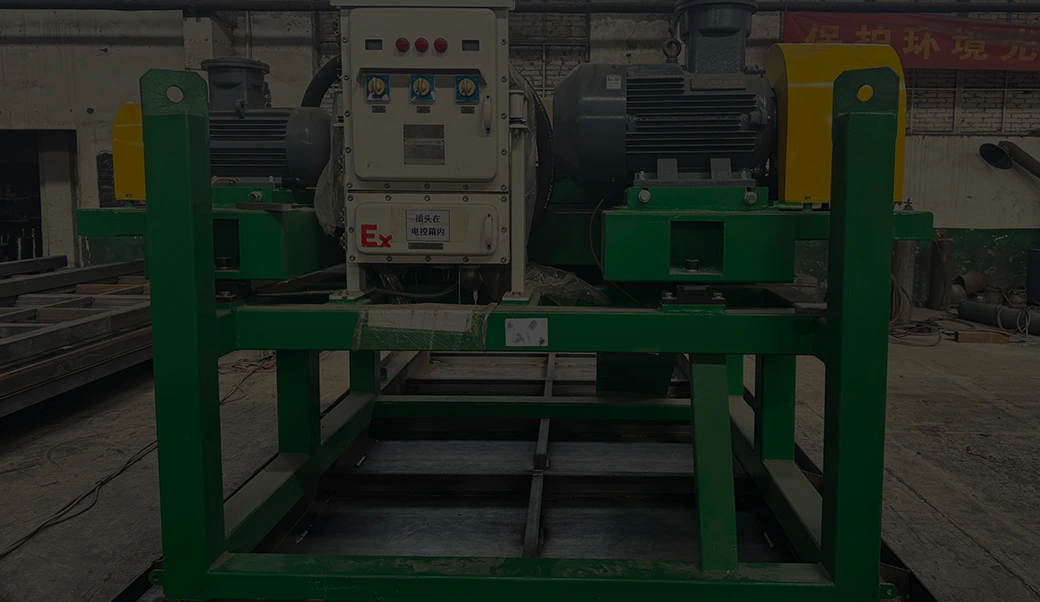
A centrifugal pump maintains stable mud circulation in drilling by using a rotating impeller to convert motor energy into continuous fluid velocity, pushing drilling mud through the circulation system at consistent flow rates. The impeller generates centrifugal force that moves fluid from the suction inlet to the discharge outlet without pressure pulsation, which is critical for protecting downhole tools and maintaining hydrostatic balance. In Solids Control Systems, this device feeds shale shakers, desanders, and desilters while supporting mud mixing and jetting operations—keeping the entire drilling fluid circuit running cleanly and efficiently.

Understanding the Fundamentals of Centrifugal Pumps in Mud Circulation
How the Working Principle Applies to Drilling Fluid
The Centrifugal Pump pulls rough mud into its case through suction. The fluid is then sped up by the spinning blade as it moves outward into the volute. The volute changes the speed into pressure, which keeps the flow going downhill. This design, unlike reciprocating pumps, creates almost no discharge pulsation. This keeps the mud weight constant throughout the shaft and saves important solid control equipment. Shaft seals stop fluid leakage when the machine is running continuously, and the hydraulic design reduces energy loss to a minimum. This is an engineering detail that directly lowers the amount of power used by active drilling rigs.
Pump Types and Their Roles in Mud Systems
Horizontal single-stage models are used for high-volume, low-head tasks like moving solids from one tank to another and feeding solids control equipment. When there isn't much floor space, vertical configurations work well for pit installations. For longer pipe runs or deep system designs, multi-stage units provide high discharge pressure. When setting up a solids control system, the most important thing for a drilling engineer is to make sure that the pump curve, especially the Q-H relationship and best efficiency point (BEP), matches the hydraulic demand of the mud circulation loop.
Common Challenges in Maintaining Stable Mud Circulation and Their Causes
Abrasion, Cavitation, and Seal Degradation
Barite, drill bits, and fine sand are often heavier than 1.5 g/cm³ in drilling mud. This rough slurry wears down turbine vanes and casing walls a lot faster than clean water flow. When the net positive suction head available (NPSHa) falls below the pump's NPSHr, gas bubbles smash into metal surfaces and make holes in the impeller. This is called cavitation. Leaky seals make these problems worse by letting fluid out and making the rig floor less safe.
Root causes often include suction pipes that are too small, which limit the flow of slurry, choosing pumps based on water-service catalogs instead of slurry duty, and putting off maintenance schedules, which lets small wear get worse. By using vibration analysis and pressure tracking to find these sources early on, unexpected shutdowns that cost drilling companies thousands of dollars per hour of idle rig time can be avoided. Industry statistics show that unplanned Centrifugal Pump failures cause about 15–20% of non-productive time (NPT) in busy drilling activities.

Optimizing Centrifugal Pump Performance for Stable Drilling Mud Circulation
Pump Selection and Hydraulic Configuration Best Practices
System curve analysis is the first step in choosing the right Centrifugal Pump. Before deciding on motor power, engineers have to think about the density, stickiness, ideal flow rate, and total dynamic head of the mud. Running near the BEP all the time lowers the loads on the rotational bearings, increases the life of the mechanical seals, and lowers the amount of energy used.
Here are the key parameters to verify during selection:
- Flow rate and head compatibility: Match the duty point to the pump's Q-H curve within 10% of the BEP to avoid steady rattling and early bearing failure.
- Material specification for wetted parts: Ductile iron casings and impellers provide superior impact and abrasion resistance compared to gray cast iron, extending service intervals in sand-laden mud environments.
- Seal system selection: Mechanical seals don't leak and need less upkeep, but packing seals can still be used in low-cost field uses where some leakage is okay.
- Motor sizing: Enough power margin, usually 10–15% more than the calculated shaft demand, keeps the motor from thermally tripping during high-density mud circulation.
These criteria collectively reduce total cost of ownership and protect rig uptime over longer project periods.
Proactive Maintenance and Monitoring Strategies
Scheduled inspections every 500 operating hours, combined with continuous vibration monitoring, catch impeller wear before it causes flow rate degradation. Using sensor data on suction pressure, discharge pressure, and motor amperage in real time creates an early warning layer that lets you do preventative maintenance instead of reactive repair.
Advanced Solutions and Technologies Improving Mud Circulation Stability
Material Advancements and Smart Automation
In the field, abrasion-resistant ductile iron parts now usually last 30–50% longer than gray iron equivalents in the same mud conditions. When the Centrifugal Pump hits a quick solid blockage, modern shaft connection designs, especially elastomeric types, absorb torque spikes. This keeps the motor and impeller from being damaged by shocks.
On the robotic side, sensor-based control systems now keep an eye on the change in flow rate, the temperature of the bearings, and the size of the vibrations all at the same time. With remote diagnosis, service teams can check on the health of pumps without sending people to the rig, which saves time and money on travel. A case study from a gas field project in the Sichuan Basin showed that when automated monitoring was added to the mud circulation system, pump-related NPT dropped by 22% and maintenance intervals were increased by 40%.

Procurement Considerations for B2B Clients: Selecting and Buying Centrifugal Pumps for Drilling
Evaluating Suppliers, Certifications, and Total Cost of Ownership
When looking at Centrifugal Pump providers, people who work in business-to-business buying should look closely at ISO 9001 quality management certification, HSE compliance paperwork, and third-party approvals from groups like TÜV or BV. These credentials show that the processes used in manufacturing meet quality standards during all production runs, not just on sample units.
As important as the price of the item is, the warranty terms, the availability of spare parts, and the professional help that can be provided after the sale. A pump that costs 15% less but doesn't come with as many spare parts will almost always cost more in the long run than a slightly more expensive unit that comes with good customer service. Delivery wait time is equally critical: stock units should ship within three business days, and custom designs within 15 days, to avoid slowing rig mobilization plans.
When looking at customization options, make sure the seller can change the size, type of motor, voltage setup, and shape of the impeller to fit certain rig models, like ZJ50, ZJ70, or ZJ90 systems.
Conclusion
To keep the flow of mud stable, you need to choose a Centrifugal Pump whose hydraulic performance, material durability, and power efficiency exactly match what the solids control system needs. Abrasion-resistant ductile iron construction, matching BEPs correctly, preventative maintenance, and smart tracking technology all work together to keep the flow steady and extend the life of the equipment. When these things work together, drilling operations keep the fluid cleaner, the NPT lower, and costs lower over the lifecycle of the project. The buying choice that supports all of this is picking a certified manufacturer with strong technical skills and quick customer service.
FAQ
How often should a mud circulation pump be inspected on an active drilling rig?
Every 250 to 500 hours of operation, the impeller's clearance, the condition of the seals, and the temperature of the bearings should all be checked visually. It is best to do a full performance check every 1,000 hours or at the start of a new well. This can be done by comparing the real Q-H output to the original Centrifugal Pump curve.
How do you identify and prevent cavitation in a drilling mud pump?
Cavitation makes the pump case make a distinctive crackling sound and changes the output pressure in a random way. To stop this from happening, make sure that the NPSHa is higher than the pump's NPSHr by a sufficient amount. This can be done by using suction pipes that are of a good size, keeping suction lifts low, and avoiding sharp bends near the entrance.
Can a standard water pump handle drilling mud circulation?
No, normal water pumps are made with materials and spaces that are made for clean, low-density fluids. The high density and coarse solids content of drilling mud quickly wear down standard impellers and frames. For mud service, pumps need to have wetted parts made of malleable iron or a similar material that doesn't wear down easily and are designed for sludge duty.
What motor power range covers most oilfield mud circulation applications?
For small auxiliary feeding tasks, motor power needs range from 5.5 kW to 75 kW, and for high-capacity mud mixing and jetting tasks, they need between 21 kW and 40 kW of power. Flow rates range from 28 m³/h to 320 m³/h.
Partner with Zhongcheng Machinery for Reliable Mud Circulation Equipment
For difficult oilfield solids control systems, ZHONGCHENGJIXIE offers tried-and-true Centrifugal Pump options. Our pumps are certified by ISO 9001/14001/45001, TÜV, and BV. They can be shipped in three days from stock and come with a one-year warranty and full technical support. Visit zcsolidscontrol.com or email oliver@zcgukong.com to get in touch with our team and ask for specs, custom configurations, or a reasonable quote from a reputable manufacturer.

References
1. Journal of Petroleum Technology — SPE, 2021
2. Drilling Engineering — Bourgoyne, A.T. et al., Society of Petroleum Engineers Textbook Series, 1986 (revised reprint cited in industry literature through 2020)
3. World Oil Magazine — Gulf Publishing Company, 2022
4. Pumps & Systems Magazine — Cahaba Media Group, 2023
5. SPE Drilling & Completion Journal — Society of Petroleum Engineers, 2020
6. Oil & Gas Journal — PennWell Corporation, 2022