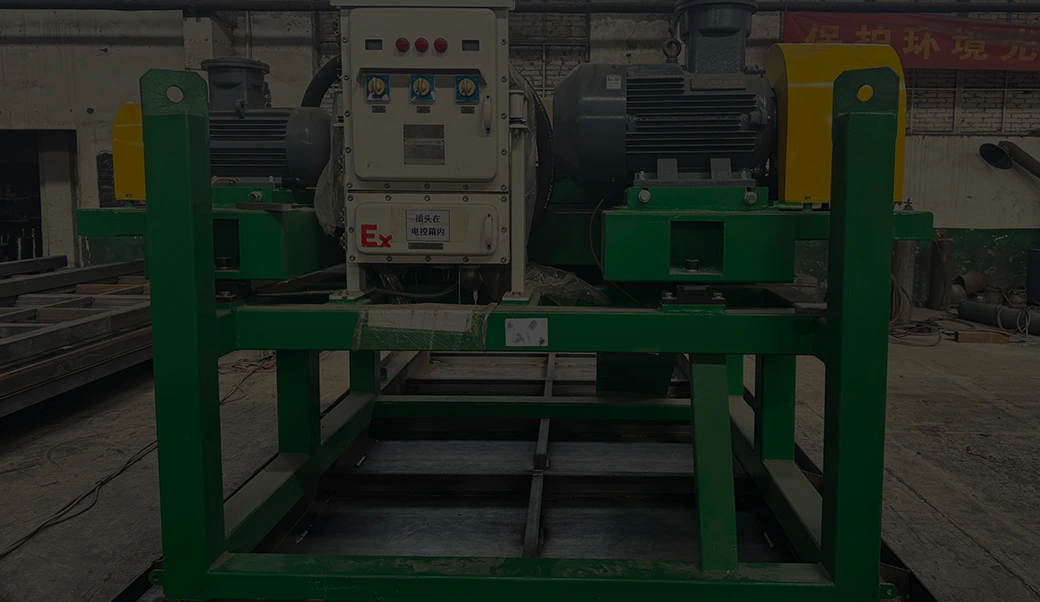
When your drilling operation depends on consistent mud circulation, an unstable flow is more than an inconvenience—it translates directly into lost footage, damaged equipment, and unplanned downtime. A well-engineered centrifugal pump stabilizes slurry flow by converting rotational kinetic energy into steady hydraulic pressure, delivering continuous, pulsation-free output even when handling abrasive, solid-laden drilling fluid. For procurement engineers and rig managers sourcing equipment for oilfield Solids Control Systems, understanding how pump design influences flow behavior is the first step toward a smarter equipment decision.

Understanding the Role of Centrifugal Pumps in Slurry Handling
How the Basic Mechanism Supports Slurry Compatibility
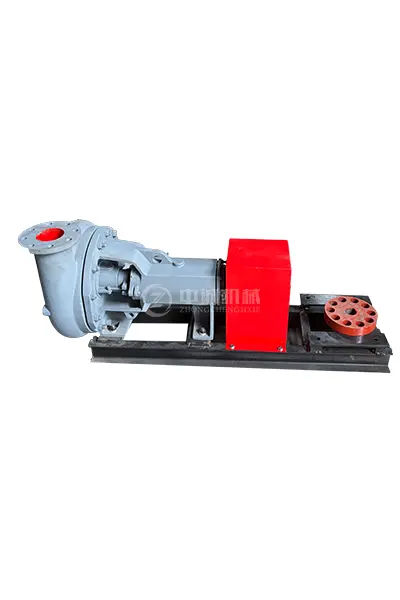
A Centrifugal Pump works by spinning an impeller inside a volute casing. This moves the fluid faster outward and turns its speed into pressure at the discharge. Positive displacement pumps send flow in bursts, but a centrifugal unit sends flow in a smooth, almost constant stream. In solids control circuits, this low pulsation property is very important because pressure spikes can damage shakers, desanders, and desilters further downstream. For rough materials like weighted drilling mud, the wet parts must fight wear and tear while keeping their shape so that the hydraulic system works well for thousands of hours.
Slurry-Specific Challenges That Influence Pump Selection
Industrial slurry is not just dirty water. It moves solids with different particle sizes, densities, and hardnesses, and its rheological behavior changes depending on the temperature, the amount of water in it, and any chemicals that are added to it. Three problems always make it hard for pumps to work in these places:
- High abrasion: Quartz, barite, and drill cuttings quickly wear away impeller vanes and cylinder walls if the base materials aren't good enough, which leads to a drop in head and capacity.
- Clogging risk: Solids or fibers that are too big can block narrow flow pathways, stopping the pump and causing dangerous changes in the suction line pressure.
- Variable viscosity: As the weight of the mud rises, the effective flow rate falls below the rated capacity. This can make the whole circulation loop unstable if the pump curve is not matched to the system resistance at the right working density.
Recognizing these variables early in the selection process prevents costly mismatches between pump rating and actual site conditions.
How Centrifugal Pumps Improve Flow Stability in Industrial Slurry Applications
Engineering Innovations That Break Performance Bottlenecks
Flow changes in slurry circuits are usually caused by three things: impeller geometry that was made for clean water instead of viscous media; walls that aren't thick enough in wear areas; and mechanical seal designs that don't work when the shaft bends. All of these are taken care of in a planned way by modern Centrifugal Pumps.
Wide-passage impellers that have been optimized make solid bridging less likely and let the pump work closer to its Best Efficiency Point (BEP) across a wider range of densities. Working at or near the BEP also lowers the radial hydraulic pressure on the shaft. This lowers bearing wear and increases the life of mechanical seals, directly contributing to stable flow over time.
Base materials that don't wear down easily are also very important. Compared to normal cast iron, ductile iron, high-chrome alloys, and ceramic-lined parts have been shown to last significantly longer in field use. A study in Wear (Elsevier, 2021) confirmed that ductile iron impellers kept their hydraulic profile accuracy up to 40% longer than grey iron equivalents when used in the same abrasive slurry service.
These two improvements—hydraulic shape and long-lasting materials—work well together. A pump that keeps its shape also keeps its flow curve, and a pump that keeps its flow curve gives the steady pressure head that solids control equipment further down the line needs.
Selecting the Right Centrifugal Pump for Industrial Slurry Handling
To find the right Centrifugal Pump for a slurry job, you have to balance four factors that affect each other: the pump's capacity range, its differential head, its solid-handling clearance, and its interaction with the material.
Here are the core selection criteria that procurement teams should evaluate before committing to a specification:
- Capacity and head range: Make sure that the Q-H curve of the pump crosses the resistance curve of the system at the desired working density. For solids control feeding jobs in the oilfield, most rigs from ZJ30 to ZJ90 can handle a capacity range of 28–320 m³/h and a head range of 21–40 m.
- Motor power alignment: Motor ratings of 5.5–75 kW cover a wide range of power needs, from small starting tasks to full-scale mud jetting and mixing. This means that a single product family can be used in more than one circuit position on the same rig.
- Material compatibility: Ductile iron casings and wetted parts can handle constant contact with heavy mud and drill solids without becoming brittle, which is a risk that comes with usual grey iron.
- Configuration fit: End-suction configurations that are horizontal are common for surface mud pit installations, while configurations that are vertical are best for sumps and recessed tanks. Before you buy, make sure that the dimensions of the envelope and the direction of the nozzle match the plan of the current skid.
These criteria provide a framework for screening that can be used again and again. This shortens the evaluation process and helps ensure that suppliers are qualified. When procurement managers use this framework, they regularly report fewer performance complaints after installation and lower total cost of ownership over the life cycle of the equipment.
Maintenance and Troubleshooting for Stable Slurry Pump Operation
Routine Inspection Priorities
In any circuit that works with slurry all the time, proactive maintenance is cheaper than reactive repair. Three things—impeller clearance, shaft seal condition, and bearing temperature—are the first to show when problems are starting to happen. At each shift change, it only takes minutes to look for leaks in the shaft seal and take a reading of the bearing temperature. This saves hours of unplanned downtime that would have happened after a catastrophic seal failure.
Diagnosing Common Field Problems
When a Centrifugal Pump needs repair, the main signs are strange noises, high vibrations, and a slow loss of discharge pressure. When there is more shaking at the bearing housing, it usually means that the impeller is wearing unevenly or that cavitation is starting because of a blocked suction line. When the Net Positive Suction Head Available (NPSHa) falls below the pump's NPSHr, vapor collapses at the impeller inlet, and erosion speeds up. This is called cavitation. Most of the time, cavitation can be fixed before it does lasting damage by clearing the suction strainers, lowering the suction lift, or raising the fluid level in the supply tank.
Procurement and Service Options for Industrial Centrifugal Pumps
Evaluating Supplier Capabilities Beyond Unit Price
When buying a Centrifugal Pump, the unit cost alone is not enough to consider the total cost of ownership. How fast and how long a new pump works at its best depends on how easy it is to get spare parts, how long it takes to get wear parts, and how good the commissioning support is. Direct manufacturers who keep finished goods in stock and have an engineering team for site-specific configuration advice always do better than distributors who don't have the technical know-how to deal with problems that only happen at one installation.
Zhongcheng's Centrifugal Pump comes with safe wrapping for shipping, including plastic film wrap, rainproof tarpaulins, and steel strapping. Pallets or wooden crates can also be added depending on the needs of the location. Each unit comes with installation instructions, help with commissioning, and a full set of operation and maintenance instructions.
Conclusion
Flow stability in industrial sludge handling is not a coincidence; it is the result of engineering decisions about the shape of the blade, the choice of base material, and the size of the pump system as a whole. A Centrifugal Pump that is built to these standards lowers operational risk, increases the time between equipment maintenance visits, and supports the steady flow of mud that modern solids control systems need. For companies that do oilfield drilling, geothermal operations, and foundation building, picking the right slurry pump maker is one of the most important decisions they can make when buying something.
FAQ
Why are Centrifugal Pumps preferred over positive displacement pumps for slurry feeding?
Centrifugal units create low-pulsation, almost constant flow, which keeps solids control equipment further downstream safe from sudden changes in pressure. They can also handle objects moving through them without stopping, which makes them useful for abrasive drilling fluid circuits.
What does "hydraulic construction" mean for flow stability?
It refers to the shape of the impeller and case that is meant to keep the internal flow smooth even when the density changes. This lowers the wear caused by turbulence and keeps the pump running close to its BEP across a wider range of mud weights.
How do I know if the motor power is correctly matched?
Find out how much power the shaft needs at the highest slurry density and flow rate, and then make sure that the motor rating is higher than this value by a service factor that makes sense, usually between 1.15 and 1.25, to account for start-up loads and changes in density.
What certifications should a reliable slurry pump supplier hold?
It starts with ISO 9001 for quality management, ISO 14001 for environmental management, and ISO 45001 for health and safety at work. HSE compliance and third-party approval from TÜV or BV give foreign project bidders even more peace of mind.
Can this pump serve as an auxiliary mud priming pump?
Yes. Because it is made of ductile iron and is hydraulically built, it can work as a mud priming pump when the main charge pump isn't working. This keeps the circuit running during maintenance windows.
Partner with a Trusted Centrifugal Pump Manufacturer for Your Next Project
For oilfield solids control, mud mixing, and material processing tasks, ZHONGCHENGJIXIE, Ltd. provides certified Centrifugal Pump options. We offer reliability from ordering to starting with ISO 9001/14001/45001 certification, TÜV and BV approval, stocked goods ready to ship in 3 days, and a 1-year guarantee that covers everything. For specs, help with setup, and a custom quote, email our engineering team at oliver@zcgukong.com or visit zcsolidscontrol.com.
References
1. Elsevier, Wear Journal — "Erosion behavior of ductile iron and grey iron impellers in abrasive slurry service," 2021.
2. Hydraulic Institute — Pump Standards: ANSI/HI 12.1-12.6 Rotodynamic Centrifugal Slurry Pumps, 2020.
3. International Organization for Standardization — ISO 9906: Rotodynamic Pumps — Hydraulic Performance Acceptance Tests, 2012.
4. SPE (Society of Petroleum Engineers) — Drilling Engineering: Solids Control and Mud Circulation System Design, 2019.
5. Elsevier, Journal of Petroleum Science and Engineering — "Performance evaluation of mud circulation systems for onshore drilling rigs," 2020.
6. World Pumps Magazine — "Material selection strategies for abrasive slurry centrifugal pumps in oilfield applications," 2022.