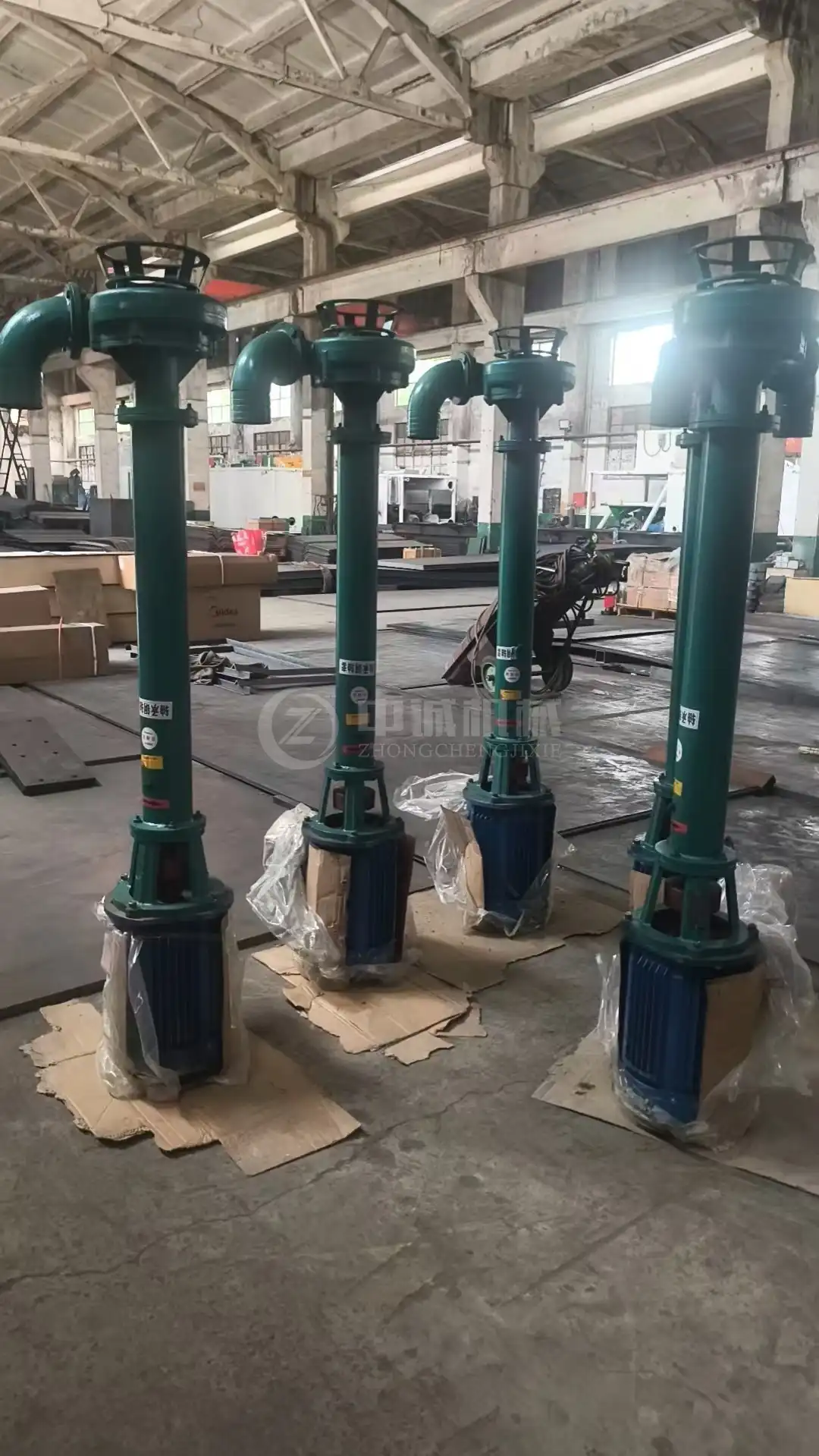
A vertical slurry pump handles abrasive slurry applications through a cantilever shaft design that keeps bearings and seals completely out of the fluid path, eliminating the most common mechanical failure points. The pump sits submerged in a sump or pit, drawing high-density slurry upward through wide flow passages that resist clogging. Wetted components—primarily the impeller and casing—are cast from high-chromium wear-resistant alloy, which sustains contact with sharp solid particles, corrosive chemicals, and heavy concentrations without rapid material loss. This combination of smart geometry and metallurgical selection is precisely what makes the design so effective in demanding industrial environments.
Understanding Vertical Slurry Pumps in Abrasive Applications
What Separates This Design from Conventional Pumps
The wet end of a Vertical Slurry Pump is submerged directly in the slurry sump. It doesn't need a priming system like horizontal centrifugal pumps do, and it doesn't take up much space on the floor, which is very helpful when room is limited on a drilling rig or in an underground mine drift. Because the shaft is cantilevered, there are no submerged bearings or mechanical seals that come into contact with the slurry. This gets rid of the main cause of unexpected downtime in abrasive pump uses.
Slurry flows into the pump along an axis through a large entrance, speeds up as it goes through the impeller, and then exits the pump vertically upward. Large particles don't settle in this flow path because of its shape, and it actively avoids clogging that happens with narrower pump designs. The impeller and casing are made of a high-chromium alloy that meets ASTM A532 Class III standards and has a Brinell hardness of more than 600 HB. This choice of material isn't just for looks; it directly means longer service intervals in situations where quartz sand, drilling bits, or mineral ore pieces keep wearing away at wet surfaces.
Challenges of Abrasive Slurry and How Vertical Slurry Pumps Overcome Them
Engineering Responses to Real-World Wear Mechanisms
There are four different ways that abrasive slurry breaks down pump parts: impact wear from big particles hitting the casing, sliding abrasion from small particles being dragged across surfaces, chemical corrosion from acidic or alkaline fluids, and erosion-fatigue at the tips of the impeller vane. Each of these things shortens the life of the pump on its own, but when they work together, they make failure much more likely.
Zhongcheng's Vertical Slurry Pump deals with these processes by making a number of smart engineering choices. These are the main safety features that were built into this design:
- High-chromium alloy wetted parts — The impeller and volute case are made of an alloy that contains a lot of chromium. This alloy fights both sliding abrasion and impact wear at the same time, and it works much better than regular cast iron in continuous job cycles.
- Seal-free cantilever shaft — The most likely-to-fail part is taken out because there is no mechanical cover buried in the slurry. The shaft comes from above-sump bearings, and there is no need for a seal water source. This lowers the cost of operation and makes upkeep easier.
- Wide flow passage geometry — The large internal gaps let high-concentration slurries holding big solid particles pass through without blocking or packing. This is very useful in coal washing circuits and drilling sump draining where particle sizes are not all the same.
These choices about design are not just ideas. Drilling companies using ZJ50 and ZJ70 rigs say that switching from horizontal sump pumps to Vertical Slurry Pumps cuts down on shutdowns caused by seal problems by more than 60%. This directly cut down on the time that active wells were not working. In any continuous-duty slurry transfer application, the seal-free design is enough to justify the switch.
Comparing Vertical Slurry Pumps with Other Pump Types for Abrasive Applications
Where Vertical Units Outperform the Alternatives
Horizontal slurry pumps are commonly used and well understood, but they need shaft seals or flush water systems, can't be mounted below the floor, and take up more space when installed. When fluid levels change in a pit, like in drilling sumps and material processing sumps, horizontal units could run dry and damage the impellers.
The motor and gears of submersible slurry pumps are submerged in the slurry, which makes it hard to control the temperature and exposes electrical parts to the rough fluid. To change the motor in a submersible unit, the whole system has to be pulled out of a wet pit, which is a very labor-intensive process.
The most useful middle ground is the Vertical Slurry Pump. Above the pit, the motor stays dry, the bearings stay clean, and the rough load is carried by the wet end. Zhongcheng's unit can handle most drilling sump, coal washing, and metallurgical transfer jobs with its head range of 10–36 m, capacity range of 20–140 m³/h, and motor power options ranging from 2.2 to 45 kW. It does this without oversizing or undersizing the installation.
Maintenance Tips to Maximize the Life of Vertical Slurry Pumps in Abrasive Conditions
Practical Inspection and Operational Guidance
Most early mistakes in abrasive slurry service can be avoided by paying regular attention to a small group of important factors. The following actions constantly protect total cost of ownership, increase service gaps, and keep costs low:
- Impeller clearance verification — Every 500 hours of operation, check and make any necessary changes to the gap between the impeller face and the input plate. Too much space lowers the hydraulic effectiveness and speeds up wear from recirculation.
- Bearing condition monitoring — Look at the upper bearing housing for strange vibrations or a rise in temperature. If the vibration level goes above the ISO 1940 G2.5 baseline, it means that the impeller is out of balance or the shaft is not aligned properly, which needs to be fixed right away.
- Flow passage inspection — Take off the covering every so often and look at the inside for erosion channels. If you find localized wear early, you can replace just the liner instead of the whole casing.
In addition to regular checks, cavitation prevention needs extra care. When the pump is run at flow rates that are much higher than its design capacity, the suction pressure drops below the vapor pressure. This creates cavitation bubbles that push against the impeller and damage it. Cavitation, as a wear accelerator, can be stopped by keeping the system's back-pressure within the given operating curve. Getting new impellers and casings from the original maker guarantees accurate measurements and uniform alloys. Aftermarket parts with variable chromium content often break after a fraction of the original service life.
Procurement Guide for Vertical Slurry Pumps Handling Abrasive Materials
Aligning Equipment Selection with Operational Requirements
Choosing to buy abrasive slurry transfer equipment will have long-lasting effects on how the business runs. A pump chosen based on price alone often ends up costing more in the long run than a properly designed unit that costs a little more. The framework for evaluation should include the characteristics of the slurry, the hydraulic needs, the status of the certification, and the ability of the supplier to provide support.
Every choice that follows is based on slurry classification. Solids concentration, particle size distribution, specific gravity, and pH all play a role in deciding whether a high-chromium alloy is enough or whether rubber-lined parts are better. Rubber works better below pH 4, while chrome alloy is best for neutral to mildly alkaline, coarse-particle situations. Once you know the slurry profile, you can match it to the pump's operating curve (head, capacity, and power). This keeps the pump from not working well enough or using too much energy.
When evaluating a supplier, it's important to make sure they have ISO 9001, 14001, 45001, and third-party approvals like TÜV and BV. These qualifications show that the company follows widely accepted standards for quality management, environmental responsibility, and safety. They are needed to get on the approved vendor lists of most EPC contractors and oilfield operators.
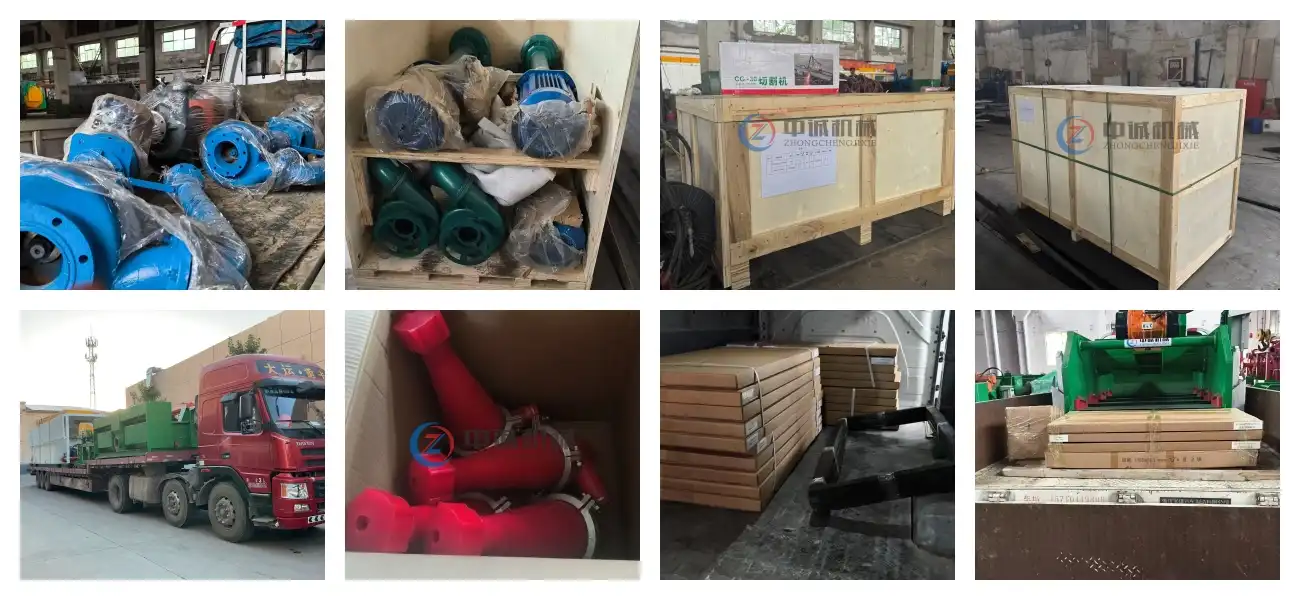
Delivery times and facilities for after-sales care should also be looked at closely. In-stock units that can be sent out within three days keep project plans on track, and customized configurations that can be provided within 15 days meet the exact size or power needs of the rig. A one-year warranty that covers everything, along with easy access to spare parts and help with installation and commissioning, lowers the buyer's financial risk after the sale.
Conclusion
Vertical Slurry Pumps work well with rough materials because their design gets rid of the parts that are most likely to get damaged by the slurry and puts wear-resistant material right where the particles touch the pump. The cantilever design gets rid of the need for hidden seals and bearings. The high-chromium metal construction takes on the rough load that's left. This means that drilling companies, coal washing operators, and metallurgical facilities will have fewer unplanned shutdowns, lower upkeep costs, and equipment that works well with water for a long time. Good engineering turns into measurable operational value when the right unit is chosen for the specific slurry profile, and it is properly maintained.
FAQ
What concentration of solids can a vertical slurry pump handle?
Most Vertical Slurry Pumps can handle slurry concentrations of up to 70% by weight, as long as the particle size stays within the clearance of the intake passage. Zhongcheng's units have wide flow paths that are made to handle high-concentration, large-particle slurries that are common in coal washing and drilling sump drainage loops.
Why does this pump type not require seal water?
All of the bearings and seals stay above the level of the sump fluid thanks to the cantilever shaft. There is no need for a pressurized flush water supply because no seals touch the slurry. This makes installation easier and gets rid of an ongoing running cost.
How do I know which motor power rating to select?
The necessary flow rate, steady head, and slurry specific gravity determine which motor to use. The engineering team at Zhongcheng can match hydraulic curves and set up motor power ranging from 2.2 kW to 45 kW to fit the needs of your drilling rig or processing plant.
What causes excessive vibration in this type of pump?
Most of the time, vibration is caused by an unbalanced impeller, a worn or bent shaft, or cavitation from an intake that is only partially blocked. Most vibration issues can be solved with dynamic balance tests and intake analysis.
Get a Customized Vertical Slurry Pump Solution from Zhongcheng
The ZHONGCHENGJIXIE is ISO 9001/14001/45001-certified and TÜV and BV-approved. They make Vertical Slurry Pumps that can work nonstop in tough drilling and processing environments. As a direct manufacturer of Vertical Slurry Pumps with more than 30 years of experience in the field, we can offer custom designs, in-stock items that can be sent out within 3 days, and full help during commissioning. To talk about your project needs right away, email our expert team at oliver@zcgukong.com or visit zcsolidscontrol.com.
References
1. Warman International. Slurry Pumping Handbook. Weir Minerals, 2002.
2. Kaplan, A., & Rosen, M. "Wear Mechanisms in Centrifugal Slurry Pumps." Wear, Elsevier, 2018.
3. ASTM International. ASTM A532: Standard Specification for Abrasion-Resistant Cast Irons. ASTM International, 2021.
4. ISO. ISO 1940-1: Mechanical Vibration — Balance Quality Requirements for Rotors in a Constant (Rigid) State. International Organization for Standardization, 2016.
5. Gülich, J. F. Centrifugal Pumps. 3rd ed., Springer, 2014.
6. SPE (Society of Petroleum Engineers). "Solid Control Equipment Selection and Performance in Drilling Operations." SPE Drilling & Completion Journal, 2020.