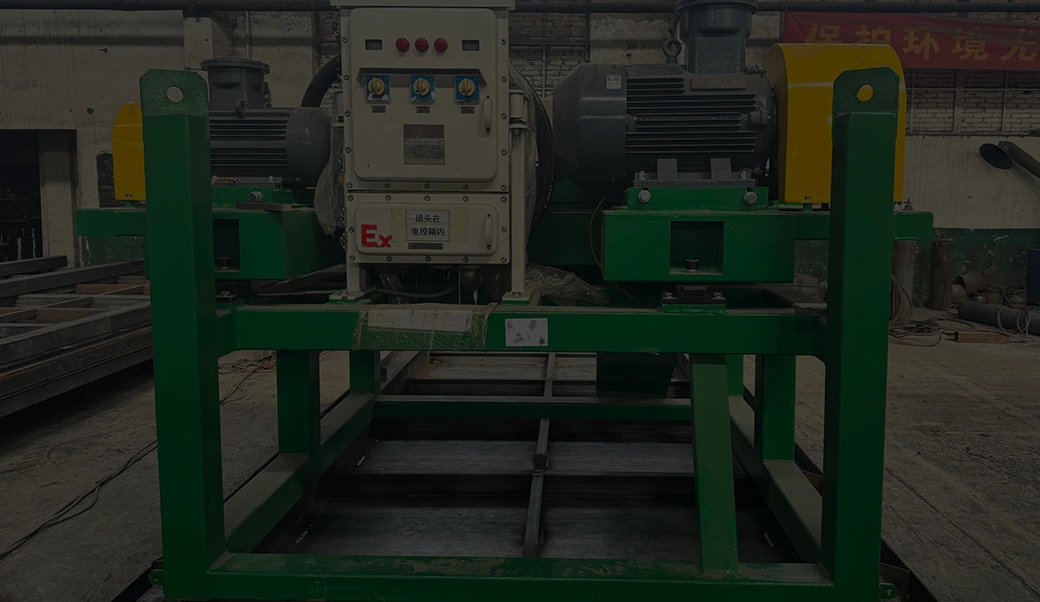
Buyers should compare engineering capability, material experience, construction quality, customization, testing, certifications, total cost, delivery speed, and after-sales support when sourcing a Screw Conveyor manufacturer. A low quotation means little if the unit clogs on wet cuttings, wears out early, or leaves your crew waiting for spare parts. Compare every supplier on the same technical sheet, ask for proof behind each claim, and judge cost over the full service life. I wrote this guide for U.S. procurement managers, drilling engineers, and project managers who want a clear way to shortlist suppliers before sending an RFQ.
Engineering Capability and Application Experience
Capacity, Torque, and Flight Design Calculations
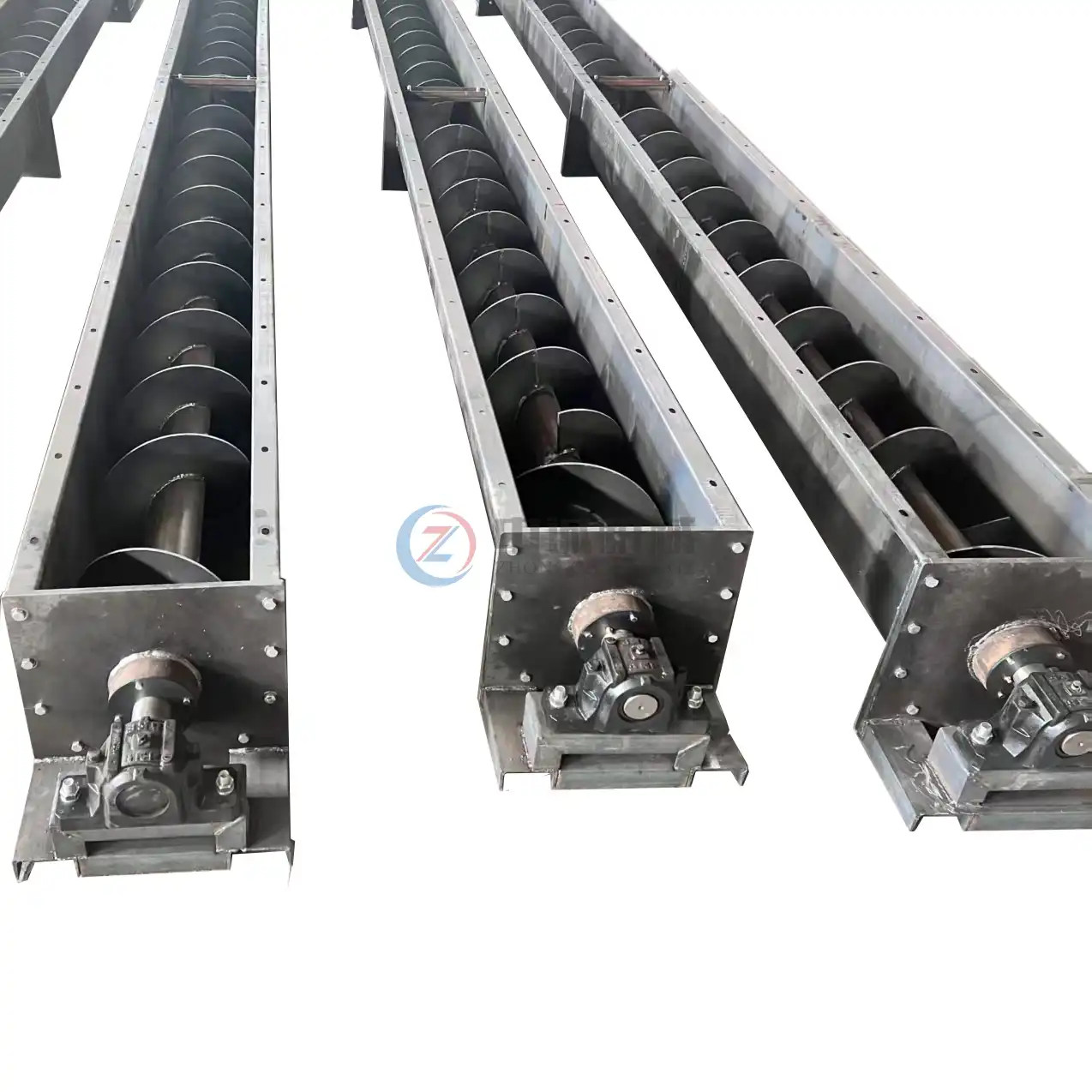
Ask each company how they found out the motor's power, speed, torque, and capacity. They change based on the slope, pitch, diameter, trough loads, and material mass. Standardization group ANSI/CEMA 350 sets the rules for how to do this work. A supplier that follows these rules will be able to talk to your engineers in the same language. Also, the way you fly is important. Normal, short, and variable pitch flights are all good for different things. The ZC Screw Conveyor can go 15 to 45 m³/h. More than one drive can work together to go 30 m, and a single drive can go 15 m. These ranges should work with your duty, and you should look for a supplier who makes its limits clear.
Experience With Your Actual Material
Cement, drill bits, barite powder, and chemical powder all act in different ways. Wet, sticky cuts can fill up a trough, while dry powder can turn it into dust. Get pictures, plans, or records from jobs that used items like the ones you have. Our ZC Screw Conveyor is used for building, chemical work, drilling waste, sludge, and more. A solids control system is made up of the shale shaker, the cutting dryer, the filter press, and the collection hopper. The cuttings are moved in a straight line, and you don't have to do any extra work by hand. A supplier who has worked in the field can tell you why something works as well as how much it costs. Request that it be put down.
Direct Manufacturer or Trader
A lot of Americans don't know whether to buy from a plant or a trade business. If you have scientific questions, you can ask the people who built the unit. They made the plans, welded, put it together, and tested it. ZHONGCHENGJIXIE is a direct manufacturer. It has a factory that is 6,300 square meters in size and can make 200 sets of oil and mud circulation equipment every year. There are more than 12 titles that belong to our team. We have worked in this field for more than 30 years. When you look at a Screw Conveyor factory direct deal, ask who plans the unit, welds it, and gives service calls.
Construction, Materials, and Configuration
Flights, Liners, and Wear Protection
Flight material makes a big difference in service life for a Screw Conveyor because drill cuttings are rough. Heavy-duty alloy steel or tungsten carbide hard-facing is used on our drilling waste flights. This makes them last 3–5 times longer than regular carbon steel flights. Most of the time, high-strength manganese steel or a metal that doesn't wear down made up the spiral blades. To protect them from the cuts, the sides are made stronger. The unit is also built to last on the inside. On runs longer than 6 to 9 meters, the shaft doesn't move because of a middle hanger bearing with metal bushings that don't wear out easily. Before you choose a service, make sure you know about the hanger bearing spacing, edge width, inner type, and flight material. After that, put the results next to each other and check to see which one is correct.
Stainless Steel and Hazardous-Area Options
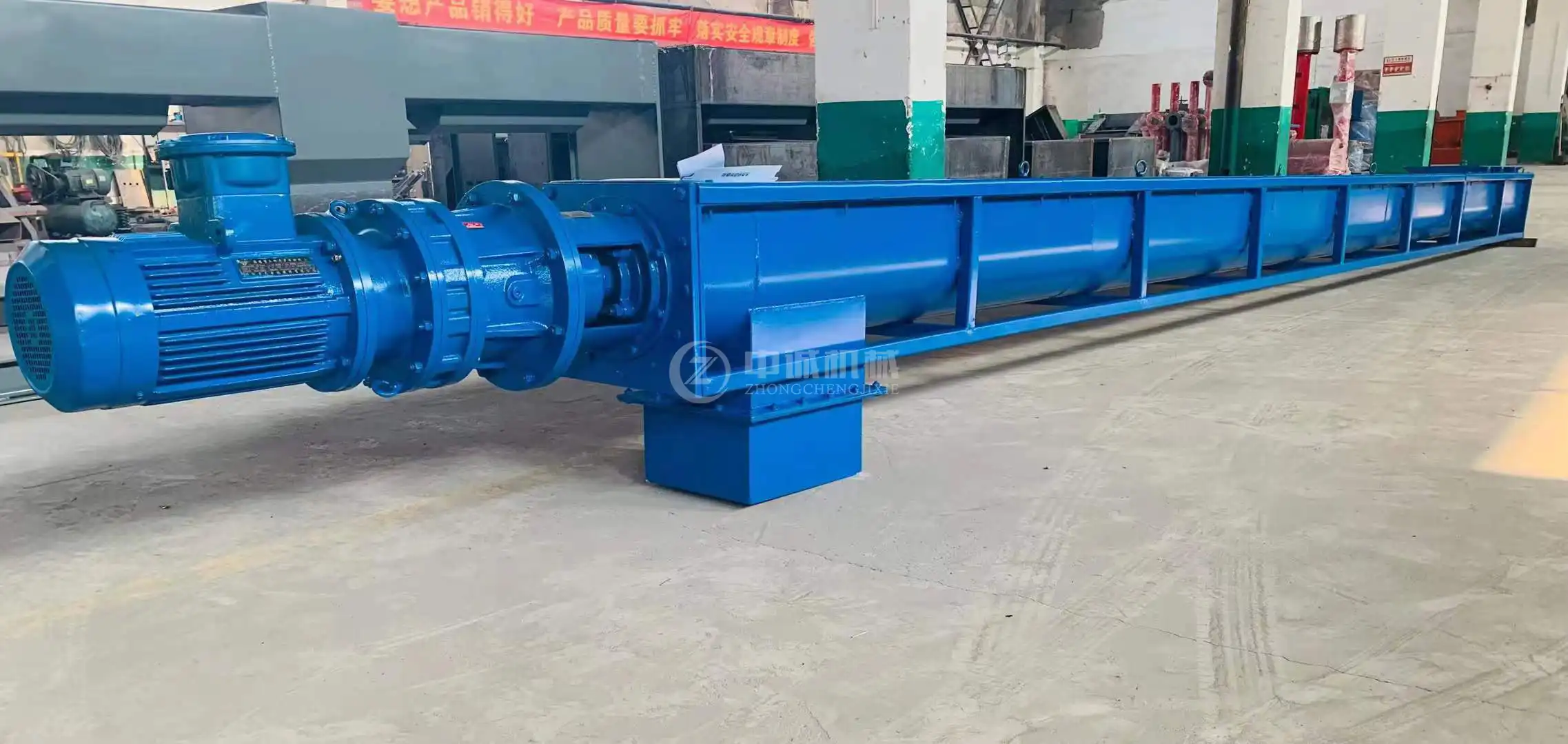
Not all jobs can be done with carbon steel. We have units made of SS304 or SS316L that are tough, don't rust, and are easy to clean for use in food, medicine, and chemicals. A motor and control device that can't explode is called Exd II BT4/CT4. It is used in oil drilling tools. When chemicals are used, the risk of dust or gas explosions can be set to different levels of safety. A safety shut-off and overload protection help keep things safe in dangerous places. Know the grade, finish, and joining method of the stainless steel Screw Conveyor maker you need. Get a written copy of the car grade for any advertising sites you use, then check it against the rules in your area.
Tubular or U-Trough Design
How well the Screw Conveyor works is based on the shape of the housing. It's fully covered and can tilt from 20° to 45°. When sealing a lot of things, tubular designs work well. It can hold cement, barite powder, dry powders, and grains. It's easy to open and clean the cap on top of a U-trough. Most Solids Control Systems use it because it's good at moving thick, wet cuts and mud lumps with a lot of water across the ground. Both shapes keep dirt, smells, and spills inside. Choose based on the material and the layout. Points that are dry and steep should go toward the tube, while points that are wet and flat should go toward the U-trough. When they choose between two products, a good source will make sure they know about both of them.
Customization, Quality Control, and Compliance
Custom Length, Angle, and Drive Options
Site plans and rigs are not the same. From ZJ30 to ZJ90, rigs need different types of power, sizes, and abilities. Our Screw Conveyor can be changed in length and angle to fit the needs of the job site because it is partly flexible. It can also be set up straight up, at an angle, or horizontally. Let us know what you need, and we'll give you motors from the best brands in the US and around the world. There isn't much to it, and the motor and gear work together as one unit. This unit has a lot of torque for starting with a lot of weight on it. Find a company that makes custom Screw Conveyors and ask them how much they can change, how fast they send plans, and who will accept them. Our custom items are usually sent out within 15 days.
Inspection and Factory Testing
Ask for a review plan before you place an order. It is good to have a no-load run test that records noise, bearing temperature, and drive performance. There are also mill test results for the flighting, weld tests on the joints between the flight and the pipe, pitch and run-out measurements, and adjusting the screw assembly. A lot of people write these things on the order form so that the results are sent with the package. With our projects, we give you operation and maintenance guides, flowcharts, drawings of the parts, and drawings of how they work. The process is going well if the service gives you papers to answer these questions. It's a sign if a seller stays away from them.
Certifications and Compliance
When you use certificates, you can quickly put things in order. The brand names for ZHONGCHENGJIXIE are ISO 9001, ISO 14001, and ISO 45001. The ZC Screw Conveyor has also been approved by BV, TÜV, and HSE. Our products also meet international standards such as ISO, IEC, ATEX, and EAC. The certificate can be given to you by anyone, and you should check who gave it to you and when it ends. For jobs in the US, make sure that the guarding and safety features follow the rules in your area. This is because OSHA's rules on machine safety talk about how dangerous it is for moving parts to cut off limbs. Our U-shaped chute has a cover that won't slip and a safety wall. For extra safety on the job site, it has either a pull-cord switch or an emergency stop button.
Total Cost, Delivery, and Support
Total Cost of Ownership
A low price can hide what it really costs. Check out which motor and reducer brands are used, as well as the flight material, plates, seals, covers, and other parts that come with each price. Finally, add up how much it costs to set up, run, fix, replace old parts, ship, and shut down. Solids control can slow down if the cuttings line gets stuck, so it's often better to wait. Because the building is simple and doesn't have many moving parts, there aren't as many repair calls. This type of carbon steel flights doesn't wear out easily and lasts three to five times longer. Fill up every cell in a table with all the bids. If a supplier won't break their quote down into items, it's hard to get a fair price comparison.
Lead Time and Export Logistics
When the deliveries happen is just as important to your project plan as the price. Things that are in stock are usually sent out within three days, and orders made just for you are sent out within fifteen days. The plant is close to both the Tianjin and Shanghai ports. To ship goods overseas, we use standard export packaging and work with partners in ground transportation. To get a list of times for drawing approval, production, plant test, and leaving the port, ask each supplier. Find out who makes the shipping papers by looking at the Incoterm. For buyers in the US, find out how long it takes to get to your port and give yourself extra time to clear customs.
Documentation, Installation, and Warranty
After the sale, how well the equipment works rests on how well it is taken care of. We offer drawings, instructions, training in the field, on-site installation and testing, service after the sale all over the world, and a one-year guarantee. Everyday problems can be solved in simple ways. If there is a blockage, either feed them less or clean out the inner trough. Check the gear, reduction, or blade if they are making strange noises. Look for any spills on the seal and cap. Change the speed or take a look at the blades if it's not working right. Before you place your order, ask each seller for a maintenance guide and a list of extra parts like bearings, seals, liners, and blades.
Mistakes to Avoid and How to Prepare Your RFQ?
Common Specification Mistakes
Most problems begin with an incomplete request, not a bad factory. People who are looking to buy often don't pay attention to the specifics of the materials or pick a standard unit for rough or sticky cuts. On long runs, some people forget to include the power supply and hazardous-area rating, or they forget to write down how far apart the hanger bearings are. Also, many people buy something without making a list of the extra parts they need. Tell the supplier what goes into the hopper, like sludge, dry barite, and wet cuttings. Also, make sure you know who is in charge of performance if the information doesn't match what was described. When these things are clear from the start, there are no disputes later on.
What an RFQ Should Include?
A better answer is given to a clear RFQ. Include the name of the material, whether it is wet or dry, how rough it is, the quantity that needs to be moved (in m³/h), the total distance that needs to be moved, the slope angle, the entry and exit points, the power source, the site conditions, any needs for a hazardous area, and the arrival port. Add a plan sketch, pictures, or CAD files if you have them. Tell us what kinds of rigs the system can handle, like ZJ50 or ZJ70. This often affects how much room can be used and how many rigs can be used. Then, ask how the seller figured out the size and power, what tests are included in the price, which parts will wear out, and which spares you should buy.
A Simple Supplier Scorecard
You should give each provider a score between 1 and 5 for five different things. Plan, get supplies and build, check for quality and get certified, deliver, and provide service. Give more weight to each job. A contractor in a faraway field might care most about service and spare parts. For a dealer, it could be the price and the approval. Put a score next to something that proves that score, like a math sheet, a copy of the certificate, or a picture that you can use as a guide. There is no need to guess when you have one scorecard for all bidders. Your technical and buying teams can all see this record. You can also do that when you ask for budget approval.
Conclusion
In order to choose a Screw Conveyor manufacturer, you should look at more than just price. To compare the main things, this article talked about things like being able to figure out and plan trips, working with real materials before, wear protection, material choice, housing type, customization, inspection and testing, licenses, total cost, delivery, and support. For each job, the best type of building is chosen, such as tube and U-trough, alloy or stainless steel, and explosion-proof. Choice should be based on the material, the plan, and the amount of risk. Standards such as ANSI/CEMA 350 and ISO management systems can help buyers figure out what they need. Buyers can compare bids fairly if they have a full RFQ and a shared evaluation. Over time, lifecycle cost shows which provider cuts down on maintenance and downtime.
FAQ
What is the difference between shafted and shaftless designs?
Shafted Screw Conveyors with long gaps are stiffer because they are longer. Types that don't have a shaft can handle materials that would get stuck around a center pipe. You can choose by material and length of run.
How do I determine the correct capacity?
How much it can hold depends on the diameter, pitch, speed, and trough loading, which can be 15%, 30%, or 45%, depending on how rough the material is. The ZC unit moves at speeds of 15 to 45 m³ per hour. Our pros will make sure it fits after you send us the material and length.
How do I reduce wear from abrasive cuttings?
Tungsten carbide hard-facing or metal planes that don't wear down should be used. Liners should be put in and the hanger bearings should have the right amount of space between them. Three to five times longer than carbon steel flights are flights made of alloys or hard faces.
What causes most screw failures?
When the hanger bearings are too close together or the shaft bends too much, a lot of things break. If you do your math according to CEMA rules, you can avoid both of these issues.
Request a Screw Conveyor Quotation From ZHONGCHENGJIXIE
They want to know about your material, size, distance, and rig at oliver@zcgukong.com so they can give you the best advice for your job. As the only company that makes Screw Conveyors, we offer a one-year warranty, 3-day shipping on items that are in stock, 15-day delivery for special orders, drawings, manuals, and training. At zcsolidscontrol.com, you can learn more about Screw Conveyor suppliers, whether you need them to drill chemical lines or trash holes.
References
1. Conveyor Equipment Manufacturers Association (CEMA), Screw Conveyors for Bulk Materials, ANSI/CEMA 350, 2015
2. International Organization for Standardization, ISO 9001: Quality Management Systems — Requirements, 2015
3. International Organization for Standardization, ISO 14001: Environmental Management Systems — Requirements with Guidance for Use, 2015
4. International Organization for Standardization, ISO 45001: Occupational Health and Safety Management Systems — Requirements with Guidance for Use, 2018
5. Occupational Safety and Health Administration (OSHA), Safeguarding Equipment and Protecting Employees from Amputations, 2007
6. International Organization for Standardization, ISO 13501: Petroleum and Natural Gas Industries — Drilling Fluids — Processing Equipment Evaluation, 2011