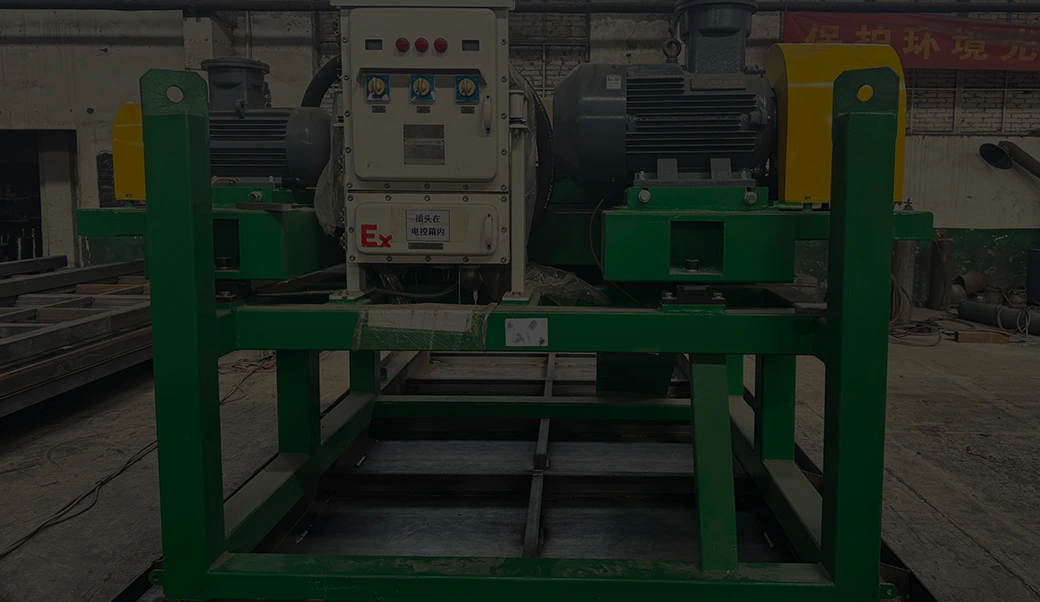
When drilling operations push deeper and regulations tighten, mud recycling performance becomes a direct cost driver. Decanter centrifuges sit at the heart of this challenge. By generating centrifugal forces that exceed 3,000 G, these machines continuously separate ultra-fine solids from drilling fluid, recovering valuable mud and reducing waste disposal volume. For procurement managers and drilling engineers evaluating solids control upgrades, understanding how high-speed centrifugal separation works — and what separates a capable unit from a costly one — is the starting point for a sound capital decision.


Understanding High-Speed Decanter Centrifuges and Their Role in Mud Recycling
A horizontal sedimentation centrifuge has a simple but effective way of working: it speeds up a solid-liquid slurry inside a spinning bowl, lets differences in density do the work, and uses a helical scroll conveyor to constantly release the solids that have been packed down. High-speed units are different because the bowl usually spins faster than 3,000 rpm, which can pick up particles as small as 2–5 microns, which is a size range that regular machines often miss.
Some very small solids are known to destroy the flowing qualities in drilling mud. Colloidal particles make the mud thicker, make it heavier, and wear out downstream pumps and bits faster. Getting rid of them quickly keeps the fluid within the limits, lowers the amount of freshwater needed, and lowers the total cost per meter drilled.
The ZC Series: Fifth-Stage Solids Control Equipment
The ZC Series Decanter Centrifuges from Zhongcheng serve as the fifth stage of solids control equipment in a surface mud system, following the shale shaker, vacuum degasser, desander, and desilter. These Decanter Centrifuges are available with bowl inside diameters of 356 mm and 450 mm and effective bowl lengths of 1,257 mm and 1,000 mm, respectively. The dimensions are designed to balance residence time and processing capacity for typical drilling rig classes ranging from ZJ30 to ZJ90. The bowl and scroll components of the Decanter Centrifuges are manufactured from high-strength stainless steel, while tungsten carbide reinforcement is applied to high-wear areas, including the scroll flight tips and discharge ports. This durable material combination helps the Decanter Centrifuges maintain reliable solids separation performance and extend service life under demanding drilling conditions.
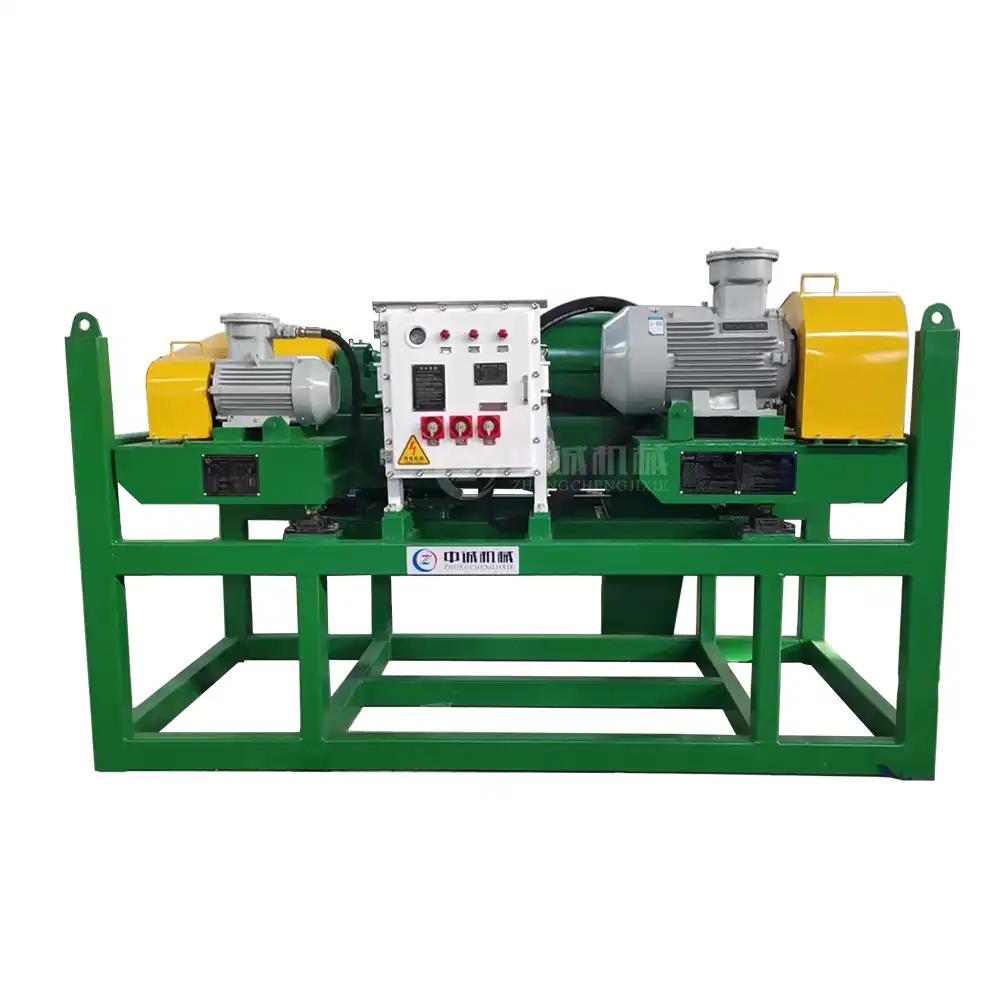
Key Performance Optimization Strategies for High-Speed Decanter Centrifuges
It takes more than just buying the right bowl width to get the best sorting results from a high-speed unit. It's important to tune the G-force, differential speed, and feed concentration all at the same time. This tuning changes as the mud program moves from spud to TD. Here are the main operational levers that drilling engineers with a lot of experience depend on:
- G-force calibration: Running the bowl at its rated speed and matching the differential speed to the solids loading makes sure that the cake discharges dry and the centrate is clear. Too much differential speed cuts down on dwell time and wets the cake; not enough speed lets scroll plugging happen.
- VFD-enabled stepless adjustment: The ZC Series can be set up with a variable-frequency drive (VFD), which lets workers change the bowl speed and back-drive power without stopping the machine. Soft-start also lowers the mechanical shock that hits bearings when they are first turned on, which significantly increases their service life.
- Routine dynamic balance verification: All ZC Series bowl parts leave the plant meeting strict standards for dynamic balance, which keeps vibrations low while the machine is running at high speeds. This standard is kept throughout the equipment's service life by re-balancing in the field after replacing the worn scrolls.
These operating rules, are put together with a well-designed centrifuge, directly lead to less mud use, lower chemical treatment costs, and fewer unexpected shutdowns during important drilling intervals.
Comparing High-Speed Decanter Centrifuges with Alternative Separation Technologies
Disk stack centrifuges can make finer cuts than Decanter Centrifuges, but they can't handle the large amounts of solids that are loaded into active drilling mud circuits and need to be cleaned by hand much more often. Belt filter presses take up a lot more floor space and have trouble with the changing feed concentrations that happen in real drills. Desanders and desilters, which use hydrocyclones, are good at getting rid of bigger particles but don't bother with ultra-fine liquid solids further down the line.
The high-speed decanter does an exact and unique job: it works continuously and without being watched over against rough, variable-density feeds, collecting particles in the 2–74 micron range that no other surface equipment can do. When barite recovery is the most important thing in weighted mud programs, middle-speed units are the way to go. On the other hand, high-speed VFD models are a must in deep, low-density mud programs and Drilling Waste Management Systems that need to improve both discharge dryness and liquid clarity at the same time.
Purchasing Guide: Selecting the Right High-Speed Centrifuge for Mud Recycling
In order to choose from the different combinations, the machine shape and drive technology must be matched to the drilling program, not to a standard specification sheet. How much of the clearing zone the liquid phase goes through before it is discharged is determined by the L/D ratio, which is the effective length of the bowl divided by its inside diameter. When fluid features need to be tightly managed, like in shale gas and geothermal projects, a longer clarification zone makes the centrate cleaner.
Besides geometry, teams in charge of buying things should check the following things before making a final decision:
- Quality assurance documentation: Check that the quality assurance paperwork includes an ISO 1940 G2.5 or G6.3 dynamic balance certificate, mill test certificates for all contact-part materials, and a factory acceptance test (FAT) log that shows the temperature of the bearings, noise levels below 85 dB, and vibration RMS velocity within specification after at least 4–8 hours of use.
- Wear protection architecture: The long-term cost of ownership is more reliable than the initial purchase price alone because it takes into account replaceable tungsten carbide tiles on scroll steps and ceramic plugs at discharge ports.
- Certifications relevant to your jurisdiction: The ZC Series has been approved by ISO 9001, ISO 14001, ISO 45001, HSE, TÜV, and BV, which means it meets the requirements of most international oilfield and geotechnical project specifications.
- Delivery and packaging standards: Plastic film, rainproof tarpaulins, and strapping are used to make transport-safe packaging that covers precisely balanced spinning parts during ocean freight. Depending on the needs of the project, you can get pallets or wooden crates.
These criteria, assessed together, shift the purchasing decision from unit price to verified total cost of ownership. This is the measure that operations teams that are responsible for uptime care about the most.
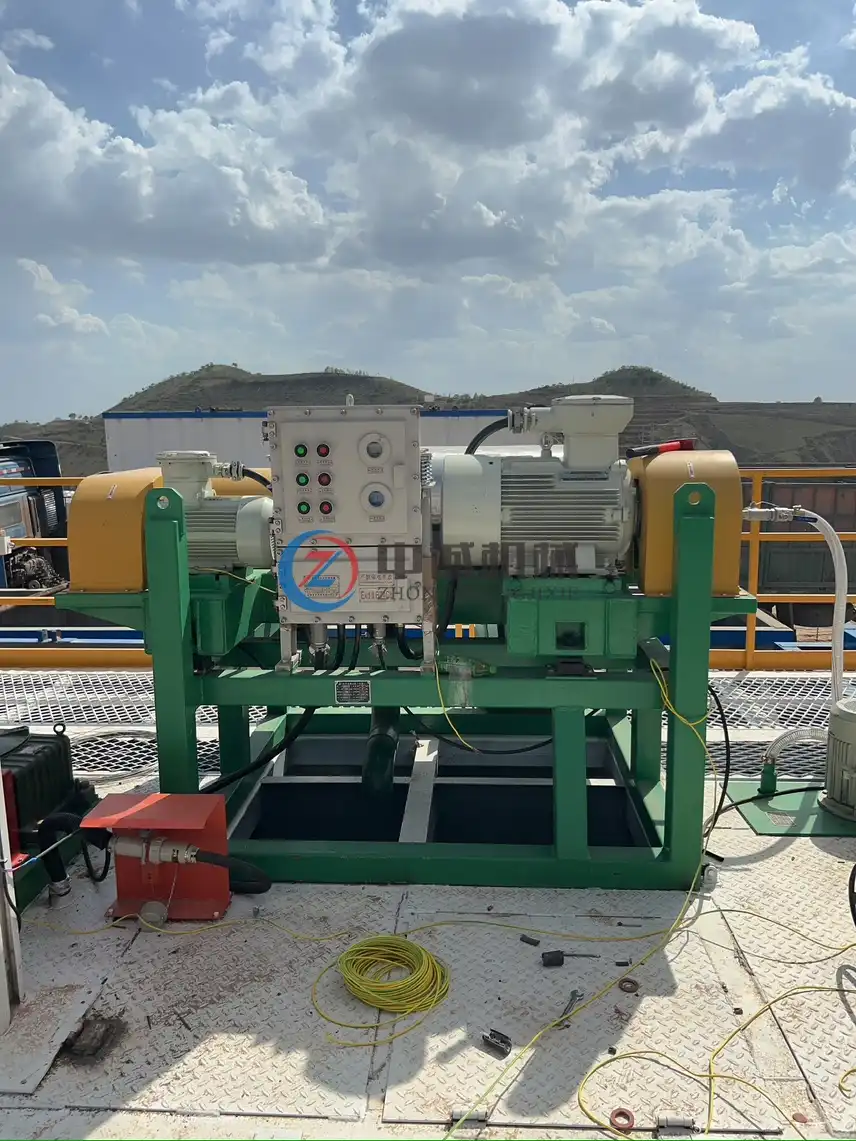
Future Trends and Automation in Centrifuge Technology for Mud Recycling
Now, automated torque control systems change the scroll differential speed in real time based on the measured solids load. This stops plugging events that used to need manual intervention and unplanned shutdowns. When placed on bearing housings, smart vibration monitors give early signs of wear and tear, turning reactive maintenance into planned service. With these features, drilling rigs built for Industry 4.0 will be able to send real-time data from all of their surface equipment to centralized operations dashboards.
Environmental safety pressure speeds up the use of these devices. Rules for managing drilling waste in the US and around the world now demand clear drops in the amount of water in solids that are discharged and the cloudiness of the liquid phase. These are performance standards that can only be consistently met by high-speed Decanter Centrifuges that are well-maintained and set up correctly.
Conclusion
High-speed Decanter Centrifuges make mud recycling work better by picking up ultra-fine solids that other technologies miss. They also recover drilling fluid for reuse and lower the amount of waste treatment. Zhongcheng's ZC Series combines the strength of stainless steel and tungsten carbide with the intelligence of a VFD. It comes with ISO, TÜV, and BV certifications and a one-year warranty that covers everything. If procurement teams and drilling engineers are looking at fifth-stage solids control equipment, it's easy to choose because the equipment has been tested to make sure it separates solids, can be customized, and has quality assurance paperwork.
FAQ
Why is my discharge cake wetter than expected?
Usually it's because the differential speed is wrong or there isn't enough G-force. Changing the VFD settings to extend the time that grains stay in the bowl makes the cake drier without changing any hardware.
How does the centrifuge manage highly abrasive drilling solids?
The scroll flights are protected by tungsten carbide tiles that can be changed out, and ceramic inserts at the release holes take the pressure of rough materials. Both parts can be replaced in the field, which keeps costs stable over the life of the product.
What does the L/D ratio mean for my mud program?
A bigger L/D ratio creates a longer clearing zone, which makes the centrate cleaner, which is perfect for maintaining low-density mud. For simple dewatering, where simplicity is more important, a smaller ratio works best.
What maintenance does high-speed bearing operation require?
High-temperature synthetic grease must be used on a regular basis to keep things moving smoothly. Using onboard or movable monitors for routine vibration analysis can find early signs of wear or misalignment before a bearing fails and causes unplanned downtime.
Can the centrifuge handle fluctuating feed concentrations during active drilling?
Automatic torque control systems keep changing the scroll speed based on how much solids are being loaded in real time. This keeps the machine from getting stuck even when the feed concentration changes a lot between drilling intervals.
Partner with Zhongcheng for Proven Decanter Centrifuge Solutions
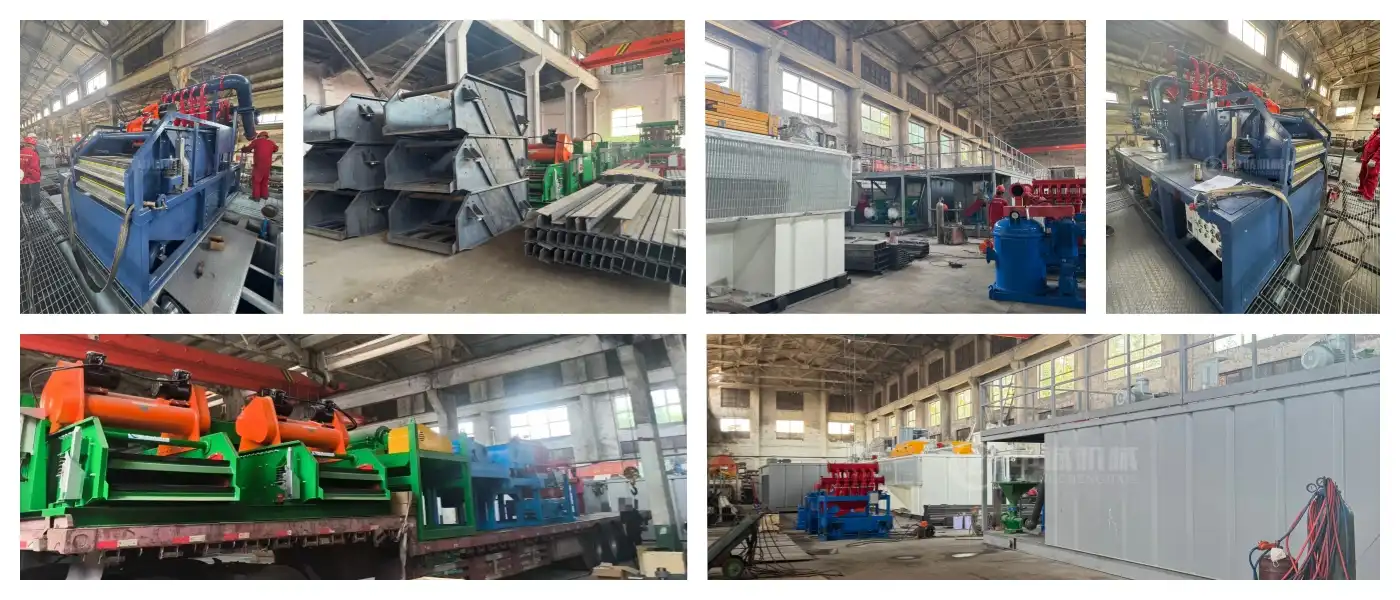
Certified Decanter Centrifuge maker Zhongcheng Machinery Manufacturing has more than 30 years of experience in the field. They offer the ZC Series and let customers fully customize the bowl diameter, VFD configuration, and motor specifications. Custom orders take 15 days to finish, while in-stock items ship within 3 days. Each unit comes with engineering drawings, operation manuals, help with installation and commissioning, and a warranty that lasts for one year. You can email our technical team at oliver@zcgukong.com or go to zcsolidscontrol.com to get prices and specs that fit your rig class and drilling program.
References
1. Journal of Petroleum Technology — Society of Petroleum Engineers, 2021
2. Drilling Engineering — Society of Petroleum Engineers Press, 2019
3. World Oil Magazine — Gulf Publishing Company, 2022
4. SPE Drilling & Completion — Society of Petroleum Engineers, 2020
5. Separation and Purification Technology — Elsevier, 2023
6. Oil and Gas Facilities — Society of Petroleum Engineers, 2018