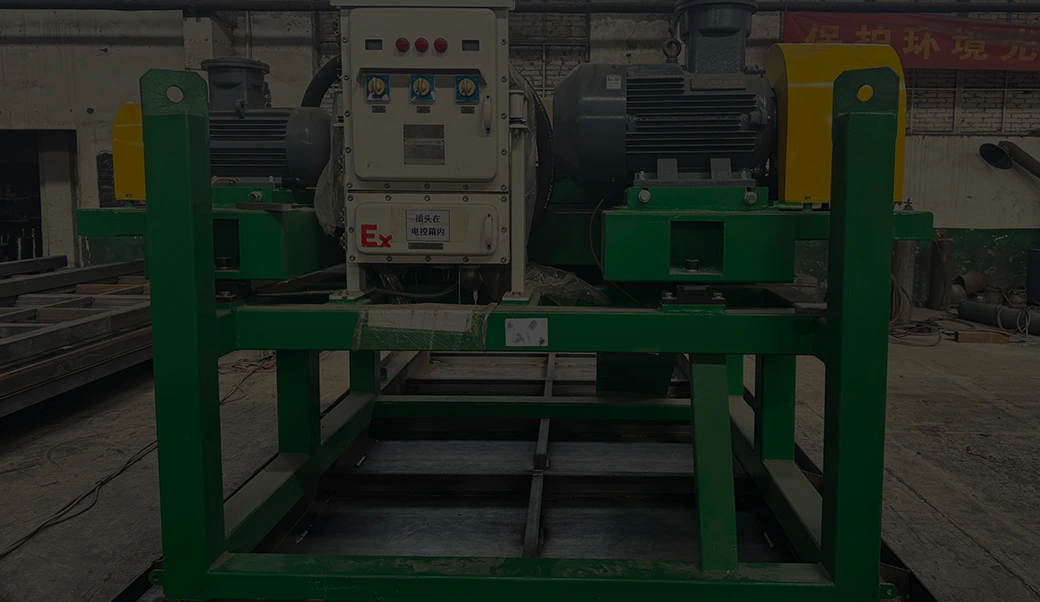
A screw conveyor is one of the most practical solutions for moving wet drill cuttings, sludge, and bulk solids in demanding industrial environments. Whether you operate an onshore drilling rig, manage a construction piling site, or run a mineral processing facility, choosing the right helical conveyor system directly affects your site cleanliness, labor costs, and environmental compliance. This article walks through how these systems work, what separates good designs from poor ones, and what procurement teams should look for when sourcing equipment.


Understanding Screw Conveyor Systems in Handling Wet and Bulk Materials
How Helical Conveying Works
A helical blade that is turned by a motor inside a sealed trough or tube moves material along its length without the need for a separate carrying surface. Wet cuttings and sludge don't spill or give off smells because the path is enclosed. This is a direct benefit over open belt systems. Because of this idea, the technology works well with drilling waste, dewatered sludge, cement powder, and rough mineral ores.
Shafted vs. Shaftless Designs
When it comes to long lengths, shafted types are more rigid and work well with dry or granular materials. Designs without a shaft don't have a center line at all, so there is no area for stringy or fibrous materials to wrap around and get stuck. For sticky, wet cuttings or high-moisture sludge that is common in drilling operations, a shaftless design lowers the risk of blocking without stopping the flow of material.
Material Types and Industry Applications
Different industries face different real problems:
- Wastewater treatment — dewatered sludge and screenings with fibrous content benefit from shaftless designs that prevent wrapping.
- Oil & gas drilling — wet drill cuttings and mud solids require wear-resistant flights and explosion-proof motors for hazardous zones.
- Mining and construction — abrasive ores and slurry demand heavy-duty flighting made from AR400 steel or tungsten carbide-coated surfaces.
Before choosing a conveyor type, it's important to know the density, wetness content, and abrasiveness of the material. This way, costly mistakes won't happen in the field.
Design Principles and Selection Criteria for Optimal Performance
Key Dimensional Parameters
The three things that determine throughput capacity are the screw diameter, the flight pitch, and the rotational speed. Q = (π/4) × D² × S × n × φ × ρ, where D is the width, S is the pitch, n is the RPM, φ is the trough-fill percentage, and ρ is the mass density. CEMA standards say that the trough should be loaded at a rate of 15–45%, based on how rough the material is. To protect the flight edges, heavier solids that are harder and sharper should be loaded less.
Material Selection for Durability
When conditions are rough or corrosive, standard carbon steel Screw Conveyor planes wear out quickly. For dealing with cutting waste, hard-facing with high-manganese steel or tungsten carbide makes flight service life three to five times longer. When used in chemical or pharmaceutical settings, SS304 or SS316L stainless steel with smooth insides keeps things clean and meets cleanliness standards. It is necessary to match the metals to the material because it affects how often upkeep needs to be done and how much the whole operation costs.
Safety and Compliance Standards
OSHA 29 CFR 1910.212 says that parts that rotate must have guards over them. Explosion-proof motors with a rating of Ex d II BT4 or CT4 are required for drilling sites in designated danger zones. The trough cover has excess power relays and emergency pull-cord switches that add an extra layer of safety. By following these standards from the beginning, you can avoid expensive repairs and fines from the government.
Comparing Screw Conveyor Solutions for Industry-Specific Needs
Screw vs. Belt and Pneumatic Systems
When materials are wet and sticky, they get stuck on belt conveyors because buildup on the belt makes it hard to move and causes spills. Pneumatic devices need particles that are dry and can move freely, and they use a lot more energy per ton moved. When it comes to energy use, a helical conveyor is in the middle. It works better than both of them when the material is wet, dense, or sticky. The enclosed design also gets rid of the need for extra dust control in closed-loop drilling waste loops.
Shaftless vs. Shafted for Wet and Sticky Materials
It is best to use shafted conveyors when the span length is more than 15 meters, and the material doesn't tend to wrap. When working with thick mud or fibrous materials on shorter runs, shaftless versions are always more efficient and have less downtime. Both types can be made with either U-trough or tube housings. Tube models can handle slopes of up to 45 degrees, while U-trough designs make cleaning easier.
Motor and Drive Technology
Variable frequency drives (VFDs) let you change the speed to match the feed rate and lower the mechanical shock at startup. This is especially helpful for applications that use a lot of drilling cuttings. For steady service, AC motors with gear reducers are still the norm. DC drives, on the other hand, offer fine torque control for situations with changing loads. Picking the right drive for the load profile lowers both the amount of energy used and the number of times the gearbox needs to be replaced.
Maintenance, Troubleshooting, and Lifecycle Optimization
Routine Inspection and Lubrication
Depending on the load and the environment, Screw Conveyor bearing housings should be greased every 200 to 500 hours of use. Long-span units have intermediate hanger bearings that hold the shaft's weight and need wear-resistant metal bushings that can handle situations with a lot of grit. By checking the flight edges every three months, you can find wear before it leads to poor performance or trough damage.
Common Problems and Practical Fixes
Field teams always run into the same set of problems:
- Blockage — reduce the feed rate or clear the inner trough; check for material bridging near the inlet.
- Abnormal noise — inspect the hanger bearing, reducer gear mesh, or a bent flight section.
- Material spillage — examine the trough cover seals and fastener torque.
- Low throughput — verify RPM against design spec and check for flight wear that reduces push area.
If you take care of these problems quickly, the small issue won't grow into a full production slowdown.
Retrofit and Upgrade Strategies
Instead of rebuilding the whole conveyor, teams can often make it last longer by adding tungsten carbide overlay plates to the flight leading edges, changing the hanger bearings with sealed metal units, or adding a VFD to a fixed-speed motor that is already there. These focused changes bring back capacity at a fraction of the cost of a full replacement, and they should be looked at during any planned outage.
Procurement Considerations and Trusted Supplier Overview
Selecting the Right Specification
Before placing an order, you should make sure of four things: the necessary carrying capacity (m³/h), the total conveying distance, the material properties (such as its moisture, bulk density, and abrasiveness), and the power source that is available. For the North American market, suppliers like Continental Screw Conveyor, Flexicon, and Martin Engineering have strong standard product lines. However, wait times and the level of customization can be different. Direct manufacturers with experience in oilfield engineering usually offer better technical alignment for drilling-specific configurations, especially explosion-proof versions or multi-stage modular assemblies.
ZC Screw Conveyor: Specification and Value
The ZC Screw Conveyor from ZHONGCHENGJIXIE is a dust-free, fully sealed conveying device that is made to work continuously in difficult circumstances. Single-drive spans can go up to 15 meters, and flexible multi-stage setups can go up to 30 meters. Processing speed can be anywhere from 15 to 45 m³/h, depending on how it is set up. The unit comes with either a U-trough or a tubular housing. It can be installed horizontally or at an angle of up to 45 degrees, and the flights are made of wear-resistant alloy or tungsten carbide. There are explosion-proof motor options (Ex d II BT4/CT4) for oilfields that are dangerous. There are certificates for the system from HSE, TÜV, BV, ISO 9001, ISO 14001, and ISO 45001.
After-Sales and Long-Term Partnership Value
When choices are made about what to buy, spare parts and expert documentation are often taken for granted. Integration delays are less likely to happen on big EPC projects if the supplier gives engineering drawings, flowcharts, operation manuals, and on-site commissioning support. ZHONGCHENGJIXIE keeps wear parts on hand so they can be sent out quickly, and they warranty every unit for a year. Standard units that are in stock usually ship within three days, while special orders usually arrive within fifteen days.
Conclusion
Moving wet cuttings, sludge, and bulk products through a drilling or processing site that is still in use requires equipment that can handle constant load, doesn't rust or wear down, and keeps the work area in line with environmental standards. All three are taken care of by a well-designed helical Screw Conveyor. Matching the design to the right material and site conditions is very important. This includes the flight material, housing type, drive system, and span configuration. If you take the time to look at the total cost of ownership instead of just the purchase price, you'll get better deals and the tools will last longer.
FAQ
What is the difference between shafted and shaftless screw conveyors?
Long spans are easier to build with shafted models because they are more rigid and work well with dry or grainy material. Models without a shaft don't have a center line, so there is no area where stringy or sticky materials can wrap and get stuck. For cuttings and sludge from wet drilling, shaftless designs usually have more downtime.
How do you calculate conveyor capacity?
The screw diameter, pitch, RPM, and the trough fill percentage (15–45% according to CEMA guidelines based on how rough the material is) all affect the capacity. Once you multiply these numbers by bulk density, you get the volumetric and mass output.
Can a screw conveyor handle inclined transport?
Yes, up to 45 degrees of tilt is possible with tubular housings. Some high-speed centrifugal designs can be set up in a vertical position, but this isn't done very often in drilling waste uses.
How do you reduce flight wear from abrasive materials?
Longer service life can be achieved by hard-facing the flight leading edge with tungsten carbide spray or by switching from standard steel to AR400 alloy. When compared to normal carbon steel, this method increases the flight life of drilling bits by three to five times.
What causes blockages and how are they fixed?
Most of the time, blockages happen because of too much feeding, material crossing near the entrance, or a worn flight that makes it harder to move. Most problems can be fixed by slowing down the feed, cleaning out the trough, and checking the flight condition. Using the right hanger bearing distance based on CEMA calculations keeps long lengths from getting blocked by deflection.
Partner with ZHONGCHENGJIXIE for Your Next Screw Conveyor Project
ZHONGCHENGJIXIE makes and sells ZC Screw Conveyor systems that are designed to work in mining, building, and oilfields. The company has been engineering for more than 30 years, has its own patents, and is certified by ISO, TÜV, BV, and HSE. Its equipment meets international standards without long lead times. To talk about your conveying capacity, material type, and site layout, please email our technical team at oliver@zcgukong.com or visit zcsolidscontrol.com. It takes 15 days to ship custom setups.

References
1. Conveyor Equipment Manufacturers Association (CEMA). Screw Conveyors for Bulk Materials, 5th Edition. CEMA, 2019.
2. American Petroleum Institute. API RP 13C: Drilling Fluids Processing Systems Evaluation. API, 2010.
3. Occupational Safety and Health Administration. OSHA 29 CFR 1910.212: Machine Guarding Standards. U.S. Department of Labor, 2020.
4. Roberts, A.W. Bulk Solids Handling: Equipment Selection and Operation. Blackwell Publishing, 2008.
5. Zenz, F.A. & Othmer, D.F. Fluidization and Fluid-Particle Systems. Reinhold Publishing, 1960. (Referenced for solids transport fundamentals.)
6. International Organization for Standardization. ISO 9001:2015 Quality Management Systems — Requirements. ISO, 2015.