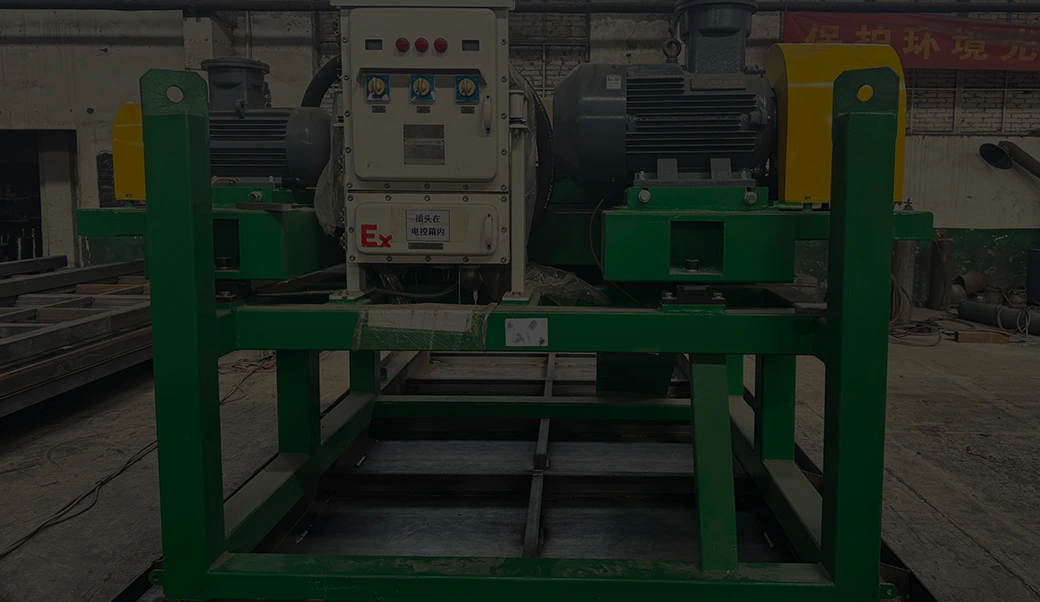
When a gas kick strikes during active drilling, the window between a controlled response and a catastrophic blowout can be measured in seconds. A mud gas separator (MGS), sometimes called a Poor Boy Degasser or gas buster, sits at the center of that response. Positioned directly downstream of the choke manifold, this well control device separates large volumes of free gas from returning drilling fluid before that gas-cut mud reaches open shaker tanks or mud pits. Without it, flammable or toxic gases—including H₂S—can migrate into the rig's suction system with devastating consequences.


Understanding Mud Gas Separators: Functions and Working Mechanisms
What the Device Actually Does
The choke manifold sends gas-cut mud to the MGS, which pushes it through a set of internal impingement baffles inside a tank that is under pressure. Moving matter and gravity separate the gas phase from the liquid phase. The freed gas rises and leaves through the top vent line to a safe flare point. The degassed mud, on the other hand, flows out of the bottom and back into the active pit system.
Key Internal Components
Separation performance is made up of three parts. When the entry tip hits the baffle plates at high speed, it breaks up gas bubbles that are stuck in the thick mud. The U-tube liquid plug at the base acts as a hydrostatic barrier to stop "blow-through," which means gas can't escape through the mud release line. Internal baffles, which were improved through fluid dynamics simulations, make the path for gas and liquid to contact longer and make gas release more efficient by more than 30% compared to single-chamber designs.
Vertical vs. Horizontal Configurations
Vertical vessels are the standard choice for onshore rigs because a mud gas separator (MGS) takes up relatively little space and allows gas and drilling fluid to separate naturally through gravity. In offshore applications, horizontal mud gas separator (MGS) designs are often selected when limited deck space and restricted vertical clearance make vertical equipment impractical. Specialized mud gas separator (MGS) configurations, such as skid-mounted units with folding supports, can also simplify transportation, positioning, and rapid setup in rural areas, making them particularly useful for multi-well pad operations.
Mud Gas Separator vs. Alternatives: Making Informed Equipment Choices
MGS vs. Vacuum Degasser
These two gadgets are made to solve different issues. During normal drilling, a vacuum degasser takes out small amounts of dissolved or entrained gas from the mud that is moving around. This keeps the pump working efficiently. The MGS can handle rapid, large amounts of free gas coming in during a kick, which would quickly overwhelm any vacuum-based device. It is a big mistake to think of them as replaceable when you are buying things.
MGS vs. Diverter Systems
When the surface casing is shallow and a full shut-in is not safe, a diverter moves the flow away from the rig floor. It doesn't separate the gas from the mud; it just sends the whole thing overboard. The MGS actively processes fluids that are being returned and returns drilling fluid that can be used. This lowers the cost of mud loss. To separate wells with deeper casing shoes and clear blowout prevention stacks, the MGS is the right main tool.
Sizing and Capacity Considerations
Throughput capacity is directly related to vessel width. The MGS units made by ZHONGCHENGJIXIE have body widths ranging from 600 mm to 1,200 mm and working pressures ranging from 1.6 MPa to 6.4 MPa. A basic engineering choice is how to match the tank width to the expected kick volume and mud flow rate. Too small of a unit can cause blow-through, and too big of a unit adds extra capital costs that aren't needed. Before confirming specifications, procurement teams should ask suppliers to do engineering calculations.

Ensuring Safety and Operational Integrity: Maintenance and Troubleshooting of MGS
Built-In Safety Features to Know
ZHONGCHENGJIXIE's mud gas separator (MGS) units feature an explosion-proof electronic ignition device for safe flare ignition, an electrical protection grade of IP55 or higher, and remote-control capability, allowing operators to stay away from the vessel when gas flow is active. Inside, each mud gas separator (MGS) has a durable epoxy coating that resists wear from abrasive solids and chemical contact, helping extend service life and reduce the need for frequent recoating. With these features, the mud gas separator (MGS) provides reliable separation and safer operation in demanding drilling environments.
Routine Maintenance Protocol
The MGS is easier to maintain than mechanical dividers because it doesn't have any moving parts. Here are the main steps that field teams should take to check each well:
- Flush the vessel interior through the integrated bottom flush ports to remove accumulated sand and cuttings that could accelerate internal erosion.
- Inspect impingement baffles for erosion wear, particularly on the leading edges where high-velocity flow makes first contact.
- Check U-tube seal depth against the original engineering specification to confirm the gas-handling hydrostatic barrier remains effective.
- Test the vent line and drain valves for blockage or corrosion, especially after operations in H₂S-bearing formations.
These steps can be done in less than two hours and keep the field from failing almost all of the time. Most of the time, separators don't do their best on the next job because they were skipped after a high-gas-cut well.
Troubleshooting Common Field Problems
If gas is leaking out of the mud discharge line, it usually means that the liquid seal is broken. This could be because the U-tube isn't deep enough or the mud density dropped below what was planned. When solids build up too much at the base of the vessel, they lower the effective separation volume and cause back-pressure problems. This is exactly why the flush holes are there. When internal erosion is thought to be happening but can't be seen, ultrasound thickness testing of the vessel wall gives a precise reading. If the loss goes over 20% of the original wall thickness, you should contact the maker.
Procurement Insights: Buying Mud Gas Separators for Global B2B Clients
Current Market Demand and Sourcing Challenges
Along with more deepwater activity, HPHT onshore programs, and stricter environmental rules, the demand for well control equipment around the world keeps going up. Two problems that procurement teams always say they have with buying are long lead times from big OEM providers and trouble getting custom setups for rig classes that aren't standard. Both problems can be solved better by direct manufacturers who can make the products themselves rather than by distributors.
What to Evaluate in an MGS Supplier
ZHONGCHENGJIXIE is a company in Shaanxi, China, that makes direct mud gas separators. Their plant is approved under ISO 9001, ISO 14001, ISO 45001, HSE, TÜV, and BV standards. Standard units that are in stock ship within three days. It takes fifteen days to deliver customized vessels that are the right size for certain rig classes, such as ZJ30 through ZJ90 and XJ350 through XJ750. All of the units meet the requirements of NACE MR0175/ISO 15156 for sour service, and the company provides full paperwork sets with technical drawings, installation flowcharts, and operation instructions.
Total Cost of Ownership
The purchase price of a mud gas separator (MGS) is shown on a single line, but the real cost includes mud losses caused by inadequate separation, unexpected downtime from equipment failures, and potential regulatory fines for poorly managed gas venting. A properly sized and well-maintained mud gas separator (MGS) from a supplier that keeps spare parts in stock and provides rapid technical support can quickly pay for itself. When evaluating a mud gas separator (MGS), buyers should therefore consider total operating costs rather than the initial purchase price alone. Every ZHONGCHENGJIXIE mud gas separator (MGS) unit comes with a one-year comprehensive warranty, providing financial protection during the critical early operating period.
Case Studies and Future Trends in Mud Gas Separator Technology
Field Performance in HPHT and Sour Gas Environments
Operators who drilled HPHT wells in the Sichuan Basin and the Tarim Basin have shown that MGS units with sour-service alloy steel construction and improved baffle geometry were able to handle kick volumes that were several times higher than what a normal vacuum degasser could handle. The separation happened in real time and didn't stop the flow of mud. This kept the well control response on schedule and kept downstream shale shakers from being overloaded with gas.
Managed Pressure Drilling Integration
The MGS is used as a second stage of separation in managed pressure drilling (MPD) operations where the fracture gradient windows and pore pressure windows are small. Even when the pressure is kept constant, the entrained gas needs to be safely sent to the flare boom while the clean mud goes back into the well. Explosion-proof ignition devices and MGS units that can be controlled from a distance work especially well with MPD systems because workers can control the lighting from a safe distance.
Technology Developments on the Horizon
When equipment makers put in smart tracking tools, they keep an eye on the gas flow rates, the amount of liquid inside the vessel, and the pressure in the vent line in real time. Optional steam heating coils, which are already available on ZHONGCHENGJIXIE units, help with operational problems in high-altitude or Arctic areas where mud viscosity at low temperatures makes natural gas release less efficient. The idea of passive design with no moving parts is still the basis. Monitoring electronics were added as a diagnostic layer instead of as a mechanical extra.
Conclusion
Gas-cut drilling fluid is a common risk in the oil and gas industry, but it does not have to become unmanageable. Choosing and properly maintaining a mud gas separator (MGS) can help control gas-cut fluid and reduce the risk of a surface emergency following a subsurface kick. The technology behind a mud gas separator (MGS) is well established, and its operational principles are clear. When purchasing a mud gas separator (MGS), buyers should consider the supplier's technical expertise, equipment specifications, customization capabilities, and long-term support. A reliable manufacturer with proven industry experience, appropriate certifications, and the ability to customize a mud gas separator (MGS) for a specific rig class can provide a more suitable solution for demanding drilling operations.
FAQ
What is the difference between an MGS and a vacuum degasser?
The MGS handles large volumes of free gas released during a kick or overflow event. A vacuum degasser removes small residual gas bubbles from circulating mud under normal drilling conditions. They perform different functions and are not substitutes for each other.
Can an MGS handle H₂S gas safely?
Yes, provided the vessel is manufactured from NACE MR0175/ISO 15156-compliant carbon or alloy steel and has undergone appropriate post-weld heat treatment. ZHONGCHENGJIXIE units meet this standard for sour service environments.
How is blow-through pressure calculated?
Blow-through pressure equals the hydrostatic head created by the U-tube liquid seal: mud density multiplied by gravitational acceleration multiplied by seal depth. If upstream gas pressure exceeds this value, gas escapes through the mud discharge line.
What maintenance does an MGS need after well completion?
Flush accumulated solids from the vessel interior, inspect baffle plates for erosion, verify U-tube seal depth, and test vent line integrity. These steps apply after every well, particularly after high-gas-cut operations.
What certifications should an MGS supplier hold?
Look for ISO 9001, ISO 14001, ISO 45001, HSE compliance, and third-party approvals such as TÜV or BV. NACE compliance is mandatory for any well with H₂S exposure.
Connect with ZHONGCHENGJIXIE for Your MGS Requirements
ZHONGCHENGJIXIE sells mud gas separator (MGS) systems that are made to ISO, HSE, TÜV, and BV standards. The body widths range from 600 mm to 1,200 mm, and the working pressures can reach 6.4 MPa. In-stock units are sent out in three days, and units that are specifically configured for your rig class take fifteen days to make. Each unit comes with full instructions, a one-year warranty, and help with installation. You can get a price right away by sending your technical needs to oliver@zcgukong.com or going to zcsolidscontrol.com.

References
1. American Petroleum Institute. API Recommended Practice 53: Blowout Prevention Equipment Systems for Drilling Wells. 2012.
2. International Association of Drilling Contractors (IADC). Well Control Manual. 2015.
3. Bourgoyne, A.T., Millheim, K.K., Chenevert, M.E., & Young, F.S. Applied Drilling Engineering. Society of Petroleum Engineers. 1986.
4. NACE International. MR0175/ISO 15156: Petroleum and Natural Gas Industries — Materials for Use in H₂S-Containing Environments. 2015.
5. Adams, N.J., & Kuhlman, L.G. Well Control Problems and Solutions. PennWell Publishing. 1994.
6. SPE Drilling & Completion Journal. Society of Petroleum Engineers. Various issues, 2018–2023.