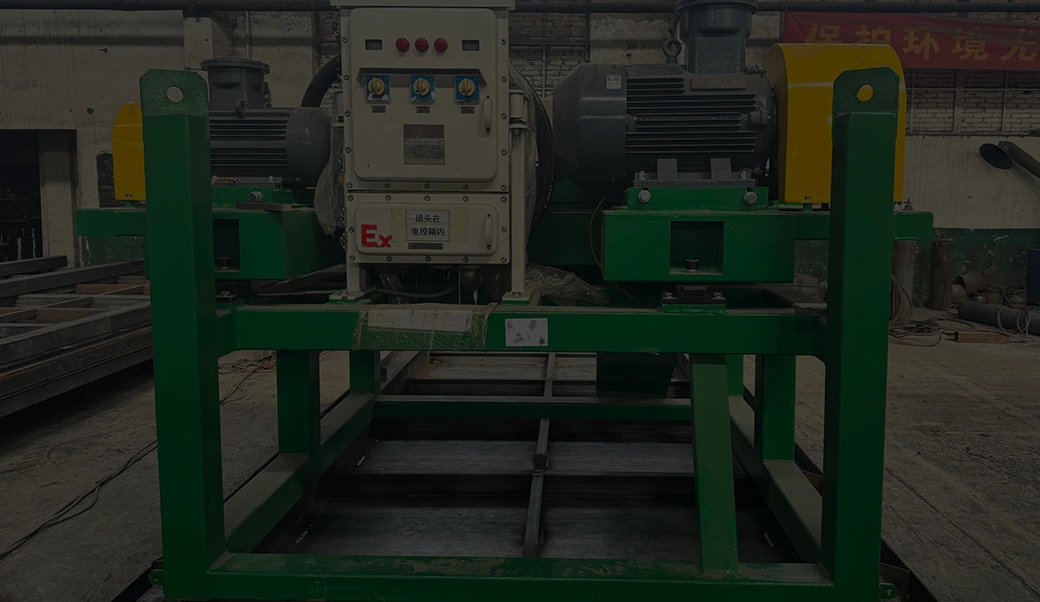
A dependable Mud Drying Shaker manufacturer gives drilling teams a practical way to dry wet cuttings, recover costly drilling fluid, and cut waste hauling. The machine uses high-G linear or elliptical vibration to separate liquid from solids that leave the primary shale shaker. Drier cuttings mean lower disposal volume, and recovered fluid returns to the circulation system. When I help buyers compare suppliers, I look at G-force, screen design, certifications, delivery time, and technical support. In this guide, I explain how the equipment works, where it fits, how to size it, and how ZHONGCHENGJIXIE supports U.S. and global projects.
What Is a Mud Drying Shaker and How Does It Work?
What Is a Mud Drying Shaker?
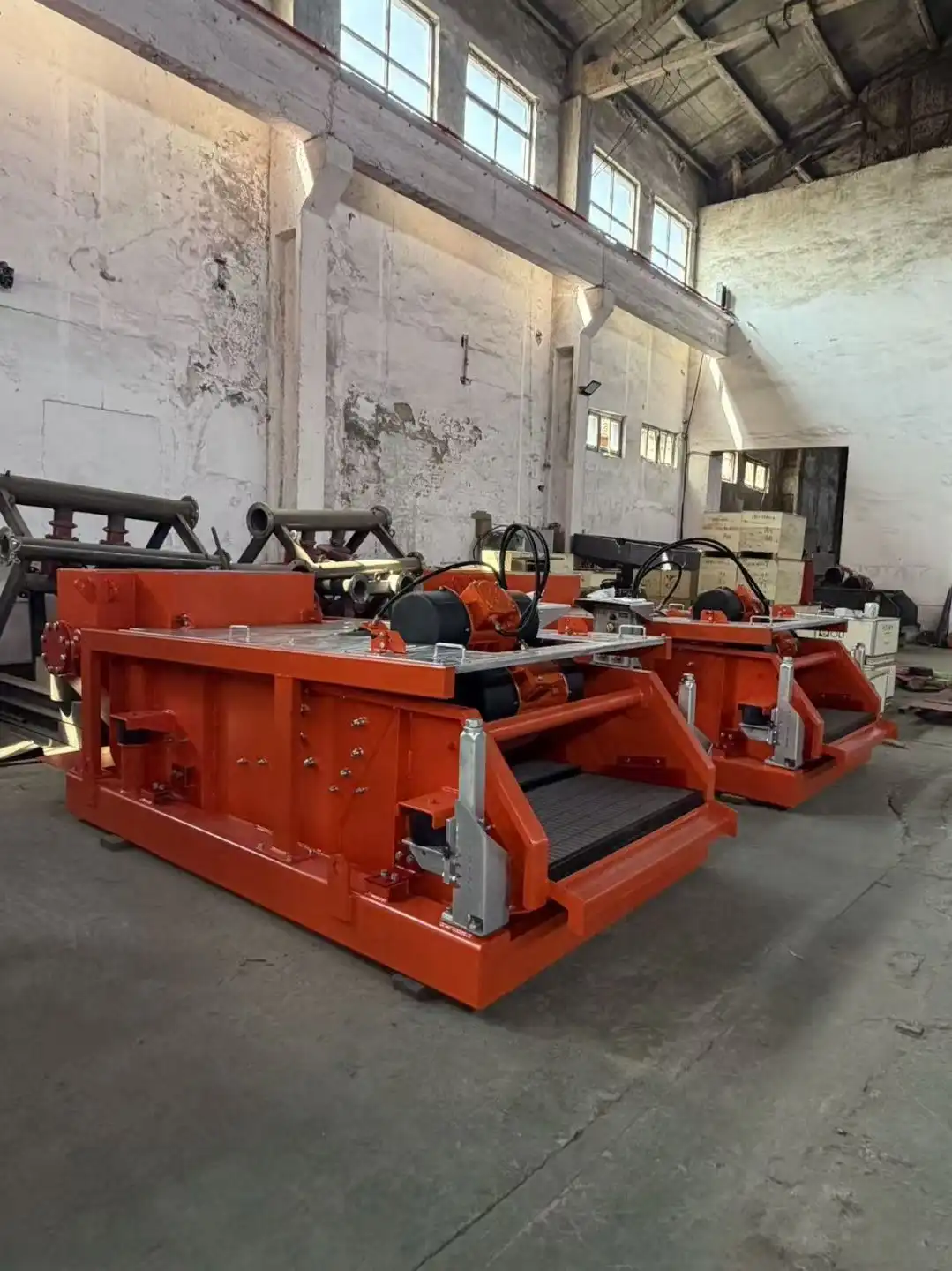
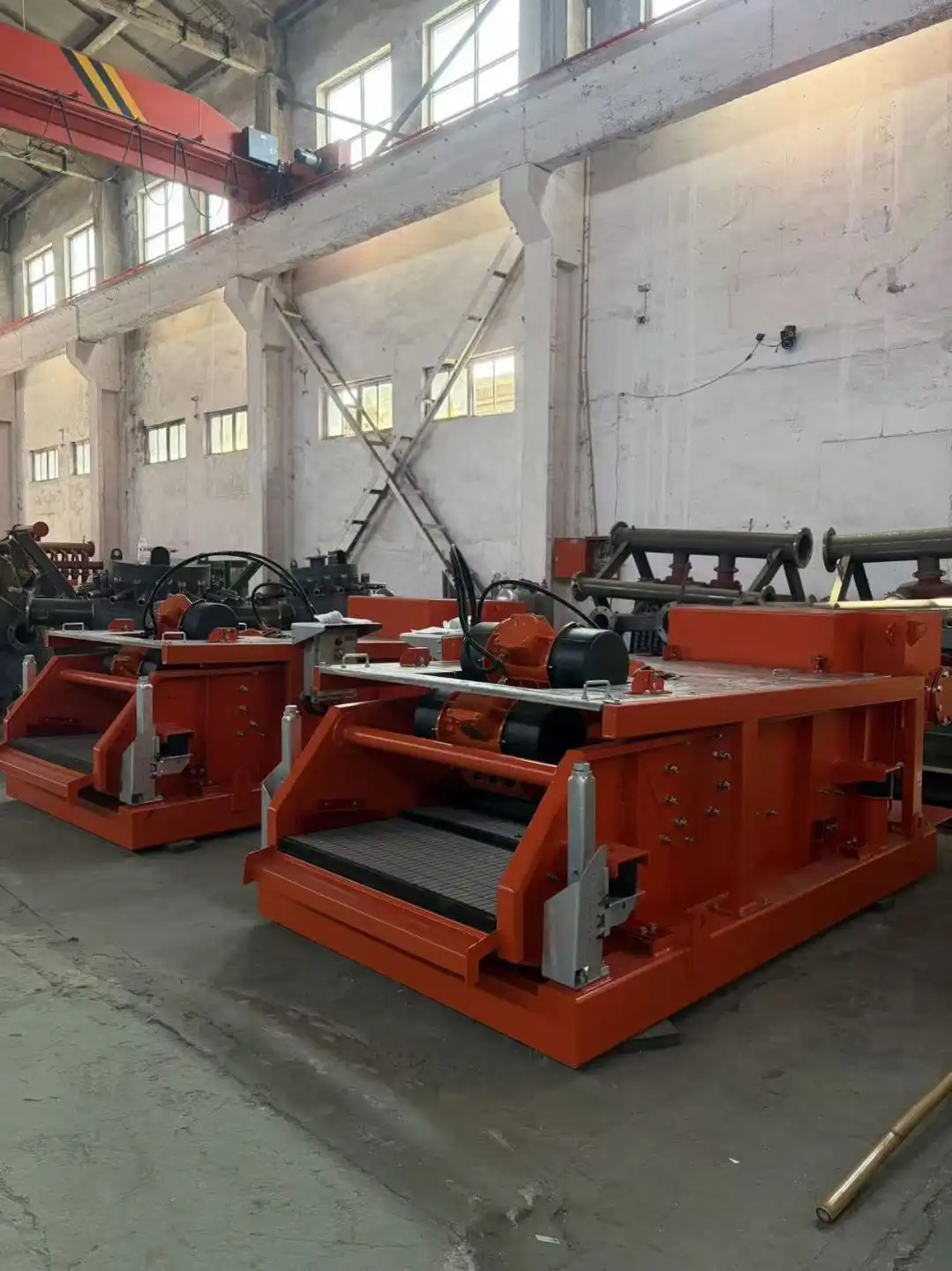
It is a high-G shaking machine used to deeply dry drill cuttings and collect drilling fluid. A Mud Drying Shaker is also known as a cuttings drying screen. It takes care of the wastewater from the main shale shaker, where the cuttings still have a layer of costly fluid on them. The feed inlet, screen deck, two vibration motors, springs, frame, discharge outlet, and liquid collection area make up the main parts. The solids control line is still there. Since it comes after the shale shaker, it deals with the waste stream instead of the moving mud. In that position, crews can get back fluid that would have been stuck to cuttings at the rig site otherwise.
How Does a Mud Drying Shaker Work?
The machine shakes a lot and moves wet cuttings across a screen deck. How long the objects stay on the screen is controlled by two motors that move them in a straight line. The surface tension that keeps liquid on the cuttings is broken by stronger vibrations. This lets the liquid pass through the screen, and the solids move toward the discharge end. Up to 8.2G of G-force can be used for linear or elliptical motion in our unit. With a variable frequency drive, operators can change the frequency and strength as the cuttings load and density of the mud change. The liquid is put back into the recycling system, and the solids that are drier are collected or treated further.
Mud Drying Shaker vs. Shale Shakers and Cuttings Dryers
People who want to buy something often ask how this machine is different from other tools. A shale shaker keeps the active system safe by removing drilled solids from the moving mud. A drying shaker works on the pieces that have been released and gets rid of the liquid that they carry. It depends on the material whether linear motion or elliptical motion is better for moving it steadily. Elliptical motion changes how solids move and how long they stay on the deck. A vibrating drying shaker is easier to set up and uses less energy than a cuttings dryer. It can also be added to an existing solids control line. Centrifuges and dryers may still work for smaller pieces of material or goals with less moisture. A lot of the time, these tools work together.
Mud Drying Shaker Applications in Drilling Waste Management
Oilfield Drilling and Waste Treatment
An oilfield Mud Drying Shaker is used by both onshore and offshore rigs to remove oil on cuttings (OOC) and moisture before they are thrown away. The gain is both financial and legal. If fluid stays on cuttings, you lose money, and transporting and dumping wet trash costs more. For both oil- and synthetic-based mud, our unit can get back at least 90% of the fluid that is attached. The fluid that is retrieved keeps its chemical qualities, which means that it costs less to mix new mud. Regulators also keep an eye on waste. As of 2001, the U.S. EPA's rule limited the amount of synthetic-based fluid that could be left on cuttings that were dumped offshore. In the Northeast Atlantic, OSPAR Decision 2000/3 limits the amount of oil that can be left on cuttings that were dumped.
Trenchless, Dredging, and Mineral Separation
The idea behind dewatering with a Mud Drying Shaker is the same for mining, trenchless engineering, and material separation. Crews that do horizontal directional drilling and other trenchless jobs often work in sensitive or urban areas where closed-loop handling is important. Cuttings that are drier are easier to load and move, and any fluid that is recovered is used again in the process. Mineral and dredging projects have to deal with thick slurries that make normal screens useless. These loads are good for a high-G drying screen that is made to dry sticky materials quickly. Because each slurry has its own particle size, density, and stickiness, we still suggest that you do a feed test. Once the feed is checked, foundation and piling workers who run systems to remove sand and water from sludge can also connect a drying shaker to those lines.
Closed-Loop and Zero Discharge Systems
Every step needs to return fluid or cut down on waste for operators who want a closed-loop or zero-discharge system. The drying shaker is used between the first step of controlling solids and the last step of handling waste. ZHONGCHENGJIXIE makes solid control systems, mud non-landing systems, construction piling sand removal systems, sludge dewatering systems, and fracturing return liquid treatment systems for rigs ranging from ZJ20 to ZJ90 and XJ350 to XJ750. The shale shaker, centrifuge, and tanks can all be set up next to the drying shaker because we build the whole line. This plan control makes it easier for workers to follow the rules that say oil-containing cuttings can't be dumped directly into the ground.
Key Technical Specifications for Mud Drying Shaker Selection
Motion Type and G-Force
Motion type and G-force are the first things to look at because they affect how well the drying works. With a G-force of up to 8.2G, our Mud Drying Shaker can move in either a straight line or a curved path. The intensity of drying screens is usually between 7.5G and 8.5G, which is higher than the intensity of normal moving screens. This is what breaks the surface tension of liquids. The two motors move the cuts in a straight line, which controls how long they stay on the deck. Elliptical motion is good for moving things that need a different pattern. Sometimes less G is better than more G. To keep screens safe, very fine, fragile, or rough solids may need a lower setting. With a variable frequency drive, the setting can be changed while the machine is running.
Screens, Wedge-Locking, and Controls
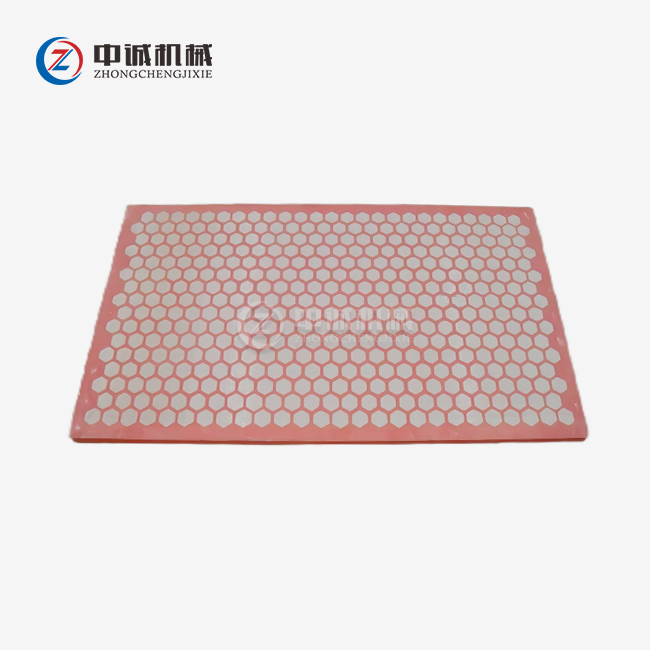
The shape of the screen affects both drying time and downtime. Buyers should look at the effective screen area, the mesh opening, the material of the screen, and how it can be replaced. Our design uses a wedge-locking system that makes it easy for crews to change screens quickly. This cuts down on the time spent doing nothing when a screen goes out or gets dirty. The mesh size should match the surface tension of the mud and the size of the cuts, because a bad match leads to blinding. With screens labeled with the API RP 13C method, buyers can compare mesh from different manufacturers. You should also look at the motor's speed, voltage, and name brands. We have motors from well-known brands in the U.S. and abroad, and we can also make them to fit specific rig layouts.
Sizing Capacity from Real Feed Data
Your real feed, not a store number, should tell you how much space you have. Get information about the average and high cuttings rates, the solids content, the cuttings size, the type of mud, its viscosity, density, and temperature. Then, set goals for recovering solids, water, and fluids that have been released. Add a good amount of room for peak drilling intervals, but don't go too big. That will make it more expensive and not separate the holes better. Professional units can usually dry cuttings to about 10% to 15% by weight, but this depends on the type of mud that was used in the first place, so make sure that any provider you talk to can back up its claims with test results. They look over this information and make sure that the configuration works with your rig and layout.
Mud Drying Shaker Operation, Maintenance, and Performance Verification
Startup and Daily Operation
It works well before the first load of a Mud Drying Shaker. It is important to make sure the unit is level, that the screens are in good shape, that the discharge paths are clear, and that the emergency controls work. Start the shaker before the material comes in, and spread it out slowly and evenly across the floor. It's bad for drying and for the springs to be stressed when one side is overloaded. See if the discharged cuttings are wet during the shift, listen for strange noises or vibrations, and write down any drop in fluid recovery. Wait until the feed is empty, then turn off the machine and clean the screens. A short written list helps workers be uniform from shift to shift.
Maintenance and Common Problems
Low downtime is achieved through routine care. As directed in the instructions, clean or replace blinded screens, check the temperature of the motor and bearings, look over the springs and connecting bolts, and grease them. If it doesn't dry well, it's likely because the shaking frequency is too low or the screen is worn out. Raise the frequency or get a new screen. Most of the time, cuttings piling up means that the feed volume or deck angle needs to be changed. If your screen is blocked, you need to clean it or change the size of the mesh. If there is unusual vibration, the motors and parts should be checked before the machine keeps going. We sell wear parts like screens and offer fitting help and support after the sale.
Performance Verification Before You Buy
On expensive items, it's normal to be wary, so ask for proof. Factory acceptance testing should make sure that the structure is stable, the motor works, the screen fits, and there is no noise. Buyers usually use sensors to check the G-force and stroke, make sure the noise level stays below 85 dB for worker safety, look at the coating thickness to see if it will rust in the ocean, and keep an eye on the motor bearing temperature during a multi-hour test. The best way to check is to use your own cuttings to make a sample. This is because waste from different wells, formations, and mud formulations is different. Ask all of your suppliers, including us, to write down how they test, what they set up, and what they expect the results to be. That way, your engineers will be able to compare data on an even playing field.
Mud Drying Shaker Price, Procurement, and Choosing a Manufacturer
Price and Total Cost of Ownership
The cost of a Mud Drying Shaker varies depending on its capacity, screen size, motor brand, structural components, controls, certifications, customization, packaging, and shipping location. A low quote may end up costing more in the long run when you add up the costs of shipping, installation, electricity, new screens, energy, and upkeep. Also count the money you'll save. Less wet cuts mean less money spent on moving and dumping, and recovered fluid means less money spent on getting new mud ready. Our drying shaker strikes a good mix between cost, life, and speed by being built to last and having a simple layout. Send us information about the capacity, mud type, cuttings, goal moisture, power source, and transport location when you ask for a quote. This will help us figure out how much the right configuration will cost.
Why Buy from a Direct Manufacturer?
A Mud Drying Shaker factory manages planning, building, and checking all under one roof. ZHONGCHENGJIXIE is based in Xingping City, Xianyang, Shaanxi. It has a plant that is 6,300 square meters and can make 200 sets of mud circulation systems and oil machinery every year. We have more than a dozen trademarks and more than 30 years of experience in the field. There are ISO 9001, ISO 14001, and ISO 45001 marks on our management systems, and HSE, TÜV, and BV marks are on our products. ISO, IEC, ATEX, and EAC requirements are also met by our goods. Because of this, we can help OEM clients, distributors, and EPC workers with quality that is always the same and paperwork that is easy to understand.
Delivery, Customization, and Technical Support
Delivery time often sets the schedule for a project. We ship items that are in stock within three days, but custom orders usually take fifteen days. Our transportation partners and the ports of Tianjin and Shanghai help us ship goods all over the world, and we use standard export packing. Customization includes choices for motors, sizes, and shapes. Our technical package comes with operation and maintenance manuals, drawings, flowcharts, component diagrams, industry training, and project solutions from our service team. There is a one-year warranty on every order. For buyers in the United States, this paperwork helps the purchasing and engineering teams look over the equipment before giving the go-ahead. Support for extra parts also makes sure that long-term operations stay on track.
Conclusion
A Mud Drying Shaker dries the cuttings that come out of the main shale shaker, returns the drilling fluid, and cuts down on the amount of trash that teams have to move and get rid of. High-G linear or elliptical vibration, up to 8.2G in our unit, breaks the surface tension of the liquid. A variable-frequency drive and wedge-locking screens make it easy for staff to change screens and change settings. The tools can be used in the oilfield, for trenchless projects, for dredging, for mineral separation, and for closed-loop systems that have to follow rules about discharge. Buyers should use real feed data to figure out how much capacity they need, compare the total cost instead of just the purchase price, and test the performance in the factory and on samples. Buying from a direct maker who offers certifications, customization, paperwork, and help for spare parts lowers the risk of buying something.
FAQ
What is a mud drying shaker used for?
Following the primary shale shaker, a Mud Drying Shaker is used to remove any remaining liquid from the drill cuttings. It gets drilling fluid back so it can be used again and makes materials that are dry, which lowers the costs of moving and getting rid of them.
How is it different from a shale shaker?
A shale shaker takes drilled solids out of the moving mud. A drying shaker uses stronger vibrations to separate more liquid from the cuttings that have been discharged. The two machines don't switch places; they work one after the other.
Can it handle oil-based mud?
There is a chance that it can treat both manufactured and oil-based mud. Our unit can get back up to 90% or more of the fluid that is connected, but the results depend on the type of mud or cuts. We suggest that you do a feed check or a practice test.
What information do you need for a quotation?
Please send the capacity, type of mud, size of the cuttings, target moisture, power supply, layout of the site, and location of the delivery. Our engineers will give you a quote, drawings, and a schedule along with a configuration suggestion.
Contact ZHONGCHENGJIXIE for a Mud Drying Shaker Quote
Are you ready to get more drilling fluid back and save money on disposal? ZHONGCHENGJIXIE is a direct manufacturer of Mud Drying Shakers. They offer 3-day shipping for in-stock items, 15-day custom production, a 1-year guarantee, and full detailed documents. Write to oliver@zcgukong.com and tell them about your site, feed rate, and mud type. Our engineers will come up with a setup suggestion and a price quote. For more information on the product, go to zcsolidscontrol.com.
References
1. Drilling Fluids Processing Handbook, ASME Shale Shaker Committee, 2005
2. ISO 13501: Petroleum and Natural Gas Industries — Drilling Fluids — Processing Systems Evaluation, 2011
3. OSPAR Decision 2000/3 on the Use of Organic-Phase Drilling Fluids and the Discharge of OPF-Contaminated Cuttings, 2000
4. Effluent Limitations Guidelines and New Source Performance Standards for the Oil and Gas Extraction Point Source Category (Synthetic-Based Drilling Fluids), Federal Register, 2001
5. Applied Drilling Engineering, Society of Petroleum Engineers, 1986
6. Composition and Properties of Drilling and Completion Fluids, Gulf Professional Publishing, 2011