A Screw Pump delivers stable, low-pulsation flow when a process must move thick, sticky, or solids-laden fluid. It is a positive displacement pump, so it traps fluid in sealed cavities and pushes it forward at a steady rate, even as viscosity rises. Centrifugal pumps often lose flow and efficiency with thick fluids. I wrote this guide for procurement managers, engineers, and project teams who need dependable transfer in oilfield, sludge, chemical, and food applications. Below, I explain how the pump works, how to select one, and how ZHONGCHENGJIXIE supports buyers.
Why High-Viscosity Fluid Transfer Requires the Right Pump?
Pipeline Resistance and Starting Torque
Each foot of pipe has to fight against the thick fluid. Moving cold, heavy stuff with a pump needs more torque, and as viscosity rises, so does friction loss. When the motor tries to start up after being turned off, and the fluid gets stiff, a motor that is too small might trip. This is a tough spot for pumps that spin. Viscosity needs to be fixed because when it goes up, head, flow, and efficiency all go down. The Hydraulic Institute gives advice on how to do this. After that, there may be an increase in heat and unstable low-flow service. That is why a positive displacement design is one way to stop this flow loss. But it still needs the right-size drive.
Where Thick Fluids Appear?
As you can see, I see rough tasks on a lot of sites. The solids control in an oilfield moves drilling mud and fluids that are full of cuttings. The sludge cleaning process dries out the feed. Chemical firms make a lot of polymers, resins, and glue. Sauces, pastes, and syrups are moved around food plants. Fuel and lube oil are moved around in hydraulic and marine gear. Things happen in different ways with different fluids. Some are thin at room temperature, some carry rough particles, and some are easy to tear. This means that some pumps are better than others for some jobs.
What Buyers Should Check First?
Before people compare models, I tell them to check five things: the viscosity at the working and starting temperature, the needed pressure, the duty cycle, how easy it is to maintain, and how easy it is to get extra parts. Just as important as the price of the pump itself is how much it costs to run and fix. Over time, things like energy use, broken parts, and downtime add up. Also, procurement teams should check early on to see if suppliers are qualified and how long it will take to ship the goods. By writing these facts down ahead of time, you can save time and money on changes made after the order has been placed.
What Is a Screw Pump and How Does It Work?
The Working Principle
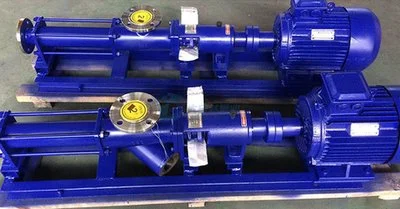
A Screw Pump moves fluid by having one or more screws turn in a straight line. As the screw profiles turn inside the case, they make holes that connect the suction port to the discharge port. These holes are blocked off. It doesn't have a single bubble in it. It goes forward in a smooth, straight line, which makes a flow with few waves that stays at about the same speed. This is not just the pump that sets the pressure at the output. Downstream resistance also does. Because of this, each installation needs something to relieve pressure or keep it safe.
Key Components
It's clear that each part does its job. It moves the fluid around and keeps the pressure inside. When the design is progressive, a rotor and a stator make up the moving spaces. Seals keep fluid inside, and bearings support the shaft. In twin Screw Pumps, the screws are held in place by timing gears. There's a valve that stops the pressure from rising too high. You can change the speed and power with the speed device and the motor. When I go over a design with a buyer, I make sure that every part of it works for the duty.
How Viscosity Changes Performance
It is possible to guess how the pump will change when the viscosity goes up. Volumetric effectiveness usually goes up when the fluid is thick. This is because thick fluid doesn't slip through internal holes as easily. The drive needs more speed and power because there is more fluid friction. People who work on pumps often slow them down or make the pressure line longer so that the fluid can fill the holes faster. The shafts, couplings, and wear parts are also put under more stress. Whenever I use thick oil, I always make sure that the motor and gears are the right size.
Types of Screw Pumps and Why They Suit High-Viscosity Fluids?
Single Screw and Progressive Cavity Pumps
Another name for a single Screw Pump is a progressive cavity pump. It has a spiral rotor that spins inside a rubber stator. It can handle sludge, polymers, rough slurry, and fluids that have solids in them. Things that would break if it moved quickly are also safe because it moves slowly. There are clear pros and cons. The fluid must have the same chemistry and temperature as the stator, and the pump must never run dry. This is because the fluid keeps the contact between the rotor and stator smooth. A level or flow switch is a good idea for dry-run safety.
Twin and Three Screw Pumps
Twin Screw Pumps have two screws that connect with each other and are held in place by timing gears. They make it easy and quick to move oil, chemicals, food, and multiphase fluids, and they can also quickly pull them back up. Three-Screw Pumps have two idler blades and a power rotor in the middle. Most of the time, people buy them to get clean fuel, hydraulic systems, lubricating oils, and high-pressure airflow. For idler wheels to work well, they need a film that keeps them smooth. Most of the time, a twin-screw pump or progressive cylinder design is best if your fluid has solids in it.
Benefits and Limits for Thick Fluids
The flow stays the same over a wide working range because of the positive displacement action. That's why these tools are good for heavy work. Low pulse and shear keep emulsions, coatings, plastics, and lubricants safe. There are also models that self-prime, which is useful for long suction lines and emptying tanks. But you should still check the NPSH, viscosity, temperature, pipe size, and speed. It is important to know the limits. When running dry, it can damage parts; it wears out seals and stators faster, and it needs more motor power for very thick fluids.
Screw Pump Comparison: Choosing the Right Pump Technology
Screw Pump Versus Centrifugal Pump
This kind of pump works well with water and other thin, high-flow fluids. As the viscosity goes up, the head and efficiency go down, and when the flow rate is low, things can become unstable. With a Screw Pump design, the flow stays more stable over time, and it's easy to change the speed. What this means is that it can be used to level, load, and move things where the flow needs to be steady. There is a lot of flow, and the fluid is thin. Centrifugal pumps work well and cost less in this case. If the fluid is thick, easily sheared, or has air in it, the positive displacement choice usually works better.
Versus Gear, Diaphragm, and Slurry Pumps
Gear pumps can apply a lot of force to clean, thick fluids, but solids that are rough and shear-sensitive can make them last less long. When sludge comes and goes, diaphragm pumps can handle it, but they often make pulsations, which can damage flow meters and other equipment further down the line. But slurry pumps don't work as well with thick materials that are easy to cut. They work best for moving rough bulk at high speeds. There are different kinds of Screw Pump systems that can handle solids and flow that doesn't pulse. When someone buys something, I ask them what problem they are having at the moment. Then I match the technology to that problem.
When a Screw Pump Is Not the Right Choice?
Not all pumps can do all jobs. A Screw Pump design is not a good choice if the system might go off without a release valve, because the pressure can rise and damage parts. Another red flag is running dry a lot, especially for types of cavities that get worse over time. Fluids that don't work well with rubber stators can make them grow or break, so material checks should be done first. That's why, before I quote, I talk to the customer about other choices or changes that will protect them. At this point, you can avoid failing in the field by getting honest help.
How to Select a Screw Pump for Industrial Applications?
Start with Full Process Data
The first step to making a good choice is to get all the moving information, not just the flow rate. I need to know what chemicals are in it, how much solids it has, the particle size, how acidic it is, how sensitive it is to pressure, and if there are any legal requirements. If you leave out one thing, the whole plan can change. When it's cold in the morning, a fluid that is easy to work with when it's at room temperature might become much firmer. NPSH can also be found by looking at how the pipes are laid out and learning about the pressure tank. If the data sheet is more complete, the price will go down faster, and there is a lower chance that it will need to be redone.
Calculate Flow and Pressure
To find the flow, use Q = V × N × ηv. V is the amount of movement per turn, N is the speed, and ηv is the efficiency of volumetric movement. Then look at the maker's success chart and compare the product to that. To get the pressure, you need to add up the static head, pipe friction, valve and filter losses, heat exchanger drop, and change in elevation. Buyers often don't think about friction on thick lines, which can be the most important thing. Put things away that get thicker when it's cold outside. You shouldn't just use formulas to make a choice; you should also look at data from tests of how well the formulas work.
Match Materials, Motor, and Controls
Next, choose covers and materials that can handle the fluid for a Screw Pump. For example, a stator rubber that works with progressive cavity pumps is a good choice. If the viscosity is very high, make sure the motor and gearbox are the right size for the start-up torque. This type of drive lets people match the speed to the flow, which makes starting up easier. When the fluid is thick or rough, the drive can slow down the Screw Pump. Making sure you know the connection rules, what you need for dangerous areas, and licenses before you buy is important. You should also plan to keep some extra parts on hand. These steps will help you turn a piece of paper into a pump that works right away.
ZC Screw Pump Applications, Maintenance, and Procurement
ZC Screw Pump Features
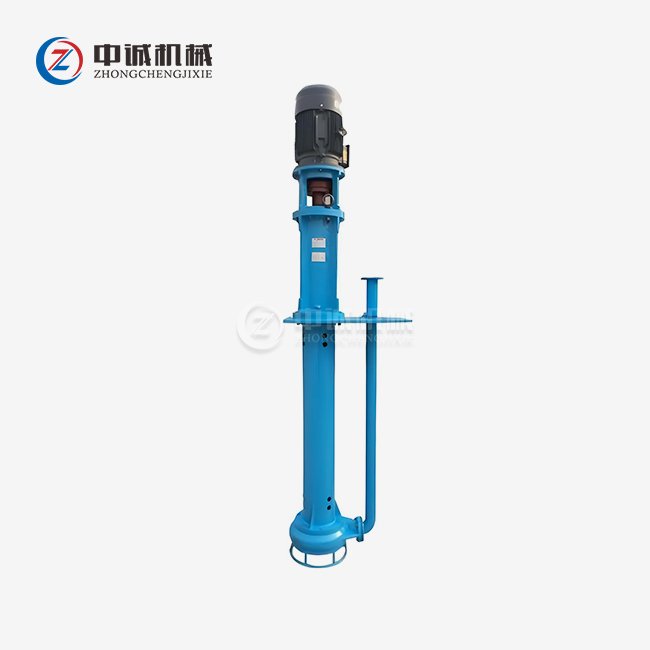
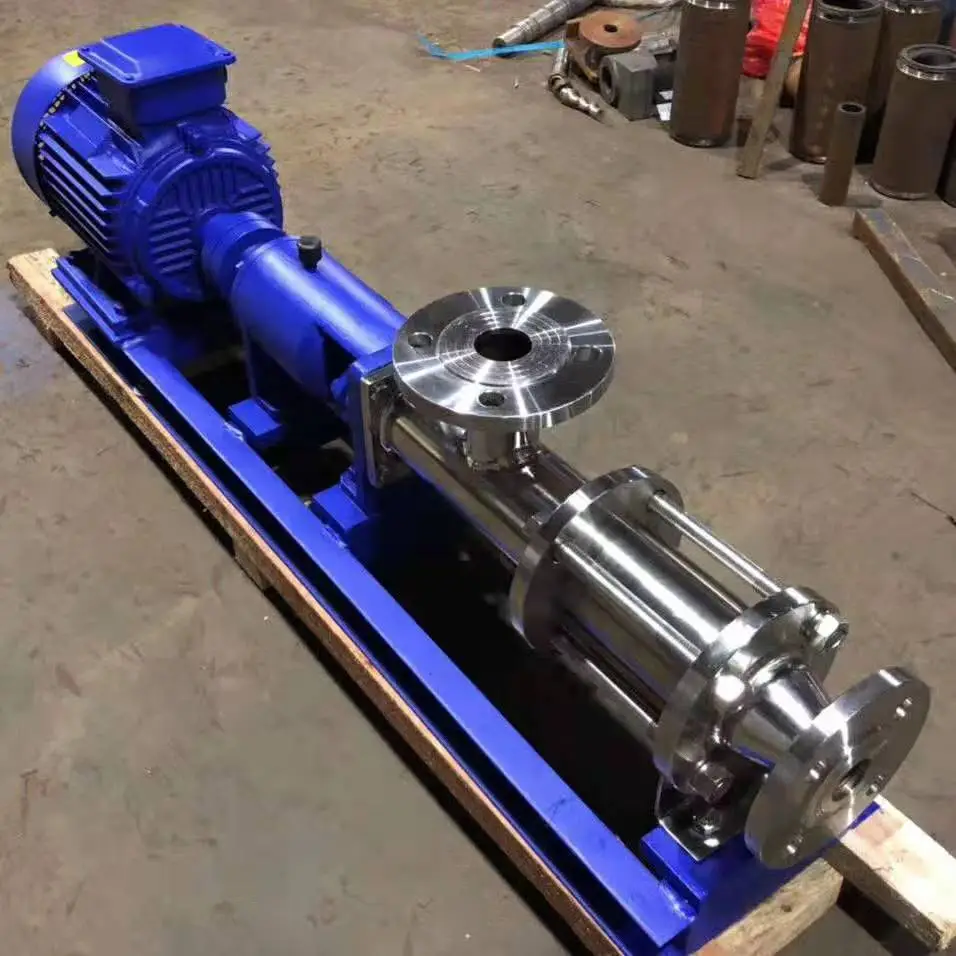
What does the ZC Screw Pump's main part do? The slurry is fed quickly and accurately by a positive displacement pump. It has a width of 80 to 200 mm and can handle 10 to 90 m³/h.
- High efficiency and stable operation: The pump is stable and works very well for both moving and self-priming. The flow of slurry stays steady with quantitative feeding that doesn't pulse, and low noise levels allow for safe, long-term production on busy sites. Separators and dose lines also work better when there is steady flow because they don't need to be changed all the time.
- Strong medium adaptability: The pump can move thick fluids with particles and solids in them without damaging the material. It can be used in the chemical and oil industries because of this. Structure that is simple and easy to maintain: The small size makes it easy to take apart and maintain every day, which helps techs get to worn-out parts faster and cut down on service stops.
- Simple structure and easy maintenance: This makes it easier for the slurry to move through and clears out blockages. Every order from ZHONGCHENGJIXIE comes with full expert service, standard export packaging, and the ability to make changes to the order as needed.
They fix common issues in production, like feed that isn't stable, broken materials, and changes that take too long.
Industrial Applications
The ZC Screw Pump can be used in many places, like the food industry, chemical processing, the oil field to keep solids in check, and more. It helps keep the flow of the mud steady in an oil field. Sludge is used to move thick feed toward filtration at sites that treat it. Slow and gentle movement is good for people who work with chemicals and food. The idea can be used in a lot of different ways, as shown by the fact that Screw Pumps are used to move heavy oils and ship fuel and lube oil systems. For this job, you can tell us what line size and volume you need.
Maintenance and Supplier Evaluation
If you check your pump often, it will keep working. I believe that regular checks should be made on the motor power, vibration, temperature, strainers, leaks, joints, seals, and motor lubrication. There should be old parts, lines that are clogged, exit valves that are open, and the pump should be able to turn. Change the old parts with spares that work when the flow drops or the loss gets worse. It's important to compare different providers based on their technical know-how, customer service, wait time, guarantee, and testing records. ZHONGCHENGJIXIE has been in business for more than 30 years and has ISO 9001/14001/45001, HSE, TÜV, and BV approvals. It is a direct producer. Their warranty lasts for one year as well.
Conclusion
There is a choice between cheaper and more stable pumps. This is because high-viscosity fluids make friction, torque, and heat worse. A Screw Pump moves fluid forward through holes that are closed off and move. This makes a steady flow with good pressure and few pulses. Plans with only one screw work best for solids and sludge. Types with two or three screws work well for oils, chemicals, and clean lubricants. A Screw Pump needs to be protected from dry-run and overpressure, but it keeps flowing better than centrifugal, gear, and diaphragm pumps as the viscosity grows. To make the right choice, you need to have all the fluid data, a flow and pressure check, and the right motor, controls, and materials. Having it checked regularly and having extra parts that work with it will help it last longer. Use what you've learned by matching the pump type to the fluid and the job. Also, don't just look at the price; think about how much it will cost you to own it over time.
FAQ
Can a Screw Pump run dry?
No, the fluid that is pumped around keeps the moving parts cool and smooth. A progressive hollow stator needs a dry-run safety because even short periods of dry running can hurt it.
How does viscosity affect performance?
With this type of pump, the flow stays the same, but the force and power need to go up. Connect the motor to the heaviest fluid you plan to use.
How do I estimate flow?
To find the volumetric efficiency, type Q = V × N × ηv. This is the speed times the number of turns. Then look at the shape that the maker made.
Why does a pump fail to build pressure?
The most common causes are the wrong movement, air in the suction line, clogged lines, an escape valve that is open, or old parts on the rotor or stator.
What does the ZC Screw Pump handle?
Slurry can be fed at speeds between 10 and 90 m³/h, and the inlet diameter can be between 80 and 200 mm. This includes fluids with a high viscosity that have solids and particles mixed in them.
Request a Screw Pump Recommendation or Quotation
Are you ready to see what you can do? Please tell ZHONGCHENGJIXIE the name of the fluid, as well as its viscosity, flow rate, pressure, temperature, and solids content. They will then help you choose the best Screw Pump. We only make Screw Pumps, so we can make them however you want. We ship in-stock items in three days, and custom orders take fifteen days. We also offer full help with technology. Email oliver@zcgukong.com or visit zcsolidscontrol.com right away to get a price.
References
1. API Standard 676: Positive Displacement Pumps—Rotary, American Petroleum Institute, 2009
2. ANSI/HI 3.1–3.5 Rotary Pumps Standard, Hydraulic Institute, 2015
3. ANSI/HI 9.6.7 Guideline for Effects of Liquid Viscosity on Rotodynamic Pump Performance, Hydraulic Institute, 2015
4. Pump Handbook, 4th Edition, McGraw-Hill, 2008
5. Handbook of Pumps and Pumping, Elsevier, 2006
6. Centrifugal Pumps, 4th Edition, Springer, 2020