Solids Control Systems directly improve fluid recovery by mechanically separating drilled solids from circulating mud through multiple staged processes. Each stage—shale shakers, vacuum degassers, desanders, desilters, and decanter centrifuges—targets progressively finer particle sizes, from coarse cuttings down to 2–5 microns. This staged approach keeps drilling fluid properties stable, allowing operators to recycle more than 90% of their mud volume. The result is lower fluid replacement costs, reduced waste discharge, and fewer downhole incidents caused by degraded mud quality across oil and gas, trenchless HDD, geothermal, and mining applications.
Understanding Solids Control Systems and Their Role in Fluid Recovery
What a Solid Control System Actually Does
A mud purification system is a group of mechanical sorting units that work together to remove solids that aren't needed from drilling fluid before sending it back to the active pit. During drilling, small pieces of rock, sand, and fine silt are constantly introduced into the system. If these solids aren't separated, they build up, which makes the fluid denser and speeds up the wear on pumps, drill bits, and other downhole tools. The whole point is to keep the properties of the fluid within certain ranges so that the process can continue without any costly breaks.
Core Components and Their Functions
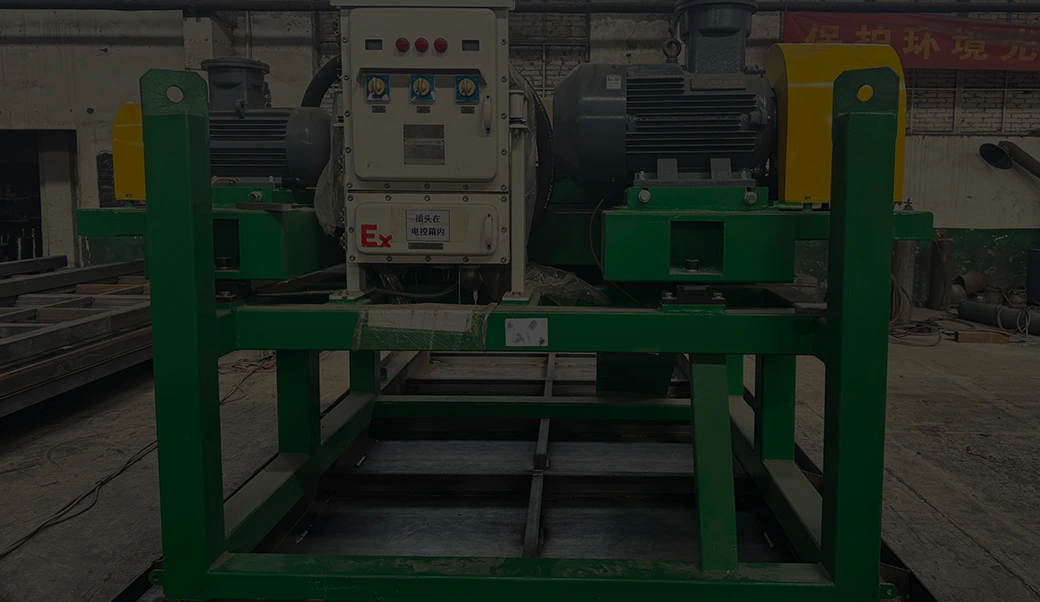
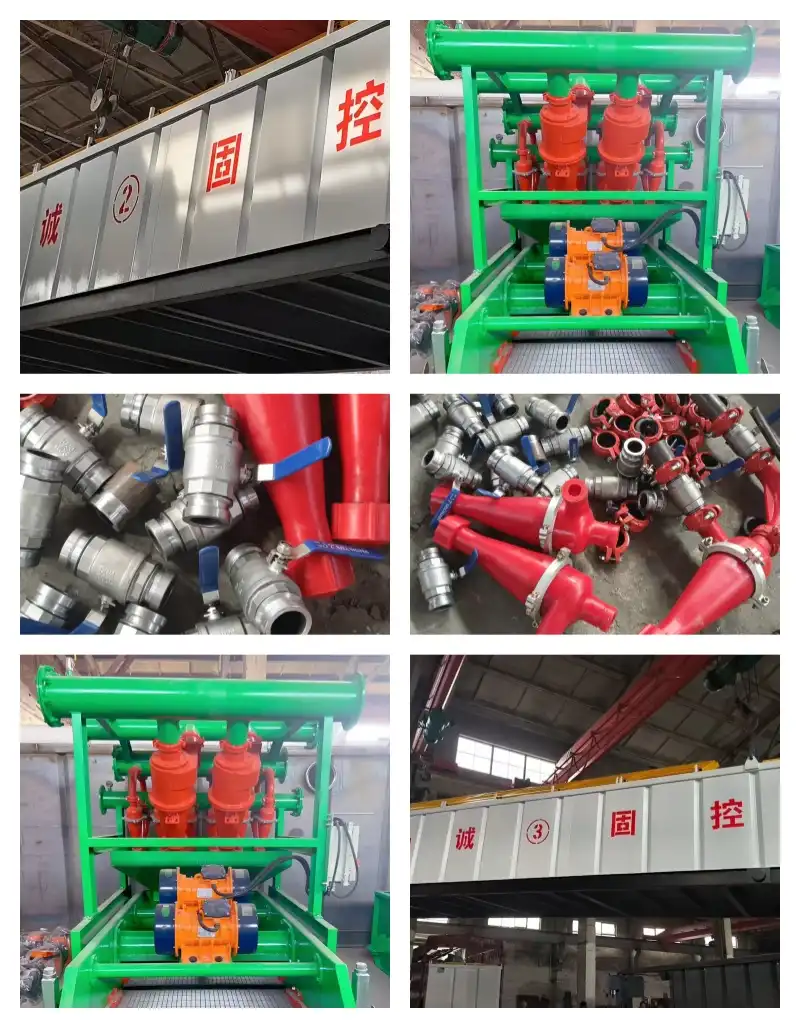
A typical four- or five-stage setup starts with the shale shaker, which uses rotating screens rated by API RP 13C mesh specs to get rid of the big cuttings. After that, the vacuum degasser removes gas bubbles that are entrained in the mud and would otherwise make it less dense, which would make primary well control less reliable. Then, desanders use 8–12-inch hydrocyclone cones to go after particles between 45 and 74 microns, and desilters use 4-inch cones to go after particles between 15 and 44 microns. Decanter centrifuges sort colloidal grains as small as 2 to 5 microns by spinning at more than 3,000 G. They handle the smallest particles.
How Multi-Stage Separation Drives Recovery Rates?
At each stage of the process, some of the base fluid is recovered that would have been lost with the solids. According to a study in the Journal of Petroleum Technology, drilling speed goes up by about 10% for every 1% drop in the amount of solids that are dug. When everything works right, a closed-loop system can recycle more than 90% of the drilling fluid amount per well. This means that the costs of chemical additives are lower and there is less trash to get rid of.
Common Challenges in Fluid Recovery and How Solid Control Equipment Addresses Them
Contamination, Wear, and Unplanned Downtime
When separation is done by hand or in a single stage, small, rough particles get mixed in with the mud. These particles wear down pump liners and drill bit nozzles like sandpaper, causing them to break down without warning. Operators can lose thousands of dollars every hour when a single drilling rig breaks down. This makes Solids Control Systems one of the most expensive problems on any site.
How Modern Automated Systems Respond?
Modern equipment for treating mud uses PLC-based controls and real-time density tracking to find changes in the mud's qualities before they damage the equipment. Decanter centrifuges have automated feed control that changes the bowl speed and differential torque based on the amount of solids being loaded. This keeps the cut points constant without any help from a person. This real-time action cuts down on operator mistakes and keeps the efficiency of separation fixed over long shifts.
Proven Operational and Environmental Gains
Field data from coastal drilling projects in North America shows that a properly set-up multi-stage system lowers the amount of trash slurry discharged per well by 200 to 400 m³ compared to traditional open-pit methods. This cut directly lowers the cost of moving hazardous trash and helps people follow EPA rules about release. Operating costs for a single well drop by 15–25% when fluid recovery rates go above 90%, according to reports from oilfield service companies that work in shale areas.
Comparative Analysis: Solid Control Systems vs. Other Fluid Recovery Solutions
Multi-Stage Systems vs. Conventional Settling Pits
Gravity settling pits need a lot of surface area and can only sort coarse material. Fine colloidal particles can't be removed, and the recovered fluid still has rough parts that can damage equipment further down the line. Multistage mechanical separation can separate particles as small as 2–5 microns and can handle hundreds of cubic meters per hour on a small skid, which is something that settling pits can't do.
Automated vs. Manual Separation Equipment
Cleaning the screen and adjusting the hydrocyclone by hand introduces user error that causes cut points to be irregular. Automated systems with shaking monitors and G-force testing maintain the design's performance when it's under load, which lowers the chance of screen blinding and skipping. Automated equipment with NACE-compliant coatings and IP55 electrical protection keeps people from coming into direct contact with toxic mud in dangerous environments that contain H2S or high-salinity fluids.
Choosing the Right System for Your Operation
What you should choose for Solids Control Systems depends on the flow rate, the type of mud, and the restrictions of the site. Here are the main things that buying experts look at when making decisions:
- Processing capacity (m³/h): The system must handle peak flow rates without bypassing stages, particularly during high-rate drilling intervals.
- Mud type compatibility: Oil-based mud requires high-G drying shakers and vertical cuttings dryers to meet oil-on-cuttings environmental limits; water-based mud systems have different screen and centrifuge configurations.
- Site footprint and mobility: Skid-mounted designs allow rapid relocation between wells, which is critical for land drilling contractors running multiple rigs across a lease.
These things show whether a standard configuration or a package that was specially made for the project is better. System capacity should be matched to rig size, which ranges from ZJ10 to ZJ90. This stops both under-processing and spending too much on capital that isn't needed.
Procurement Guide: Selecting and Purchasing Solid Control Equipment for Industrial Applications
Evaluating Manufacturers and Certifications
The first thing that is looked at in a qualified purchase review is the state of the certification. If a manufacturer has ISO 9001 for quality management, ISO 14001 for environmental management, and ISO 45001 for occupational health, it shows that their production processes meet international standards that can be checked. Extra approvals from TÜV and BV provide independent third-party proof of product quality, which greatly lowers the risk of buying from other countries.
Factory Acceptance Testing and Inspection Checklist
During factory acceptance testing (FAT), procurement teams should make sure of the following things before accepting any system:
- Dynamic balancing tests on centrifuge bowls to prevent high-speed vibration in the field.
- G-force verification on shale shakers using digital accelerometers under full load conditions.
- Hydrostatic pressure testing of hydrocyclone manifolds at 1.5 times operating pressure to confirm zero leakage.
- Coating inspection for Sa 2.5 sandblasted surfaces with NACE-compliant coatings for corrosive service.
- 24–48-hour continuous FAT run to confirm stable performance before shipment.
These tests keep buyers safe from problems in the field that could stop a whole drilling project.
Customization and Delivery Expectations
System configurations for Solids Control Systems need to be different for each drilling rig because of differences in size, processing power, motor requirements, and electrical standards. As part of the standard package, buyers should make sure that the manufacturer can provide engineering drawings, process flowcharts, and operation manuals. Delivery times are also important. Standard versions that are in stock should be shipped within three days, and custom-engineered systems should have a clear wait time of about fifteen days.
Maintenance Best Practices to Maximize System Efficiency and Longevity
Routine Inspection and Replacement Schedules
Regular repair of high-wear parts is needed for consistent function. Before every shift, shaker screens need to be checked for tears or blindness. The tungsten carbide tiles and main bearings of the centrifuge screw conveyor should be checked at the times suggested by the manufacturer. When the discharge pattern changes from a spray to a rope discharge, which means that separation is less effective, the hydrocyclone apex valves need to be replaced.
Predictive Maintenance Through Technology
IoT-enabled vibration sensors on shaker frames and centrifuge bearing housings send real-time data to control panels, which find unusual vibration patterns before they cause a mechanical failure. With remote diagnostic access, engineering teams can check on the health of equipment without having to go to the rig site. The overall service life of major parts is increased, and unplanned downtime is cut down.
Protecting Long-Term Investment Value
A mud sorting machine that is well taken care of will keep separating things well for many years. The total cost of ownership is always cheaper for operators who do planned maintenance than for those who wait until something breaks before doing maintenance. The cost of planned maintenance is always less than the cost of emergency repairs during drilling. This is because replacement parts for centrifuges, shakers, and hydrocyclone cones are readily available from reputable manufacturers.
Conclusion
How well Solids Control Systems take solids out of moving mud directly affects how well fluids are recovered in drilling and other industrial processes. A multi-stage mud purification system takes care of this for all particle sizes, protects equipment further down the line, lowers trash output, and cuts running costs per well by 15–25%. When managers make purchases based on proper certification review, factory acceptance testing, and matched system capacity, they get a reliable asset that pays for itself over many well cycles. That value goes even further because good maintenance keeps the separation performance the same from one well to the last.
FAQ
How often should shale shaker screens be inspected?
Before every shift, screens should be looked at carefully. If your screen has tears, panel separation, or blind spots that can't be cleaned with water, you should get a new one. If you use the right API RP 13C mesh size for your mud type and flow rate, the screen will last longer, and the cut point will stay accurate.
Can this equipment handle oil-based mud?
Yes. To get the oil-on-cuttings level down to a level that doesn't harm the environment, oil-based mud processing needs high-G drying shakers and, most of the time, vertical cuttings dryers. Check with your provider to make sure that the way the system is set up meets OBM standards.
What is the expected return on investment timeline?
Costs are usually recovered in the first one to three wells, but this depends on how much mud costs and how much the daily rig rate is. The main things that have led to this timeline are recycling rates for drilling fluid above 90% and a 15–25% drop in the cost of running a single well.
What is the difference between a desander and a desilter?
Desanders use cones that are 8 to 12 inches long to get rid of 45 to 74 micron particles. Desilters aim for the 15–44 micron range with 4-inch cones. For better use of space, both are usually installed on the same manifold as a combined mud cleaner.
Get a Custom Quote From ZHONGCHENGJIXIE — Trusted Solids Control Systems Manufacturer
ZHONGCHENGJIXIE sells certified Solids Control Systems to EPC projects, drilling contractors, and oilfield service companies all over the world. Our ZC line includes rigs from ZJ10 to ZJ90. Standard setups are shipped within three days, and our company is certified by ISO 9001/14001/45001, TÜV, BV, and HSE. Get in touch with our tech team right away to get a quote and a unique configuration. Oliver@zcgukong.com is his email address, and zcsolidscontrol.com is his website.
References
1. Journal of Petroleum Technology — "Solids Control Efficiency and Its Impact on Drilling Fluid Performance," SPE Publications, 2019.
2. API Recommended Practice 13C — "Evaluation and Specification of Drilling Fluids Screening Equipment," American Petroleum Institute, 2010.
3. World Oil — "Advances in Closed-Loop Drilling Fluid Management and Waste Reduction," Gulf Publishing Company, 2021.
4. Drilling Engineering — "Decanter Centrifuge Applications in Weighted Mud Systems," Society of Petroleum Engineers, 2018.
5. Environmental Science & Technology — "Drilling Waste Management and Fluid Recovery Practices in Shale Operations," American Chemical Society, 2020.
6. Oil & Gas Journal — "Comparative Analysis of Solids Removal Technologies for Land Drilling Operations," PennWell Corporation, 2022.