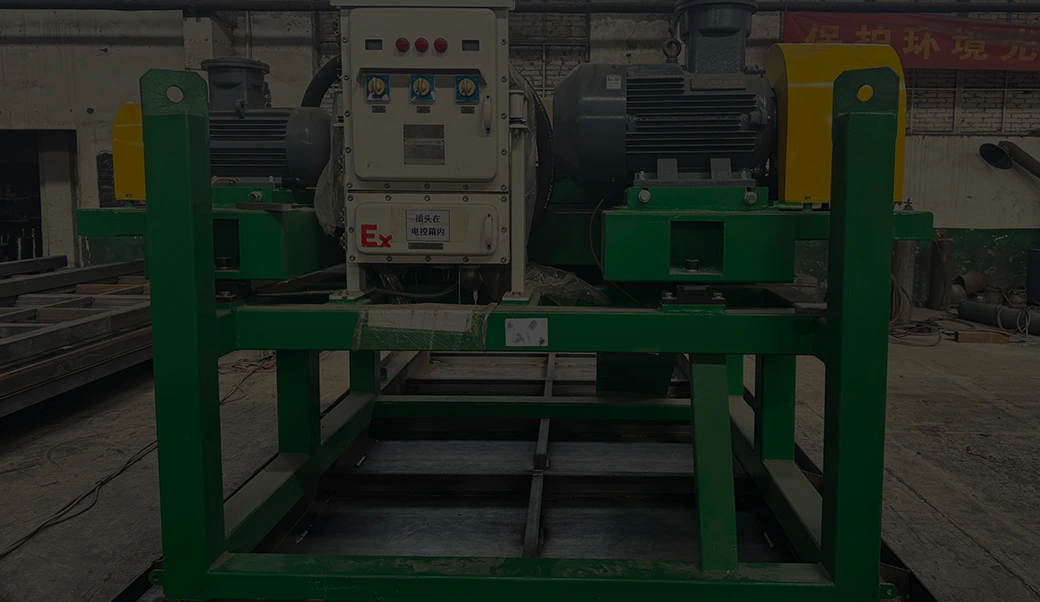
When drilling fluid additives fail to hydrate properly, the consequences ripple through every stage of the operation—unstable wellbore conditions, degraded mud rheology, and expensive downtime. A high-efficiency shear pump addresses this problem at its source. By generating intense mechanical shear forces, it breaks down undissolved polymer clusters and bentonite agglomerates, achieving uniform chemical activation across the entire mud system. At Zhongcheng Machinery, our shear pump lineup covers capacities from 28 to 320 m³/h with motor power ranging from 5.5 to 75 kW, making it a reliable core component for drilling fluid preparation on rigs of all scales.
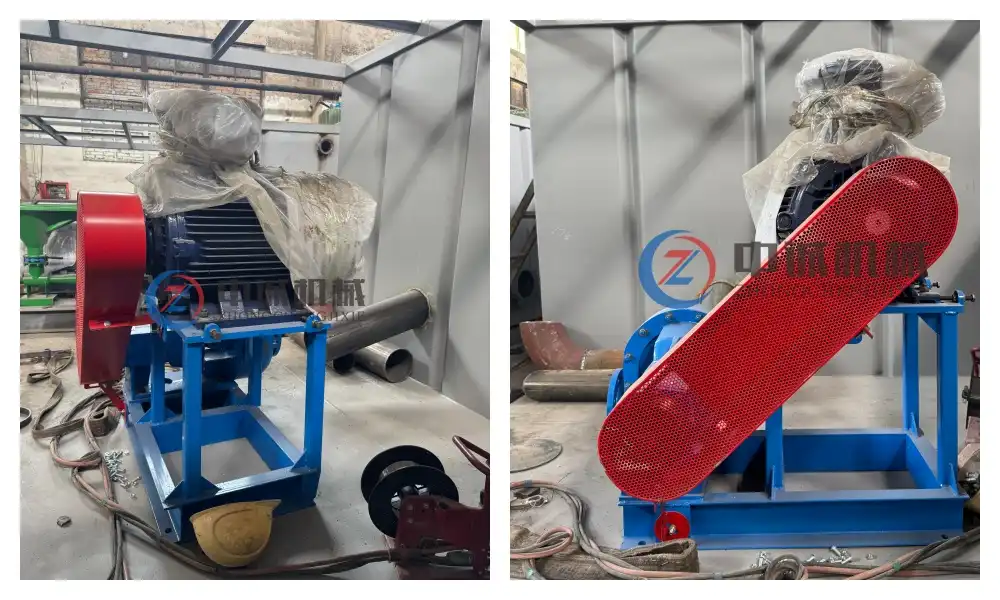
Understanding Shear Pumps and Their Role in Polymer Activation
A Shear Pump is more than just a way to move fluids; it's also a precision mixing tool designed to fix the "fish-eye" problem, which is one of the most common issues in managing drilling fluids. When polymers or bentonite are added to the mud pit through a normal hopper, the top layer quickly absorbs water and turns into a gel skin, trapping the dry stuff in the middle. Normal centrifugal pumps don't have enough force to break this construction. The high-speed turbine and rotor design of a Shear Pump creates turbulence strong enough to break up these clumps at the molecular level.
How the Shearing Mechanism Works
The impeller spins at speeds of 1,450 to 2,900 RPM, pushing fluid through a small space between the rotor and stator. Every particle of fluid in this geometry is constantly sped up, slowed down, and hit by other particles. This creates shear rates that are much higher than what can be achieved with regular mixing tools. This leads to full additive hydration, which has been linked by studies on drilling fluid rheology to 15–20% less chemical use and shorter mixing cycles that can be measured.
Key Challenges in Polymer Activation and How This Equipment Solves Them
Incomplete polymer dispersion isn't just a science issue; it's also a problem for business and money. Solids that haven't been dissolved build up in mud lines, which speeds up the wear on equipment further downstream, like shale crushers and centrifuges, and changes the rheological consistency that keeps the wellbore stable. When mud qualities change from what was expected, it adds to the risks that operations teams face when working with wells that are under a lot of pressure and heat.
This is how a well-designed mud cutting tool fixes these problems in the field:
- Consistent shear delivery across variable fluid densities: Professional-grade units can handle mud densities of up to 2.4 g/cm³ as long as the motor is the right size for the specific gravity. Zhongcheng's range includes motors with up to 75 kW of power, which can handle heavy mud systems used for directional and deep drills.
- Material integrity under abrasive exposure: The rotor, casing, and seal sides are made of high-chrome metals and have coated wear areas to protect the material from wear and tear. When kept up with a working cooling system, tungsten carbide mechanical seals can safely work for more than 500 to 800 hours without needing to be inspected in high-solids situations.
- Reduced downstream solid control burden: The unit delivers a uniform mud stream, which lowers the number of large pieces that reach the shale shaker. This increases the screen's life and makes solid control more effective overall.
These design features directly lead to fewer unplanned shutdowns and more predictable drilling performance, which are the two things that procurement managers and rig supervisors say are the most important things in equipment.
Selecting the Right Shear Pump for Drilling Mud Applications
When buying mud mixing equipment, there are more factors to consider than just the rated flow capacity. Which specifications are important depend on the job, such as the type of rig, the weight of the mud, the chemistry of the polymers, and the temperature of the area. Zhongcheng's Shear Pumps have a head range of 21 to 40 m and a capacity range of 28 to 320 m³/h. They are made to work with mud systems on rigs that are ZJ30 to ZJ90 in size.
Critical Selection Criteria
The activation quality is based on the shear rate capacity and the shape of the impeller. Service life is based on how resistant wet parts are to wear. Maintenance times depend on the shape of the seal. When you're looking at a polymer activation pump, make sure the impeller has been dynamically balanced to a G2.5 level. This stops vibrations from breaking the seal, which is the main reason why units shut down too soon. The pump case should be tested hydrostatically at 1.5 times its maximum working pressure before it leaves the plant. As part of Zhongcheng's quality control method, material spectrometry is used to check the makeup of the alloy, and precise clearance testing is done between the impeller and the stator.
Operational Excellence: Maintenance and Troubleshooting
Preventive maintenance is important for making sure that a drilling fluid Shear Pump unit works well. The part that wears out the fastest is the mechanical seal. In places with a lot of solid mud, the condition of the seal face should be checked every 500 to 800 hours of operation. It is important to keep the cooling circuit working because, in most field situations, heat buildup speeds up seal failure faster than impact wear.
Another failure mode that you should keep an eye on is cavitation. It usually means that there isn't enough suction head or that the inlet is partly closed. Finding it early on through vibration and noise analysis stops impeller pitting and makes equipment last a lot longer. Every unit from Zhongcheng comes with a lot of technical information, like operation and maintenance instructions, engineering drawings, and diagrams of the parts that make up the unit. This way, site maintenance teams can use these documents as accurate guides for every process.
The company also has a fast spare parts supply chain and a guarantee that covers everything for one year. In-stock units are sent out within three days, and special setups take fifteen days to arrive. This transportation skill is especially useful for oilfield service companies that are in charge of several jobs at once in different places.
Future Trends in Mud Shearing Technology
The drilling business is changing to become smarter and smaller. IoT-enabled sensors built into pump drive systems now allow tracking of sound, temperature, and flow rates in real time. This data is sent to predictive maintenance platforms, which find problems before they break down. New developments in material science, especially in ceramic-polymer composite coatings, are making wear parts last longer in muddy environments that are harsh on chemicals.
More and more people are using modular impeller-stator systems because they let the shear zone shape be changed to work with different polymer chemicals without having to replace the whole unit. Another strong driver is energy efficiency. Variable frequency drives (VFDs) let the shearing intensity be fine-tuned, which protects delicate polymer chains from being over-sheared and lowers power use during the mixing cycle's lower-demand phases. When procurement teams ask for VFD-compatible units now, they set up their businesses to have lower total costs over the life of the equipment.
Conclusion
In today's mud systems, a high-efficiency Shear Pump is essential—it's what makes polymer and bentonite mixtures work the way their chemical datasheets say they will. Incomplete hydration wastes expensive additives, changes the properties of the drilling fluid, and makes problems worse for all the solid control equipment that comes after. Zhongcheng's Shear Pump range, which is certified by ISO 9001/14001/45001, HSE, TÜV, and BV, is designed to eliminate that risk in a wide range of drilling tasks. Because it is built to last, makes little noise, and works with all systems, buying it is an investment that pays off over the life of the rig.
FAQ
Why choose a shear pump over a standard mixing hopper?
A hopper adds solids to the mud stream, but it can't get past the barrier of water that forms around dry polymer particles. The energy needed to break up those clumps and full chemical hydration can only be delivered by a mechanical cutting device. This difference has a direct effect on the consistency of the mud and how well the additives are used.
How often should the mechanical seal be inspected?
In situations with a lot of solids, the state of the seal should be checked every 500 to 800 hours of use. If you take care of the cooling system, the tungsten carbide seal faces will last longer. Not paying attention to the flow of water is the most common reason why seals fail early in the field.
Can shearing intensity be adjusted on-site?
Yes. You can change the shearing strength by changing the impeller-to-stator clearance during regular maintenance or by changing the speed of the blade using a variable frequency drive (VFD). With VFD control, workers can fit the shear rate to the chemistry of a certain polymer without having to use mechanical tools.
What mud density can these units handle?
Professional mud cutting tools can handle densities of up to 2.4 g/cm³, as long as the motor is the right size for the specific gravity of the fluid. The 5.5–75 kW motor range on Zhongcheng can handle both normal and heavyweight mud systems.
Does the equipment affect fluid viscosity?
When compared to normal mixing, full hydration of additives usually raises the effective viscosity. Over-shearing some types of polymers, on the other hand, can shorten molecule chains and make the fluid less viscous. VFD-equipped units let you precisely control the unit to avoid this outcome.
Partner With Zhongcheng for Your Next Drilling Fluid Project
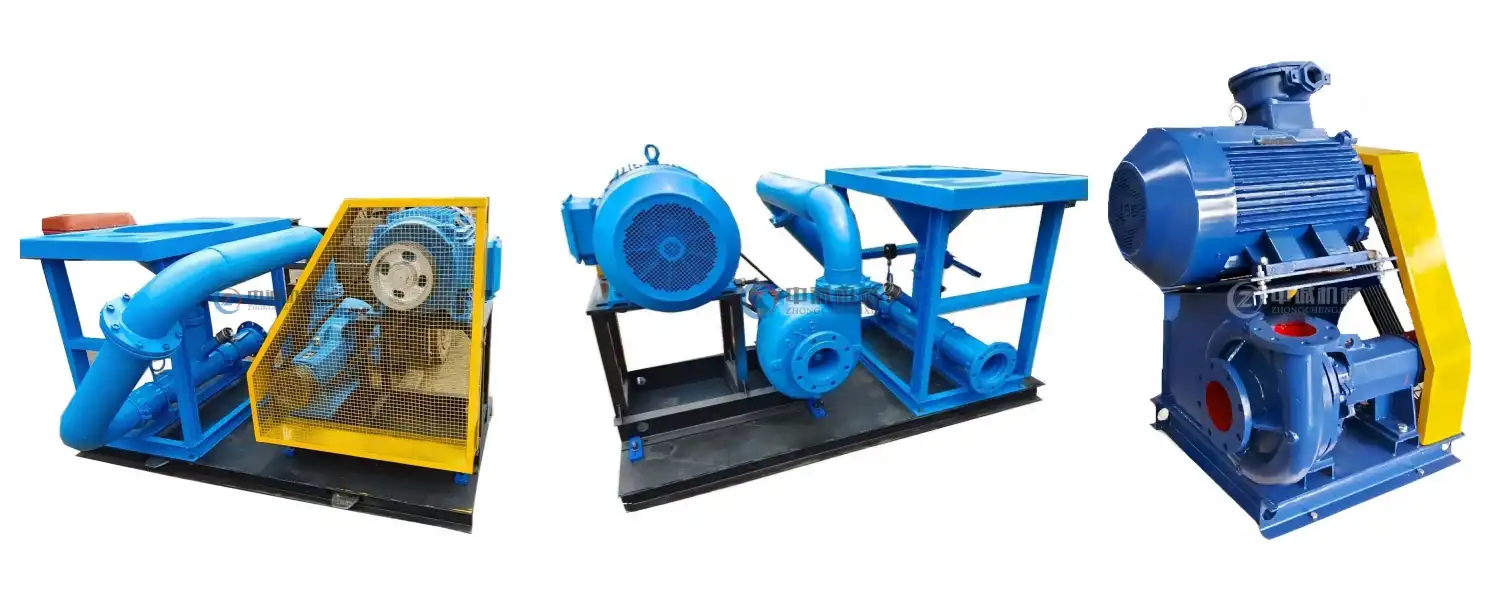
ZHONGCHENGJIXIE has been providing Shear Pump solutions to oilfield managers and drilling companies in China and around the world for many years, and their products are certified by ISO, TÜV, BV, and HSE. As a direct maker of Shear Pumps with our own designs and the ability to make 200 sets of pumps every year, we can offer reasonable prices, unique configurations, and 3-day shipping on units that are in stock. You can email our engineering team at oliver@zcgukong.com or go to zcsolidscontrol.com to get details, technical drawings, or a quote that is tailored to your project.
References
1. Bourgoyne, A. T., Millheim, K. K., Chenevert, M. E., & Young, F. S. — Applied Drilling Engineering, Society of Petroleum Engineers, 1986.
2. Caenn, R., Darley, H. C. H., & Gray, G. R. — Composition and Properties of Drilling and Completion Fluids, Gulf Professional Publishing, 2011.
3. API Recommended Practice 13B-1 — Recommended Practice for Field Testing Water-Based Drilling Fluids, American Petroleum Institute, 2019.
4. Saasen, A., & Løklingholm, G. — "The Effect of Drilling Fluid Rheological Properties on Hole Cleaning," SPE/IADC Drilling Conference Proceedings, SPE, 2002.
5. Tehrani, A. — "Behaviour of Suspensions and Emulsions in Drilling Fluids," Annual Transactions of the Nordic Rheology Society, Vol. 15, 2007.
6. Lummus, J. L., & Azar, J. J. — Drilling Fluids Optimization: A Practical Field Approach, PennWell Publishing, 1986.