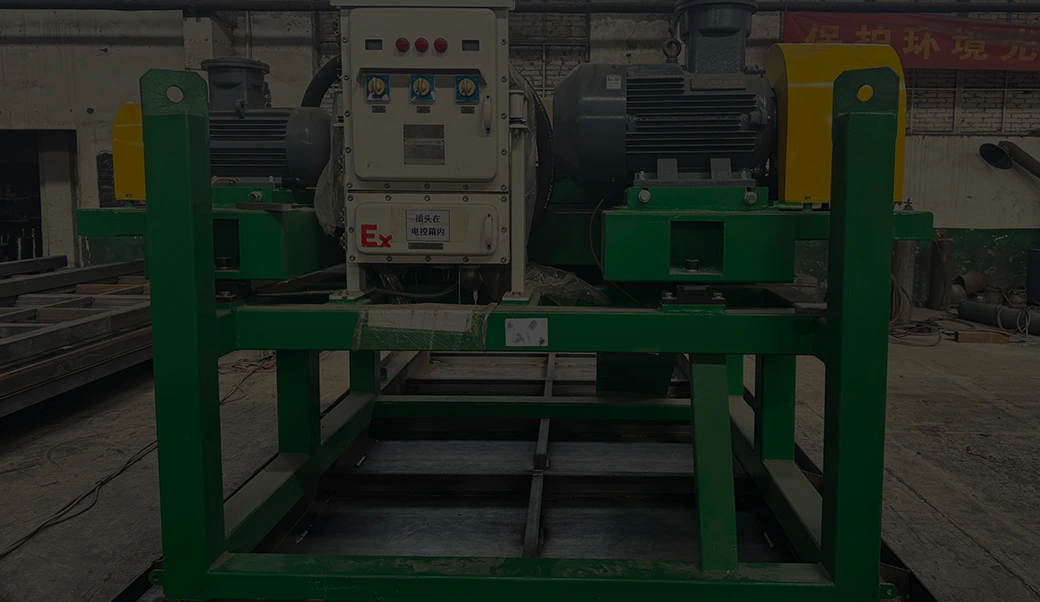
Maintaining consistent drilling fluid properties is one of the most demanding tasks on any active rig. Inconsistent mud weight, poor additive dispersion, and polymer clumping directly threaten wellbore stability and increase non-productive time. A jet mud mixer addresses these problems at the source. By generating intense shear forces through high-velocity Venturi injection, it draws dry additives—barite, bentonite, polymers—from a hopper into the base fluid, producing a homogeneous mixture far more reliably than paddle-type agitators. For operations spanning 1,000 m to 9,000 m drilling depth, this consistency is not optional; it is operationally necessary.
Understanding Jet Mud Mixer Technology and Its Operating Principles
What the Equipment Actually Is
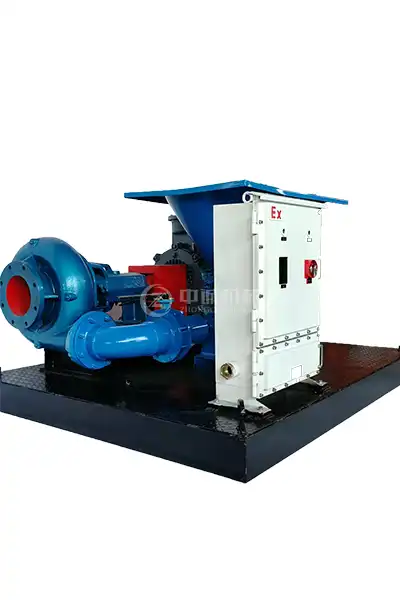
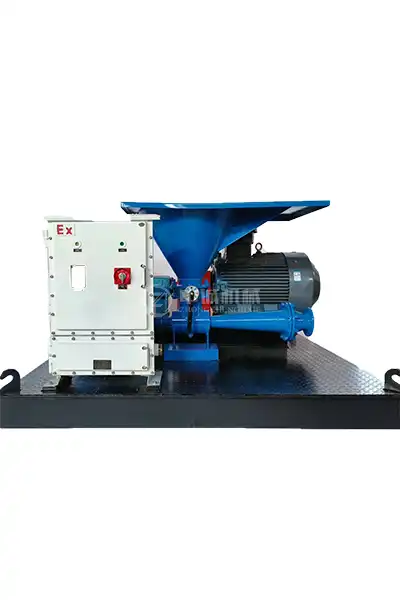
A jet mud mixer is the main piece of equipment used to prepare and weigh drilling fluid. The Venturi principle is used: a centrifugal pump sends fluid through a narrow tube at a high speed. This makes a low-pressure zone that pulls solids from the bin into the flow stream. The end result is complete blending in a single pass, without the dead spots that often happen with paddle systems that use tanks.
Primary Components and How They Work Together
A centrifugal pump, a Venturi hopper, a mixing nozzle, butterfly control valves, and pipework that connects them all make up the system. The pressure at the pump's intake is between 0.25 and 0.4 MPa. High-performance butterfly valves, which come in either stainless steel or a high-hardness metal, allow workers to precisely control the rate of additive feed during rapid weighting operations.
Single-Jet vs. Dual-Jet Configurations
ZHONGCHENGJIXIE has two different types of configurations: Single-unit (one hopper and one pump) and Dual-unit (two hoppers and two pumps). The hopper and pump set can be mounted on the same skid or connected by separate pipes, so they can work with different rig tank-top sizes. The motor has a power range of 37 to 55 kW, and the dispensing speed is 60 to 100 kg/min. This means that the mud weight can be changed quickly, even when well control is time-sensitive.
Challenges of Maintaining Mud Consistency in Complex Drilling Conditions
Why Conventional Mixers Fall Short
Paddle-style agitators move the energy around the mud tank in a random way. Solids settle in corners, polymers form clumps that don't break (these are often called "fish-eyes"), and barite forms layers as soon as the mixing stops. In deep, high-pressure rocks, a change in density of just 0.05 g/cm³ can make it harder to control the well and cost a lot to fix.
Environmental Stress Factors on the Rig
Equipment at drilling sites is constantly being shaken, the temperature can change, the sand can be rough, and the brine fluids can rust. Normal nozzles and seals wear out faster in these situations. ZHONGCHENGJIXIE makes nozzles out of metals that don't wear down easily for mud with a lot of sand in it. Full stainless steel models are available for ocean salt spray or high-salinity mud conditions, which keep them from failing too soon because of corrosion.
Chemical Instability in Special Formations
Special chemical mud systems, which can be oil- or synthetic-based fluids with tight rheological limits, are often needed for shale gas, coalbed methane, and geothermal wells. When oil-wetting agents or viscosifiers are added to these systems, they need a high level of shear that regular mixers can't always provide. In a Venturi-based system, the optimized ejector flow path keeps fluid properties within the design window and prevents clogging. This leads to better mixing regularity.
Evaluating the Benefits of Jet Mud Mixers for Complex Drilling
Field data makes it possible to see the difference in performance between Venturi-based mixing and other methods. A study in the journal SPE Drilling & Completion found that even distribution of mud weight lowered the rate of bit wear and increased the rate of entry by keeping the hydraulic pressure at the bit face constant. Here are the main benefits this device gives you:
- Powerful shear and uniform concentration: High-pressure injection generates intense shear forces that break polymer chains quickly and distribute weighting material evenly, completely eliminating clumping across both heavy barite slurries and long-chain polymer systems.
- Flexible layout for space-constrained rigs: The skid-mounted or pipe-connected installation option means the equipment adapts to ZJ30 through ZJ90 rig configurations without requiring tank modifications, reducing commissioning time significantly.
- Wear and corrosion resistance for harsh media: Wear-resistant alloy nozzles withstand abrasive barite and high-sand-content fluids, while stainless-steel variants protect against saline and corrosive offshore environments, extending service intervals.
- Precise dosing through quality valve control: High-performance butterfly valves allow operators to dial in additive feed rates accurately, reducing chemical waste and keeping total fluid cost per meter drilled lower than manual batch mixing methods.
Most drilling engineers have to deal with problems like uneven mud weight, polymer fish-eyes, chemical waste, and unexpected downtime due to equipment rust or clogging. These benefits directly address these problems. The pieces of equipment have at least an IP55 rating for electrical safety and are approved by ISO 9001/14001/45001, HSE, and TÜV & BV.
How to Choose the Right Jet Mud Mixer for Your Drilling Needs
Match Configuration to Rig Size and Depth
The main factor in selecting the size of a jet mud mixer is the depth of the drilling operation. Single-unit jet mud mixer configurations work well for rigs operating at shallower depths or requiring a modest amount of drilling mud. On the other hand, dual-unit jet mud mixer configurations are better suited to high-volume, deep drilling projects that need to quickly refill their fluid tanks. ZHONGCHENGJIXIE offers jet mud mixer solutions for drilling depths ranging from 1,000 m to 9,000 m, allowing contractors to select a suitable configuration based on rig capacity, mud volume, and operating requirements.
Evaluate Material Compatibility with Your Mud Program
Specifying an SS316 butterfly valve and an oil-based hopper will keep chemicals from breaking down if your drilling program uses salt-saturated brine, oil-based mud, or strong polymer systems. For water-based mud programs with a lot of solids, standard carbon steel versions with alloy nozzles work well.
Verify Certifications and Supplier Capability
People in charge of buying things should make sure that the supplier has third-party certifications that can be checked. Along with TÜV and BV approvals, ZHONGCHENGJIXIE has ISO 9001/14001/45001 certifications. The company sends stocked items within three days and completes custom orders within fifteen days. They are a direct producer with more than thirty years of experience in the field and more than a dozen unique patents. Each unit comes with full technical paperwork, such as engineering drawings, flowcharts, and operation instructions.
Maintenance and Troubleshooting Guide for Jet Mud Mixers
Routine Inspection Priorities
Every 500 hours of use, check the Venturi tip on the jet mud mixer for wear. A high-chromium nozzle in a jet mud mixer usually works well for 1,500 to 2,500 hours of use before the suction vacuum starts to drop. Every time the mud program changes, the butterfly valve seals and stem packing on the jet mud mixer should be checked to make sure there are no leaks that could affect dosing accuracy. Regular maintenance of the jet mud mixer helps maintain stable mixing performance and reliable additive control during drilling operations.
Diagnosing Weak Hopper Suction
Most of the time, weak suction at the hopper is caused by either not enough inlet pressure or a partially blocked nozzle orifice. Check to see if the centrifugal pump provides the 0.3 MPa that it is supposed to at the mixer's entrance. If the pressure is right but the suction is still weak, take off the nozzle and look for scaling or abrasive wear deposits that make the throat diameter smaller.
Preventing Downtime Through Operator Training
With every piece of equipment they send, ZHONGCHENGJIXIE offers installation help, commissioning support, and full technical training. Most typical failures can be avoided if operators are trained on the right additive feed rates and valve sequence. For example, polymer bridging in the hopper throat and over-pressurization of the mixing manifold can be avoided. The full guarantee on the equipment lasts for one year, and extra parts are kept on hand so they can be sent out quickly.
Conclusion
A jet mud mixer does make the consistency of the mud better for difficult drilling conditions, and it is well known how this happens. The equipment uses Venturi-principle shear forces to make the drilling fluid density and additive distribution consistent, which is something that paddle mixers can't do on a large scale. The performance data, material choices, and configuration flexibility of this type of equipment make it a good operational investment for procurement managers, drilling engineers, and rig managers who are looking at mud circulation upgrades. When you choose a certified direct manufacturer with a history of field deployment, you lower both the technical risk and the total cost of ownership over the life of the equipment.
FAQ
Can this equipment handle oil-based and synthetic mud systems?
Yes. Units with chemical-resistant butterfly valves and stainless steel hoppers can reliably handle oil-based, synthetic-based, and salt-saturated mud systems. For water-based systems, standard carbon steel units work well.
What is the typical nozzle service life?
Depending on how rough the media is, a high-chromium metal needle can be used for about 1,500 to 2,500 hours. There are tungsten carbide choices for uses that are very rough.
Does the equipment meet hazardous zone safety requirements?
To meet Zone 1 and Zone 2 safety standards, standard units come with motors that won't explode and anti-static parts. This means they can be used for drilling both ashore and underwater.
How quickly can mud weight be adjusted using this system?
With a speed of 60 to 100 kg/min, weighting operations can be done quickly. This makes it possible to increase mud density in response to unexpected formation pressure without stopping drilling.
What drilling rig sizes is this equipment compatible with?
The tools can be used with ZJ30, ZJ40, ZJ50, ZJ70, ZJ90, and other types of rigs. They can drill to depths of 1,000 m to 9,000 m, both on land and at sea.
Get a Custom Jet Mud Mixer Quote from ZHONGCHENGJIXIE
ZHONGCHENGJIXIE makes jet mud mixer systems that can be used in a wide range of drilling situations, from shallow geothermal wells to deep oil and gas formations with high pressure. As a direct jet mud mixer provider with third-party certifications and the ability to send stocked units within three days, we offer proven performance backed by a one-year guarantee and full technical support. You can email our tech team at oliver@zcgukong.com or go to zcsolidscontrol.com to get a price or talk about the needs of your project.
References
1. SPE Drilling & Completion, Society of Petroleum Engineers — Drilling Fluid Management and Wellbore Stability in Complex Formations, 2021.
2. World Oil Magazine — Advances in Mud Mixing Technology for Deep and Ultra-Deep Drilling, 2020.
3. Journal of Petroleum Science and Engineering — Rheological Properties of Weighted Drilling Fluids and Their Effect on Downhole Pressure Management, 2019.
4. Drilling Contractor Magazine — Solids Control and Fluid Management Best Practices for Onshore and Offshore Operations, 2022.
5. Oil & Gas Journal — Venturi-Based Mixing Systems: Performance Benchmarks Against Conventional Paddle Agitators, 2018.
6. International Association of Drilling Contractors (IADC) — Drilling Engineering: Fluid Preparation Standards and Equipment Selection Guidelines, 2023.