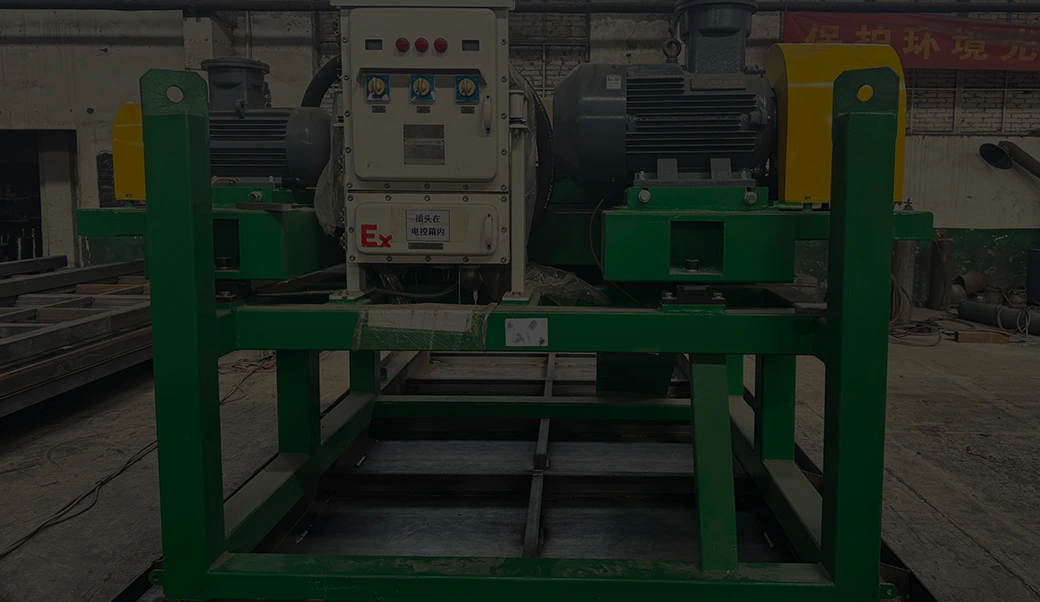
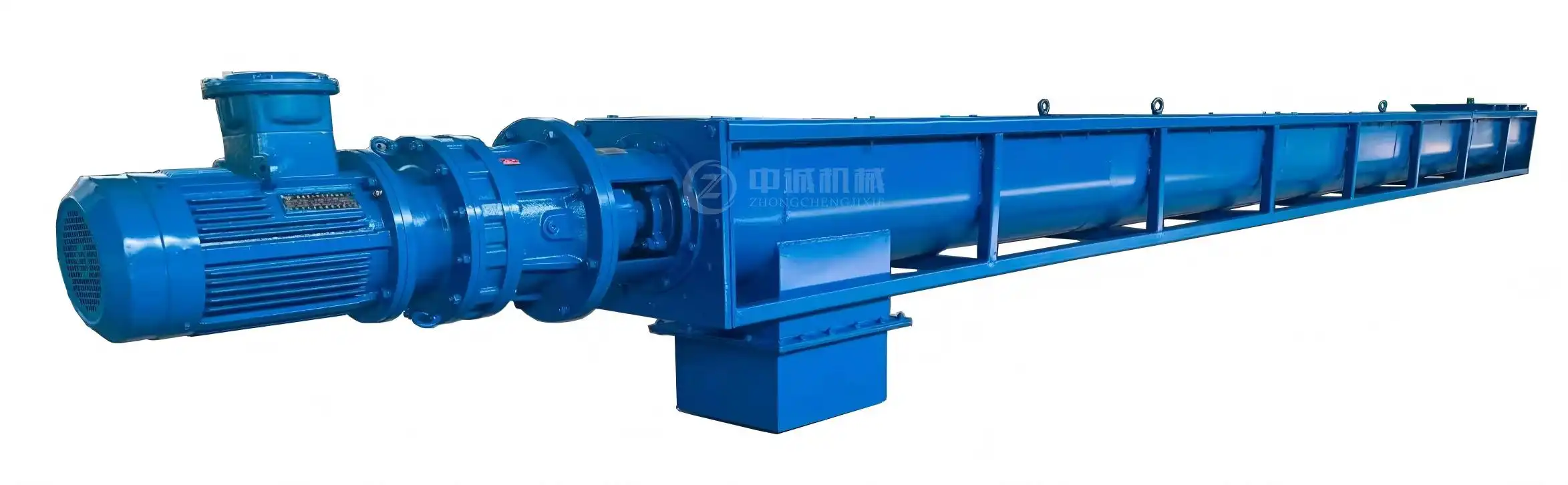
A screw conveyor handles a broad spectrum of materials in continuous production, including dry bulk solids like cement, barite powder, and grain; wet or sludge-type materials such as dewatered drilling cuttings and wastewater screenings; abrasive substances like mineral ores and sand; and chemically sensitive or hygienic materials in pharmaceutical and food processing lines. The specific screw conveyor configuration — trough type, flight material, shaft design, and sealing method — determines how well it manages each material category without spillage, clogging, or excessive wear.
Understanding the Basics — How Screw Conveyors Handle Different Materials
Before you choose a helical conveying system for your production line, it's helpful to know how it works mechanically. When a spinning helical blade pushes material axially through a trough or tube, it moves forward. The idea is easy, but the shape is very important.
How Screw Geometry Affects Material Flow?
Throughput and material behavior are directly affected by flight pitch, width, and rotating speed. Short pitch screws slow down heavy or sticky material, which stops it from spilling back. For chunks that move around easily, standard size screws work well. With variable pitch designs, material moves smoothly from the feed inlet, so there is no bridging at the entry point.
Shafted vs. Shaftless Configurations
Shafted conveyors are good for dry, granular materials because they have a strong structure over long distances. Shaftless types don't have a center pipe at all, so stringy or fibrous materials like wastewater screens or wet drilling cuttings can't wrap around the shaft and block the system. Uptime is directly linked to picking the right setup.
Key Components and Wear Points
The parts that are most affected by material properties are the trough, screw flights, hanger bearings, and end seals. Ores and drill bits, which are abrasive, speed up wear from flying debris. For runs longer than 6–9 meters, middle hanger bearings with wear-resistant metal bushings keep the shaft from bowing and keep the machine from breaking down while it's running all the time.
Material Categories Suitable for Industrial Screw Conveyors
Not every helix conveyor unit is good at moving all kinds of materials. For each group, different design changes are needed to keep things working well and extend the life of the tools.
Dry Bulk and Granular Materials
The easiest things to move are grainy materials that can flow freely, like cement, barite powder, grain, and small aggregates. Throughput is always the same when standard carbon steel flights are rotated at moderate speeds. The ZC Screw Conveyor's tube-enclosed structure works especially well here, reaching speeds of 15–45 m³/h while keeping dust inside the sealed body.
Wet, Viscous, and Sludge-Type Materials
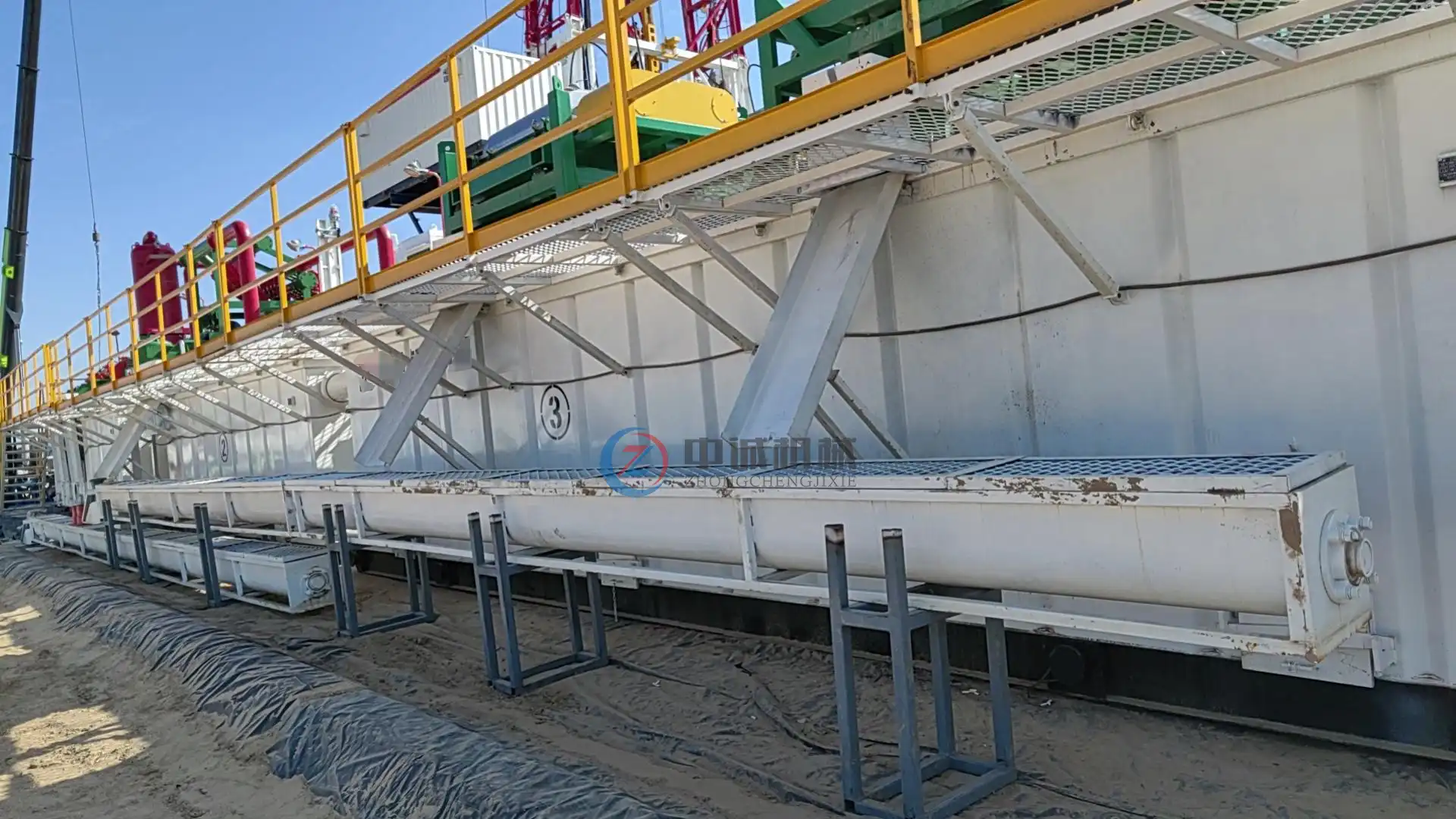
It's hard to work with wet drilling bits, dewatered sludge, and high-moisture mud lumps using a Screw Conveyor. These things tend to stick to flights and trough walls, which slows things down and makes them hard to move. Because the top cover can be taken off, the U-shaped design makes it easy to clean. Configurations without shafts stop the wrapping that happens a lot with fibrous sludge. To keep the flow even, CEMA guidelines say that the fill level in the trough should be between 15% and 30% for sticky, wet materials.
Abrasive and Heavy Industrial Materials
Mineral ores, clinker, sand, and drill cuttings wear out standard flights very quickly. The ZC unit directly addresses this issue; the screw steps are made from high-strength manganese steel or a wear-resistant alloy, and tungsten carbide hard-facing is an option that makes them last 3–5 times longer than normal carbon steel. This makes replacements much less common in mining and oilfield settings.
Hygienic and Chemically Sensitive Materials
Pharmaceutical powders, food-grade ingredients, and chemical pigments need to be transported without getting contaminated. In these situations, the ZC Screw Conveyor is made of SS304 or SS316L stainless steel and has a smooth inside. These models work with CIP (Clean-In-Place) washing methods, which keep production runs from getting contaminated with each other and meet sanitation standards in controlled industries.
Design Principles for Handling Diverse Materials Efficiently
To choose the right design factors, you need to know how the object you are moving behaves physically. If you do this wrong, it could cause blockages, too much power use, or early failure of parts.
Bulk Density, Moisture Content, and Particle Size
Every estimate of ability is based on these three things. When the bulk density is higher, the torque demand goes up, so the drive unit needs to be stronger. A lot of moisture in the material makes it stick together and easy to break. Flight wear is sped up by coarser particles with irregular shapes. The CEMA standard has reference tables for sorting materials that help engineers make sure they choose the right conveyor size from the start.
Screw Pitch, Diameter, and Speed Selection
The volumetric output is based on the screw's girth and pitch. Units with a bigger diameter move more material per turn, but they need more power. When there are sticky substances, variable pitch screws open the pitch near the opening to break up the stuff before it gets too hard. The ZC unit can handle single-drive runs of up to 15 meters and flexible multi-stage combinations that go up to 30 meters. This gives engineers the freedom to set up production lines that span long distances.
Material Selection: Stainless Steel vs. Carbon Steel
Carbon steel with wear-resistant metal flights works well in rough industrial settings where chemical interaction is not a problem for a Screw Conveyor. For chemical handling, marine uses, and clean production, stainless steel is the best material. Choose SS304 for general corrosion protection or SS316L for chloride-heavy settings. When you pick the wrong base material, rust speeds up, and the product gets contaminated, both of which cost a lot more than the difference in price.
Advantages and Challenges of Using Screw Conveyors for Various Materials
The sealed helical conveyor design has real practical benefits across many industries, but it also brings new problems that need thoughtful engineering solutions.
These are the main reasons why this equipment is the best choice for environments with continuous production:
- Fully enclosed operation: The sealed trough or tubular body prevents dust emission, odor diffusion, and material spillage. At oilfield sites, this directly improves wellsite environmental compliance and reduces cleanup labor.
- Space-efficient footprint: Unlike belt conveyors, a helical conveying unit installs horizontally, at inclines up to 45°, or vertically — fitting into congested plant layouts without major civil modifications.
- Low parts count, easy maintenance: The drive system uses a single motor and reducer. Fewer moving parts mean fewer failure points, and routine inspection focuses on bearing condition, flight wear, and seal integrity.
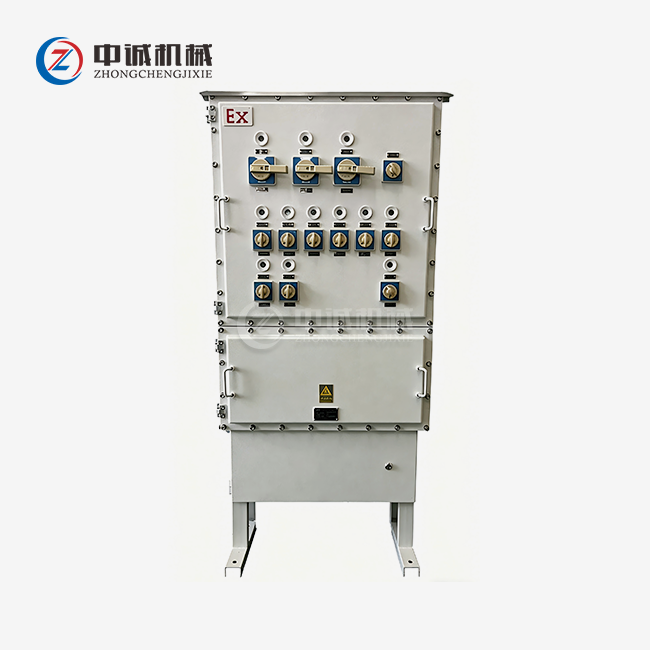
- Explosion-proof configuration available: For oil drilling and chemical environments, the ZC unit supports Exd II BT4/CT4 rated motors with overload protection and emergency stop functions, meeting HSE requirements for hazardous area classification.
These benefits directly address the main problems that building and oilfield companies have, namely following environmental rules, keeping tools up and running, and keeping the site safe.
Still, there are operational problems. When you fill a lot of wet or sticky materials, the torque can rise and trip the drive or bend the flights. The most common reason for failure is that the trough was overfilled beyond the CEMA-recommended loading percentages. By installing pull-cord emergency stops and checking the drive current during launching, these issues are found quickly. Hanger bearings and end seals are oiled regularly, and the flight width is checked every three months to make sure the system is running as it should.
Procurement and Maintenance Considerations for Industrial Screw Conveyors
There are more factors than just unit price that go into buying industrial moving tools like a Screw Conveyor. The real cost of ownership over the equipment's service life depends on how reliable it is over time, how customizable it is, and how well the supplier supports it.
Evaluating Supplier Capability and Certification
A good Screw Conveyor maker should have quality certificates that can be checked. These include ISO 9001 for production management, ISO 14001 for environmental compliance, and ISO 45001 for health and safety at work. Approvals from outside groups like TÜV, BV, or HSE show that quality claims have been checked by a third party. It is true that ZHONGCHENGJIXIE has all of these approvals. The ZC Screw Conveyor has passed ISO 9001/14001/45001, TÜV, and BV.
Customization and Delivery Timelines
Standard production jobs don't always exactly match what's listed in a catalog. When drilling with ZJ30 to ZJ90 rigs, drilling contractors need to make sure that the size and power configuration of the conveyors work with the layout of the rigs. ZHONGCHENGJIXIE lets you change all the parameters, including the diameter, length, flight material, motor grade, and explosion-proof requirements. Stocked items ship in 3 days, and special orders are finished in 15 days.
Maintenance Practices That Protect Investment
There are three parts of scheduled maintenance that should be done: lubricating the bearings every 500 hours of operation, measuring the flight width every three months, and checking the seals after every high-moisture material campaign. It is much cheaper to replace old flights before they break than to fix a stuck shaft or replace a deformed trough section. By keeping flights, hanger bearing bushings, and end seals in stock locally, you can avoid long periods of downtime when replacements are needed.
Conclusion
Industrial Screw Conveyors can move a variety of materials in continuous production, including dry loose solids, wet drilling bits, abrasive ores, and clean chemical powders. The configuration, flight material, and sealing method you choose will depend on the properties of the material. Failures later on that cost a lot of money can be avoided if the design is right at the planning stage. The ZC Screw Conveyor from ZHONGCHENGJIXIE covers the whole range. It can move up to 45 m³/h, comes in modular lengths of up to 30 meters, and is made from wear-resistant alloy steel or SS316L stainless steel. It also comes with certified quality management and quick technical support.
FAQ
Can a screw conveyor handle wet and sticky drilling cuttings without clogging?
Of course, but the design has to take material harmony into account. U-shaped types with covers that can be taken off make cleaning easier. Blockage risk is greatly reduced by keeping trough fill levels between 15% and 30% and choosing flights with variable pitch at the inlet zone. For wet, stiff, or stringy materials, shaftless designs get rid of the problem of center shaft wrap completely.
When should I choose stainless steel over carbon steel construction?
If you need to handle acidic chemicals, clean food ingredients, or medicinal powders that could get contaminated, choose SS304 or SS316L. As long as chemical compatibility is not an issue, carbon steel flights made of wear-resistant alloys are the best choice for drilling waste, mineral ores, and standard industrial bulk solids.
How is conveying capacity calculated?
Capacity is affected by the width, pitch, rotating speed, and portion of the trough that is filled. The CEMA standard divides materials into groups based on how rough they are and how well they flow. Each group is then given a suggested fill level, such as 15%, 30%, or 45%, which engineers then use in the volumetric formula. The ZC unit can reach speeds of 15 to 45 m³/h in its normal range.
What maintenance does a screw conveyor require?
Most maintenance needs are met by lubricating the bearings every 500 hours, checking the flight thickness every three months, and checking the seals after wet material campaigns. By keeping an eye on the current going through the drive motor while it's running, you can catch overload situations before they damage the motor.
Partner With ZHONGCHENGJIXIE for Your Next Screw Conveyor Project
The ZC Screw Conveyor is made by ZHONGCHENGJIXIE, which has over 30 years of experience making drilling equipment. We are a direct producer and seller of Screw Conveyors with ISO, TÜV, BV, and HSE certifications. We offer low prices, full customization, and fast shipping all over the world. Whatever you need, from oilfield units that won't blow up to pharmaceutical models made of SS316L stainless steel, our engineering team is ready to build it. To get a quote, email us at oliver@zcgukong.com or go to zcsolidscontrol.com right now.
References
1. Conveyor Equipment Manufacturers Association (CEMA). CEMA Standard No. 350 — Screw Conveyors for Bulk Materials. 7th Edition, 2015.
2. Colijn, H. Mechanical Conveyors for Bulk Solids. Elsevier Science Publishers, 1985.
3. Roberts, A.W. "Bulk Solids Handling — An Introduction to the Practice and Technology." Bulk Solids Handling Journal, 2003.
4. ISO 9001:2015. Quality Management Systems — Requirements. International Organization for Standardization, 2015.
5. Woodcock, C.R., and Mason, J.S. Bulk Solids Handling: An Introduction to the Practice and Technology. Chapman and Hall, 1988.
6. Zenz, F.A., and Othmer, D.F. Fluidization and Fluid-Particle Systems. Reinhold Publishing Corporation, 1960.