A screw pump is a positive displacement pump that moves fluid axially through one or more rotating helical screws enclosed in a tight-fitting housing. Unlike centrifugal pumps that rely on velocity, this pump type delivers a constant, non-pulsating flow regardless of pressure changes. That characteristic makes it particularly effective for transferring viscous, abrasive, or solids-laden fluids in oilfield solid control, chemical processing, and wastewater treatment. The ZC Screw Pump from ZHONGCHENGJIXIE, with a capacity range of 10–90 m³/h and inlet diameters of 80–200 mm, addresses these exact demands across multiple industries.


Understanding Screw Pumps and Their Working Principles
How Does Fluid Move Through the Pump?
When fluid goes into the suction port, it gets trapped between the screw flights and the housing bore. As the screw turns, the trapped volume moves along the axis toward the release hole, but its size stays the same. This axial movement makes flow that is steady and doesn't have any pulses. The pump has high volumetric efficiency even at high viscosities because there is no recirculation inside the cylinder. Centrifugal designs simply can't match this feature under the same conditions.
Single, Twin, and Triple Screw Configurations
Single-screw (progressive cavity) pumps have one rotor that turns inside an elastomeric stator. They are very good at moving slurries that have a lot of solids in them. Twin-Screw Pumps use two interlocking screws to move multiple phases and thick fluids. Triple-Screw Pumps have a third rotor that makes the hydraulic balance smoother and the noise level lower. This is why they are the best choice for fuel systems in boats and for moving lube oil. As each design has its own duty point, the first step in choosing tools is to match the rotor shape to the fluid properties.
Key Design Features That Matter
The sealing gap between the screw sides and the case directly controls internal slip, which in turn impacts both the minimum working viscosity and the efficiency. Sand and drill bits don't wear down hardened spinning surfaces. Leaks around the shaft are stopped by mechanical seals that are rated for the process fluid. The ZC Screw Pump has a small, modular design that lets it be taken apart in the field without any special tools. This cuts down on the time needed for scheduled maintenance and the cost of labor on remote drilling sites.
Key Applications of Screw Pumps in Oilfield, Chemical, and Wastewater Systems
Oilfield Solid Control and Mud Circulation
The mud movement system on a drilling rig has to move drilling fluid that has blades, barite weighting agents, and different amounts of gas in it. A regular centrifugal pump quickly loses its effectiveness as the solids level rises, but the output of a progressive chamber or twin-screw machine stays the same. The ZC Screw Pump moves drilling fluid from the active pit to the shale shaker, desander, and desilter. It does this without breaking down the mud's fragile polymer chains, which keeps the fluid's rheology and lowers the cost of replacing it.
Chemical Industry Transfer and Metering
When working with corrosive acids, sticky resins, and polymer slurries, chemical processing lines need to be able to do exact volumetric dosing all the time with a Screw Pump. In a positive displacement pump, the flow rate changes evenly with shaft speed. This means that workers can set precise dosing rates without using flow meters downstream. The ZC machine can handle media from 1 cSt to well over 100,000 cSt and can handle temperatures up to the seal rating. It can do most of the work needed for moving and measuring chemicals in specialty chemical plants.
Wastewater and Sludge Handling
Municipal and corporate wastewater treatment plants use low to moderate pressures to move activated sludge, digested sludge, and grit-filled influent through long pipes. For this job, progressive cavity pumps are the standard because they can handle solids that are both fibrous and granular without getting clogged. The ZC Screw Pump's input width ranges from 80 to 200 mm, which is perfect for sludge transfer because of its high flow and low velocity. Its output doesn't pulse, so it keeps downstream instruments and filter presses safe from pressure spikes.
Comparing Screw Pumps with Other Pump Types for Industrial Use
Screw Pump vs. Centrifugal Pump
Centrifugal pumps have a high flow rate when the viscosity is low, but they lose head quickly when the fluid gets thicker or when more gas is sucked in. A screw-type positive displacement pump keeps its duty point over a wide range of viscosities and can work with both gas and liquid without losing its prime. When viscosities go above 100 cSt, the performance gap gets big for lines that move drilling mud, crude oil, or sludge. A centrifugal unit's efficiency can drop below 40%, but a screw unit's stays above 80%.
Screw Pump vs. Gear and Lobe Pumps
Gear pumps are small and cheap for clean, thin oils, but they break down quickly when they come in contact with rough or particle-filled fluids. Lobe pumps are easy to clean and handle gently for sanitary purposes, but they need to be lined up more precisely because they have smaller clearances. The Screw Pump is in the middle. It can handle moderately rough loads, moves bigger particles than gear pumps, and has better flow than lobe pumps at the same speeds. This makes it a good choice for moving slurry in the fields and in factories.
Cost and Maintenance Comparison
Gear and piston pumps usually have lower initial prices, but they need to have their seals and gears replaced more often in rough service, which makes the total cost of ownership higher. In gritty slurry applications, a well-maintained Screw Pump that is checked for seal wear and bearing condition every 2,000 to 4,000 hours of operation usually lasts much longer than gear units. The Screw Pump choice often has a lower cost per hour of operation when procurement teams take into account the cost of replacement parts, worker hours, and lost production due to downtime.
Selecting the Right Screw Pump for Your Industrial Needs
Match Specifications to Fluid Properties
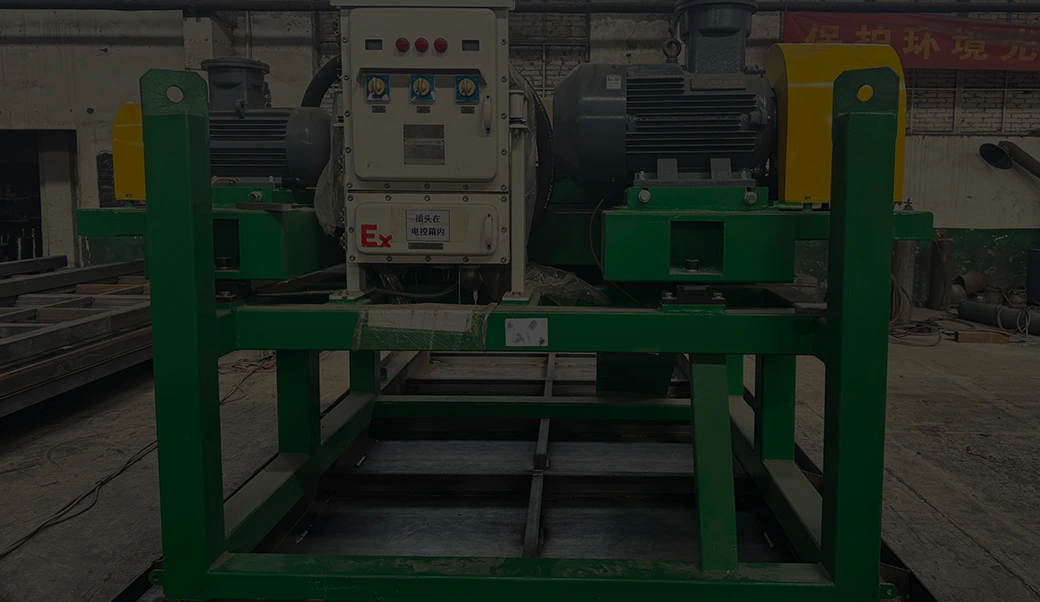
Before you call a supplier, you should make a fluid data sheet that lists the viscosity range, density, particle size, solid content percentage, pH, and operating temperature for a Screw Pump. The rotor shape, stator elastomer grade, and casing material are all based on these numbers. The ZC Screw Pump can handle up to 90 m³/h of flow and has inlet diameters ranging from 80 to 200 mm. For uses outside of this range or with odd media, the ZHONGCHENGJIXIE engineering team can make unique configurations, such as motor brand choices and changed skid sizes.
Evaluating Suppliers and Certifications
There's more to choosing a Screw Pump provider than just looking at prices in catalogs. Failures in the field at faraway places are less likely when quality systems have been checked. Here are the most important factors that purchasing managers in the gas and chemical industries always look at when evaluating suppliers:
- Quality certifications: ISO 9001, ISO 14001, and ISO 45001 certifications confirm documented production controls and traceability for all wetted-part materials.
- Third-party approvals: HSE, TÜV, and BV approval signals that independent auditors have verified both the management system and specific product performance data.
- Hydrostatic and performance testing: Reputable manufacturers test each unit at 1.5× maximum allowable working pressure and verify the flow-pressure-power curve before shipment.
- Customization capability: Oilfield and chemical projects rarely use off-the-shelf configurations; a manufacturer with in-house engineering can modify flange standards, drive arrangements, and material grades to match site requirements.
These factors set makers who can work on complicated projects apart from distributors who only sell standard equipment. ZHONGCHENGJIXIE has all of the above certifications and has its own engineering department for special orders.
Delivery and After-Sales Support
For project-driven buying, wait time has a direct effect on when rigs can be mobilized. ZHONGCHENGJIXIE ships ZC Screw Pump units that are already in stock in three days and finishes special orders in fifteen days. Every unit comes with full technical documentation, such as engineering drawings, operation and maintenance manuals, and parts diagrams. Every delivery comes with a one-year warranty and a dedicated after-sales engineering contact. This way, field teams can get help from experts in the product whenever they need it.
Maintenance Tips to Maximize Screw Pump Efficiency and Lifespan
Routine Inspection Schedule
Depending on how rough the fluid is, seals and bearings should be checked every 2,000 to 4,000 hours of use. Check the sides of mechanical seals for scoring, and replace lip seals that are getting hard or breaking. During operation, make sure that the bearing temperatures stay within the manufacturer's recommended range. A high bearing temperature is an early sign of misalignment or lubrication breakdown.
Addressing Cavitation and Flow Loss
Cavitation happens when the pressure of the suction goes below the pressure of the fluid's vapor. This makes vapor bubbles that crash into the rotor surfaces very hard. Most of the time, the fix includes either lowering the suction line, making the pipe bigger, or slowing down the pump. A slight decrease in flow rate without obvious seal leakage is usually a sign of more internal slip due to rotor-stator wear. Checking the clearance during the next planned shutdown confirms the diagnosis and shows if the rotor assembly needs to be replaced.
Lubrication and Fluid Compatibility Checks
Grease bearings with the right kind of grease and the right amount of it at the times listed in the operation instructions. Just as easily, over-greasing or under-greasing will cause heat. When the process fluid changes, check to see if the elastomer is still compatible. Using a stator elastomer that isn't compatible will cause it to swell and fail quickly. The expert team at ZHONGCHENGJIXIE can help you choose the right elastomer type for a certain chemical or slurry makeup at no extra cost.
Conclusion
A Screw Pump can handle a wide range of viscosities and solid contents with steady, pulse-free flow. This makes it a reliable choice for moving chemicals, moving oilfield mud, and moving wastewater sludge. The ZC Screw Pump from ZHONGCHENGJIXIE can handle 10–90 m³/h, is qualified to ISO 9001/14001/45001, and is approved by HSE, TÜV, and BV. It works like an industrial pump and is easy to maintain in the field. Finding the right pump configuration for your fluid and operating conditions is still the most important thing you can do to get a long life and a low total cost of ownership.
FAQ
Can a screw pump run dry?
No. The fluid acts as a lubricant between the rotor and stator. Even brief dry operation causes rapid stator failure. Install a dry-run protection sensor or low-level switch on the suction vessel to prevent this condition.
How does viscosity affect pump performance?
Flow rate stays relatively constant as viscosity rises, which is the primary advantage over centrifugal designs. However, shaft power increases with viscosity because internal fluid friction grows. Size the motor with an adequate service factor when handling fluids above 1,000 cSt.
What causes premature wear in abrasive slurry service?
High particle concentration, oversized particles relative to rotor clearance, and operating above rated speed are the main causes. Hardened rotor coatings or upgraded stator compounds extend service life in abrasive drilling fluid and sludge applications.
Is this pump type suitable for precise chemical dosing?
Yes. The linear relationship between shaft speed and volumetric output makes it well-suited for accurate dosing in chemical processing. Pairing the pump with a variable-frequency drive allows repeatable flow adjustments without downstream instrumentation.
What maintenance cycle should I follow?
Inspect seals and bearings every 2,000–4,000 hours. Check rotor-stator clearance annually. Replace elastomer components immediately if the process fluid composition changes to an incompatible chemistry.
Get a Quote from ZHONGCHENGJIXIE — Trusted Screw Pump Manufacturer
The ZC Screw Pump is made by ZHONGCHENGJIXIE, which is fully ISO and third-party certified and has in-house engineering for unique setups as well as units that are ready to ship in three days. Our team gives you technical information, competitive prices, and a one-year warranty with every order of a Screw Pump for solid control in the oilfield, chemical transfer, or sludge dewatering. To get a quote, email us at oliver@zcgukong.com or go to zcsolidscontrol.com right now.
References
1. Karassik, I. J., Messina, J. P., Cooper, P., & Heald, C. C. — Pump Handbook, McGraw-Hill, 2008.
2. American Petroleum Institute — API Standard 676: Positive Displacement Pumps — Rotary, 3rd Edition, 2009.
3. Hydraulic Institute — HI 3.1–3.5: Rotary Pump Standard, Hydraulic Institute, 2019.
4. Nesbitt, B. — Handbook of Pumps and Pumping, Elsevier, 2006.
5. Water Environment Federation — Wastewater Treatment Plant Design, WEF Press, 2010.
6. Society of Petroleum Engineers — Drilling Engineering, SPE Textbook Series, Vol. 2, 2006.
.webp)
.webp)