The factors that matter most when choosing a factory for bulk orders are product fit, technical data, material quality, testing and certification, production capacity, total cost of ownership, customization, after-sales support, and contract terms. I weigh these items together because a low unit price can hide undersized pumps, uneven batch quality, or slow spare-part supply. A good factory backs its claims with performance curves, test records, and clear lead times. Below, I explain how to check each factor, and I show how ZHONGCHENGJIXIE approaches bulk supply for oilfield, sludge, chemical, and food applications.
If you buy for a drilling contractor, an oilfield service company, an EPC project, or a distribution business in the United States, you probably compare several screw pump manufacturers at once. The sections below give you a fair way to do that.
Start With Product Fit and Technical Performance
Confirm the Screw Pump Product Range
First, I check to see if the factory makes the work pump I need. There are different kinds of Screw Pumps, and each one works best with a certain kind of fluid. Ask which models can handle rough, acidic, or food-grade media with a high viscosity, and give examples of jobs that are like the ones you're asking about. If you want to choose the right pump, you need to know about the viscosity, solids content, temperature, pressure, and how well the chemicals work together. It's good for a supplier to ask about all five of these things. Before giving an OEM job, make sure the plant can offer custom sizes, unique materials, and technical changes that can be kept track of. If having a small range works for you, that's fine. But it costs a lot to order a lot of the wrong thing.
Assess Technical Capability and Pump Performance
Having book sheets isn't enough. You should ask for performance charts that show the coolest and thickest solids, flow, pressure, speed, and temperature that can happen on the job site. It depends on the gaps inside the motor, the seals, and the size and shape of the screws how well the rotor and stator fit together. A good engineer will be able to explain this. With these pumps, viscosity goes up, but flow stays pretty steady. But because of friction inside the pump, more power is needed. For things that need to stay clean or are sensitive to shear, it's important to compare noise, shaking, shear, low-speed stability, and efficiency. Don't place a big order if the plant can't connect its data to your fluid. That should be a red flag.
Verify Materials, Components, and Manufacturing Quality
What something is made of is what makes it last so long. You should check the blades or screws, the stator, the shaft, the bearings, the mechanical seal, the coupling, and the gearing. Parts that get wet can be made of carbon steel, cast iron, stainless steel, duplex stainless steel, rust-proof metals, or certain types of rubber. The person who made it should make sure that each choice works with your fluid and temperature. Find out which parts are made by the company and which ones come from reliable sources. When you do rough work, wheel loss is a common maintenance problem. That's why if you run at or above the rated speed or pressure, you should ask about coatings or stronger blades. Make sure that the bearings, stators, rotors, and seals you want will still be in stock after you place your order.
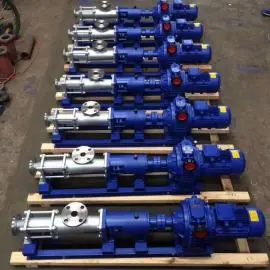
Check Quality Systems, Capacity, and Cost
Review Quality Control, Testing, and Certification
There are ways to tell if the 100th Screw Pump will be the same as the first one. Checks on the materials that come in, rules for machining, rules for assembly, pressure tests, performance tests, final checks, and packing are some of the things you should ask about. To make sure the case is solid, some hydrostatic tests are carried out at 1.5 times the highest pressure that can be used. You should ask for material certificates, performance curve checks, and shaking checks if the job calls for them. Check for certifications like ISO 9001 and ask about standards that apply to your company, like API 676 for oil and gas service rotary positive displacement pumps. Make sure that the price and purchase contract cover all the necessary inspections and paperwork. That way, a phone promise won't matter.
Evaluate Production Capacity and Bulk-Order Consistency
A company can't finish fifty units on time with just one good sample. You should find out how many jobs are being done right now, the monthly capacity, the machines, the assembly area, and the number of engineers. Find out how to mix models and what the minimum order size is. Find out how long you have to wait for standard models, special units, motors, gears, extra parts, and standard models. It is important to check the export packing, wooden boxes, shock and rust protection, and customs papers for pumps that are sent over long distances. People in the US who want to buy something should also learn how the business plans and manages each ocean freight shipment. If the plant gives you exact times and numbers instead of just making vague claims, you can make better plans.
Compare Total Cost of Ownership, Not Only Price
A cheap quote doesn't always mean a low price in the long run. You can look at different sets that include the pump, motor, gearbox, coupler, baseplate, seals, controls, tools, shipping, testing, and packing. Then you need to add up how much power was used, how many times it had to be serviced, how many times the seals had to be replaced, how much the rotor or stator had to be worn down, and how long it was turned off. Life cycle costs of pumps are broken down by the Hydraulic Institute and Europump. The cost of the pump is not the only cost. Ask each seller what extra parts they think you will need in one, two, or five years. After that, check out how much each round of life costs. Sometimes, saving a little on the pump itself isn't better value than getting standard parts and quotes that are easy to understand.
Look at Customization and Service Support
Check Customization, OEM, and Engineering Support
Not enough for many projects. Some people need more than just a book of styles. Find out if the plant can change the types of materials used, the seals, the flow, the pressure, the motor's voltage and frequency, the mounting standards, the connections, and the direction of the inlet and exit. Take a look at the different brand, nameplate, instruction, label, and foreign document options for OEM and partner programs. Write down who has the plan, how to keep it secret, and how to change the specifics. Another important thing is to plan well before the sale. Before suggesting a configuration, a good supplier will ask about the needs, NPSH, motor choice, gearbox size, and plans for maintenance. The plant won't just send you a pump; they will choose one that will work with your process after that.
Analyze After-Sales Service and Maintenance Support
It costs more to be down than to use the Screw Pump, so I wait until after the delivery to find out what happens. Ask the supplier if they offer installation guides, troubleshooting guides, help with commissioning, remote support, training for operators, or service on-site. It's important to write down things like low flow, broken seals, shaking, burning, weird noises, worn blades, and motor stress. A machine needs to be oiled, balanced, checked for leaks, joints fixed, flushed, and turned on and off to make sure it doesn't run dry. This last part is very important because it holds the rotor and stator smooth. Even a short dry run can hurt the stator if there is a leak. If the medium is 2,000 to 4,000 hours, check the seals and bearings every two to four hours. Note down the warranty terms and how long it will take for someone to get back to you.
Compare Factories With a Procurement Scorecard
This is a fairer way to compare things, and quotes that aren't complete but are interesting can't change the decision. A small group of companies made the cut. I rate each one based on their technical know-how, experience with certain applications, product quality, certifications, capacity, lead time, total cost of ownership, ability to customize, availability of spare parts, after-sales service, experience with exporting, and their communication skills. Set up and send all bids with the same service points so that they all match up line by line. Machinery, test benches, records, and the way things are stored can all be checked in person or online. Talk about your job with people who work close to you or in the same field. Then, tell each group how important it is to the project by giving it a value. When setting a rig-up date, think about the wait time more.
Reduce Risk and Decide With Confidence
Identify Common Risks Before Signing a Bulk-Order Contract
Before you start making things, think about the risks. There is a chance that a cheap pump will not be the right size, be made of weak materials, not work well, or not come with good extra parts or help. You should include information about the solids, flow, pressure, speed, materials, seals, motor needs, and any standards that relate to the fluid in your technical specification. I need drawings to be okayed before I can start making something. It should be very clear in the contract who is in charge of inspecting, what is okay, how to pack, when to ship, how much to pay, the warranty terms, and any claims for spare parts. Before the units get to your yard or job site, it's best to have clear terms so that nothing goes wrong.
Follow a Simple Supplier Selection Process
Five things I do. First, write down what it's for, how much, where it's going, the tax points, and the demand each year. Now, make a short list of companies that want to export, have the right goods, the right tech skills, and references that you can check. Next, ask for full business and technical plans that include test dates and times, prices for spare parts, information about the motor, model choices, curves, materials, drawings, and guarantee terms. Send a test or sample order after that. Finally, pick the service provider whose speed, dependability, service, supply, and total cost work best for you. Because you always use the same order, the choice is fair, and your buying and engineering teams only need to look at one record.
Use a Sample or Pilot Order to Test the Factory
There are some things that a pilot order can't show that a datasheet can. Check the agreed-upon duty point against the test reports, the quality of the build against the drawing, the papers to make sure they are true, the condition of the packaging when it arrives, and how quickly the team answers questions. You can get a few Screw Pump units before the big order comes in. Every day, your service staff will get used to taking them apart and fixing them this way. Write down any holes and ask the plant to fill them up before you send out the main order. A supplier who stays calm when there are small issues is likely to do a good job with large orders as well.
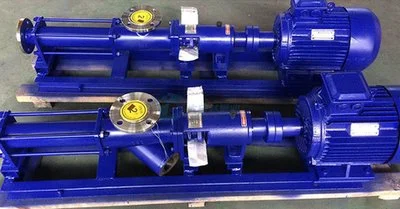
How ZC Screw Pump Supports Bulk Orders?
ZC Screw Pump Overview and Parameters
It says on the ZC Screw Pump, "The ZC Screw Pump is a positive displacement pump made to feed slurry steadily and accurately." It can hold 10 to 90 m³/h, and its opening is 80 to 200 mm wide. Before you ask for a rate, compare those prices to the ones you already have. It has been in business for more than 30 years and has more than 12 patents on its own. It is a straight producer. Our plant in Xingping, Shaanxi, is 6,000 square meters big. The gear to move mud and control rigs from ZJ20 to ZJ90 that we've made is good. It can take care of up to 200 sets of oil and mud circulation systems each year.
Core Advantages of the ZC Screw Pump
This is why the ZC Screw Pump is great:
- Stable operation and high efficiency: The pump works well and is very good at starting itself and moving fluid efficiently. Because it feeds slowly and steadily, doses are always the same, and the pulse doesn't affect equipment further down the line. Also, it moves things carefully so that the slurry doesn't break as it goes from the pump's input to its output.
- Strong medium adaptability: Works well with many types of media; the pump can move thick media without damaging it. These move bits and pieces of objects that are mixed with liquids. It can be different from one project to the next in the field, though. It can be used to treat sludge, work with food, and keep solids in check in chemicals and industry.
- Simple structure, easy maintenance, and low noise: A building that is simple, quiet, and easy to keep up. Repair teams can do their jobs faster because it's easy to take apart and fix every day because it's small. A low amount of noise helps keep production steady and safe over time. These things are important for people who work long shifts near the pump. These two things help a lot of units train their crews.
These extras help with production issues like swirling, hard slurry, and slow maintenance.
Customization, Service, and Compliance
There is a wide range of sizes, forms, and motors from well-known American and European names, so people can choose what they want. Standard export packaging keeps each item safe while it's being shipped, and items that are in stock can be sent out within 3 days. For special orders, we usually send them out within 15 days. Our connections to the ports in Tianjin and Shanghai make it easy and quick to ship items all over the world. For our professional service, we offer operation and maintenance instructions, drawings, flowcharts, component diagrams, training for the industry, and a guarantee that lasts for one year. ISO 9001, ISO 14001, and ISO 45001 have all said that the ZC Screw Pump is good. HSE, TÜV, and BV have also done this. This gives the people on your screening team something to read.
Conclusion
When you need to buy a lot of Screw Pumps, price doesn't matter as much. To begin, we will talk about how well the item fits, how well it works, and how good the materials are. That done, we'll talk about test records, certifications like ISO 9001, production capacity, and packing to send abroad. The cost of owning something is more important than the price when you have it. This is because over time, broken parts, energy use, and downtime all add up. It does its job better if you can get service after the sale, get skilled help, and make changes to the pump. A weighted evaluation, clear contract terms, and a test order all lower the risk. To properly compare prices, buyers can ask all providers for the same things. This way, they can choose a plant that gives them regular units and help for a long time.
FAQ
What details should I request from a Screw Pump factory before a bulk order?
Before I buy a lot from a Screw Pump company, what do I need to know about them? What kind of pump it is, how fast it moves fluids, how much pressure it has, what kinds of materials it is made of, how many fluids it can hold, how long you have to wait, what the warranty terms are, and how much new parts cost.
How do I compare manufacturers without relying on online listings or price?
You should get the same number of tax points from every seller. Next, compare trends, test reports, and sources with a weighted evaluation. Lastly, make sure you understand everything by doing a check, either in person or from away.
How can I verify OEM capabilities?
Look at some instructions, models, and nameplates. Make a note of who owns the plan and how it will be kept secret. Also, use a test order to make sure the papers and work are good.
Which spare parts should I plan for?
You should think about things like axles, blades, seals, and stators. You can get a list from the provider that is good for one, two, or five years. After every 2,000 to 4,000 hours, you should check the joints and wheels.
Request a Screw Pump Bulk-Order Evaluation From ZHONGCHENGJIXIE
Are you really ready to look at different brands of Screw Pump? Send ZHONGCHENGJIXIE the type of fluid, how fast it flows, how thick it is, how hot it is, how much of it there is, where it needs to go, and how many objects are in it. We'll get back to you with a model idea, some drawings, and a group price quote. We promise your satisfaction for a year, and we ship things in stock within three days. For the review to begin, visit zcsolidscontrol.com or send an email to oliver@zcgukong.com.
References
1. Pump Life Cycle Costs: A Guide to LCC Analysis for Pumping Systems, Hydraulic Institute and Europump, 2001
2. API Standard 676: Positive Displacement Pumps—Rotary, American Petroleum Institute, 2009
3. ISO 9001: Quality Management Systems—Requirements, International Organization for Standardization, 2015
4. ISO 45001: Occupational Health and Safety Management Systems, International Organization for Standardization, 2018
5. Pump Handbook, McGraw-Hill, 2008
6. ANSI/HI 3.1–3.5 Rotary Pumps for Nomenclature, Definitions, Application, and Operation, Hydraulic Institute, 2015