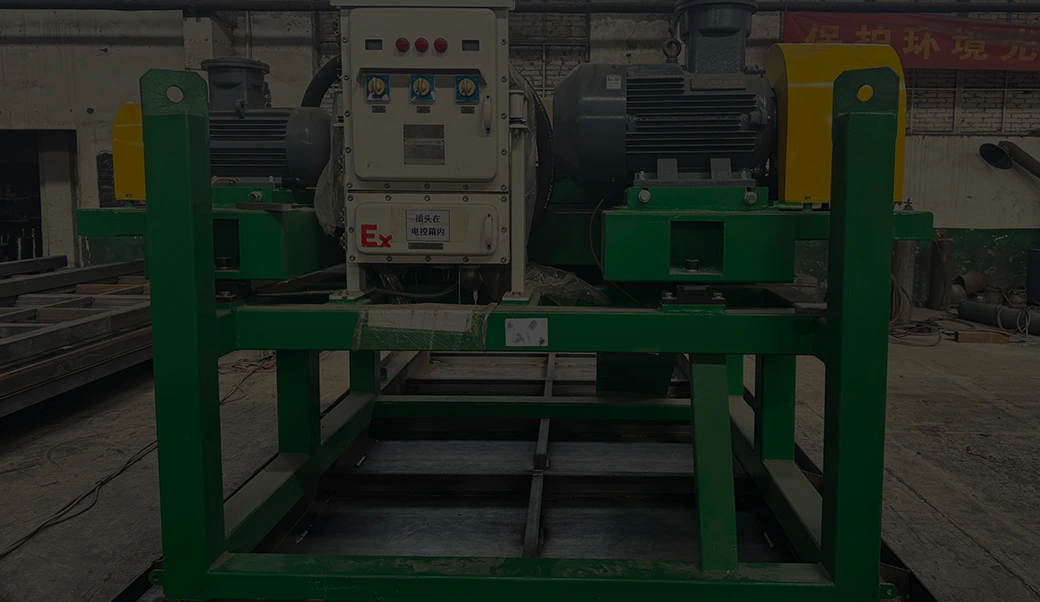
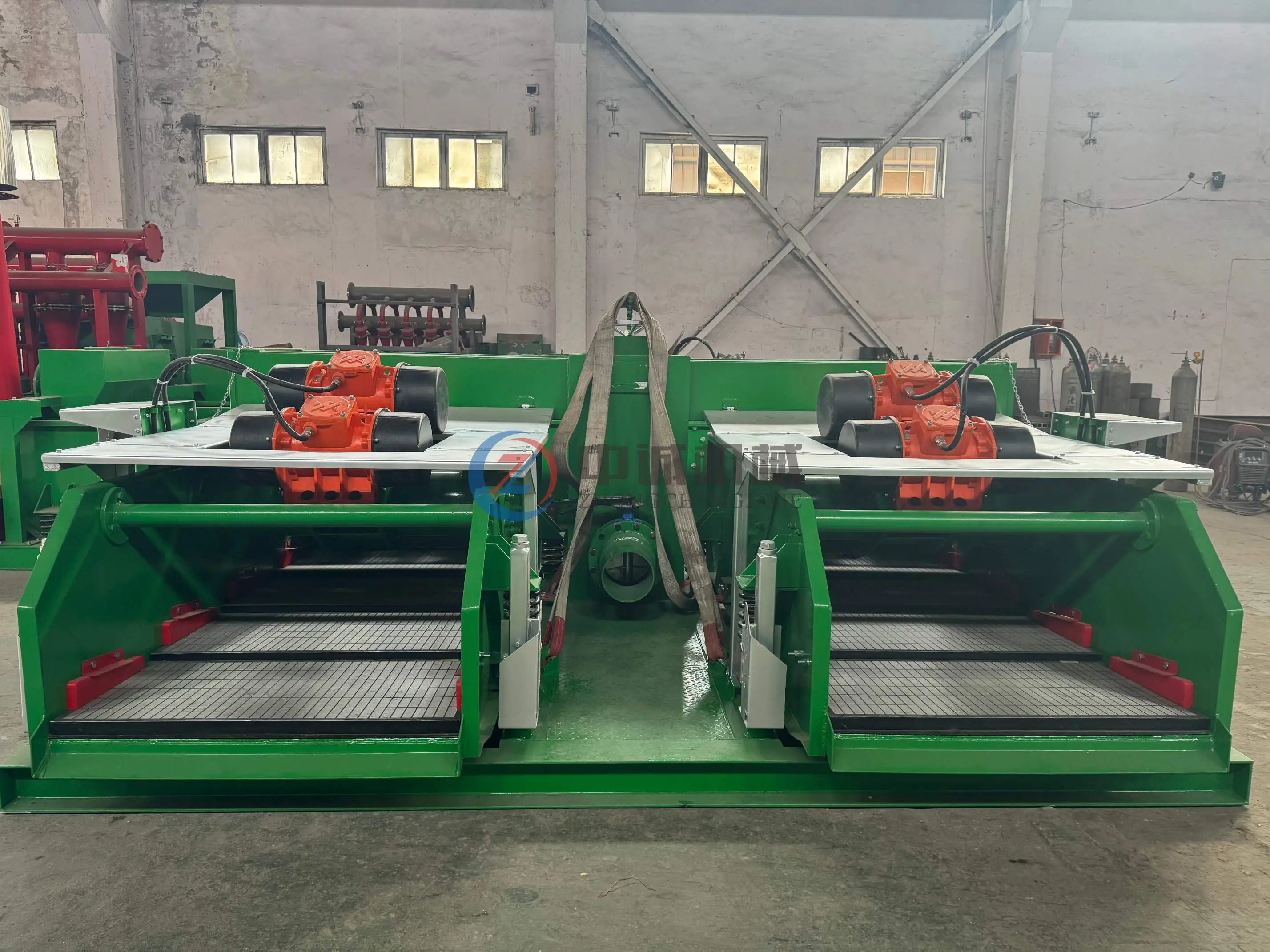
The performance of a Multi-unit Shale Shaker depends on a combination of design architecture, operational parameters, and maintenance discipline. These systems, featuring modular parallel vibrating units mounted on a single skid, are engineered to handle ultra-high flow rates typical of large-scale drilling operations. Core influencing factors include vibration intensity (typically ≤8G), screen selection and mesh sizing, flow distribution uniformity across units, and the synchronization of vibration motors. Additional variables such as deck angle adjustment, environmental conditions, and the quality of drilling fluid significantly impact separation efficiency and throughput capacity in demanding onshore and offshore applications.
Understanding Multi-Unit Shale Shaker Performance
People who work in oil and gas drilling use solid control devices. The shale shaker is the first line of defense against solids getting into the drilling fluids. Performance measurement isn't just about getting rid of cuts; it's also about getting the smoothest recovery, the least amount of screen time, and the least amount of downtime. When there is more than one unit, the problem gets much bigger.
Operating Principles and Core Metrics
A Multi-unit Shale Shaker works with timed shaking motors that make paths that are either straight or curved. During drilling, cuttings-filled fluid flows onto the screen surface. The solids are moved to the discharge end, while the liquids flow through the mesh openings and return to the active system. A number of critical performance indicators show how well this separation process works. Capacity is the amount of fluid that can be handled in an hour. Depending on the type of unit, capacity can be anywhere from 500 to 3,000 gallons per minute. The screening rate is the number of small particles that make it through the mesh without getting stuck with the cuttings. The amount of vibration, measured in G-force, has a direct effect on the speed at which objects move and the resistance to screen blinding.
Vibration intensities of up to 8G are possible with these systems. Aggressive conveyance keeps the screen from going blank even when heavy drilling fluids with a lot of solids are being processed. Choosing between elliptical and linear motion paths changes how fast the objects move across the screen deck and how well the liquid phase is split.
Applications in Drilling Operations
Multi-unit configurations work best in places where reliability and volume can't be compromised. Deepwater platforms in the ocean handle synthetic muds at high circulation rates, which means they need the most screening area possible in the space they have on deck. When horizontal wells are drilled through shale rocks on land, huge amounts of cuttings are created that need to be constantly cleared to keep the fluid properties stable. When digging for coal bed methane, you have to be careful with special drilling fluids and get rid of small bits that could damage downhole tools.
Procurement managers can match the specs of tools with operational needs if they know what the individual drilling job needs in terms of performance. If you make the wrong choice, you could lose fluid, damage the environment, or have to pay a lot for rig downtime.

Design and Technology Factors Affecting Performance
When everything is perfect, the most that a shale shaker can do is limited by how it is built. When looking at multi-unit systems, there are a few architectural features that set high-performing ones apart from average ones.
Screening Area and Deck Configuration
Processing ability is directly related to the total screening area. A Multi-unit Shale Shaker system with three separate shaker baskets, each with an area of 8.5 square feet for screening, has a total capacity that is much higher than that of single-unit options. The separation approach is very different depending on whether the deck is single-deck or tiered multi-deck. Single-deck designs focus on being simple and quick to change screens, which makes them a good choice for operations with middling solid loads. The simplified structure cuts down on servicing spots and the amount of training an operator needs, but it also makes the system very reliable.
Setups with multiple levels and levels of decks allow for gradual separation. The top deck, which has a coarser screen, cuts off big pieces of grass and other waste. Using a finer mesh, the bottom deck cleans the drilling fluid very precisely. This method makes expensive fine-mesh screens last longer by keeping them from coming into contact with rough, large particles. Even though it costs a little more up front, this design is better for buyers who want to reduce screen consumption in abrasive formations.
Vibration Mechanics and Motor Technology
The vibration system is what makes a shale shaker work. Linear motion, which is caused by two vibration motors spinning in opposite directions, makes a straight-line path that is perfect for moving objects quickly. This type of motion works well with drilling fluids that don't have colloidal particles and with tasks that value throughput over ultra-fine separation. By changing the positions of the motors or using special exciters, you can make elliptical motion, which creates a more complex path that improves the flow of liquid through the screen while keeping solids moving well.
Energy-efficient vibration motors lower operating costs and heat production when they are used all the time. Systems with protection ratings of IP55 or higher can handle the dust, water, and vibration that are common in drilling sites. The tough design of motors and mounting systems stops bearings and frames from breaking too soon, which happens a lot when equipment isn't well thought out.
Modular Design and Redundancy Features
Their flexible parallel design is what makes multi-unit systems unique. The feed delivery box is shared by all three moving baskets, but each one works on its own. This design provides important working redundancy—if one unit needs a new screen or motor repair, the other units keep processing without stopping. Managers of drilling operations like this feature during critical hole sections where even short breaks in solids control can cause problems with well control or damage to the rock.
A big part of overall performance is often overlooked: the distribution manifold. Precision-engineered pipes make sure that the flow is equal across all units. This stops preferred loading that would overwork one basket while underusing others. Uneven flow distribution makes screens fail early on crowded units and lowers the total system capacity. Procurement teams should ask for flow balance test data that shows uniform spread under a range of working situations when they are reviewing sources.

Operational Factors Influencing Performance
When used wrongly, even the most advanced equipment doesn't work as well as it should. Companies that do drilling and other services that follow strict operating rules get the most out of their investments in solids control.
Proper Setup and Screen Selection
One of the most important and often misunderstood practical factors is deck angle adjustment. Positive slopes and steeper angles speed up the movement of solids, which cuts down on screen touch time and the risk of blinding, but they may also slow down the return of some liquid. Shallower angles (almost horizontal or slightly negative) increase the flow of liquid and separate small particles, but they also raise the risk of screen overload in high-volume situations. Operators should change the deck angle based on real-time observations of the discharge characteristics—dry cuttings mean the conveying speed is too high, and soupy discharge means the cuttings are not dry enough.
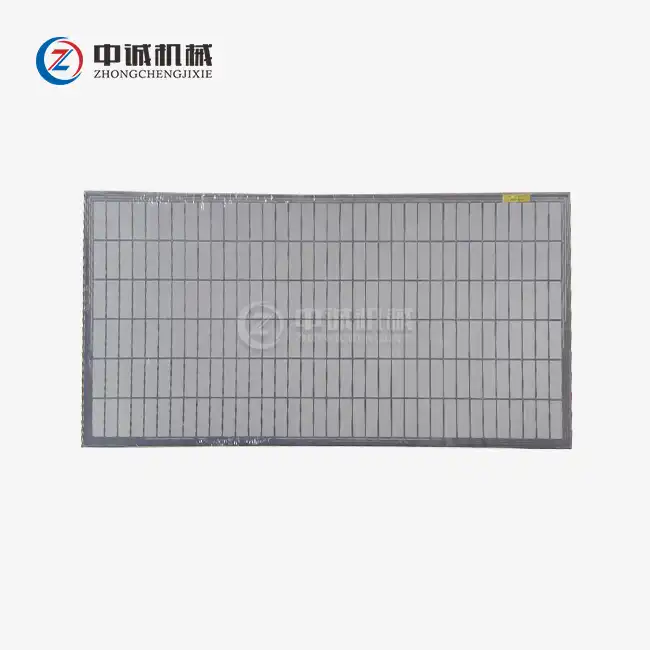
The qualities of the drilling fluid and the goal separation point must both be taken into account when choosing the screen. There are different types of API screens, from the wide API 20 (850 microns) to the very fine API 325 (45 microns). When you use screens that are too fine, you quickly become blind and lose fluid. When screens are too big, valuable parts of the drilling fluid are thrown away with the cuttings, which drives up the cost of the mud. Starting with a coarser mesh during the initial circulation and moving to a finer mesh as the returns clean up are the best ways to get the best separation quality and equipment life.
Maintenance Protocols and Wear Management
Routine checking routines keep breakdowns from happening out of the blue. Vibration motor bearings need to be oiled regularly according to the manufacturer's instructions. If you grease them too much, the seals will fail early, and if you don't grease them enough, the bearings will get damaged. Every month, you should check the torque on the mounting bolts because vibrations can cause them to loosen, which can lead to structural problems. Before every tour, screen panels need to be checked for tears, worn-out support strips, and tensioning devices that aren't working right.
As time goes on, garbage builds up in the distribution manifold and feed pipes. This limits the flow, which lowers capacity and causes uneven loads. Flushing and checking these parts on a regular basis keeps the flow spread at its best. Rubber gaskets and sealing strips wear down over time, letting fluids get around and reducing the effective screening area. By replacing these cheap wear parts before they break, you can avoid more expensive fixes and efficiency loss.
A drilling company in the Permian Basin set up a structured preventive maintenance program for their Multi-unit Shale Shakers. The program included weekly vibration motor inspections and documentation of the screen's condition. Over the course of six months, they cut down on unplanned maintenance by 40% and increased the average screen life from 38 hours to 61 hours, which saved a lot of money and made drilling more efficient.
Procurement and Selection Considerations for B2B Buyers
To choose the best solids control equipment, you need to weigh the technical specs, the supplier's abilities, and the overall cost of ownership. When drilling companies and EPC firms make decisions about what to buy, they think about both the needs of the current job and how the business will run in the long term.
Matching Equipment to Project Requirements
Different drilling conditions put different demands on systems that control solids. Offshore operations need parts with an IP55 rating and marine-grade finishes to protect against rust and small footprints. When drilling on land in the United States, heavy-duty skid-mounted designs that can handle rough handling are preferred because they last longer, are easier to maintain, and can be moved quickly between pad sites. When digging for geothermal resources, high temperatures and corrosive fluids are encountered. This means that building materials must be able to withstand both heat degradation and chemical attack.
Process capacity needs are based on how much the mud pump can move and how much solid material is expected to be loaded. For a digging program with mud pumps that have 1,600 horsepower and move 800 gallons of fluid per minute, a Multi-unit Shale Shaker needs to be able to handle more than that rate of flow to avoid losing too much fluid. Conservative engineering practice says that solids control equipment should be sized for 120 to 150% of the highest flow rates that are expected. This gives room for changes in viscosity and surge conditions.
Supplier Evaluation and Certification Requirements
Internationally known certificates show that a company is committed to quality and is a reputable one. ISO 9001 quality management systems make sure that production processes are always the same and that things can be tracked. Getting ISO 14001 certification for environmental management means that you are treating trash and emissions in a responsible way. The ISO 45001 certification for health and safety at work shows that factories have safe places to work. Independent confirmation that industry standards are being met comes from third-party verification through groups like TÜV, BV, and HSE.
The professional skills of the supplier go beyond just making things. Full technical support, such as system design help, flow calculations, and equipment plan drawings, helps buyers get the most out of their investments in solids control. Having access to detailed operation and maintenance manuals, catalogs of spare parts, and troubleshooting guides speeds up the learning process and helps field operations run smoothly. The warranty should last at least one year and cover both problems with the way the product was made and important parts wearing out too quickly when it is used normally.
Logistics and After-Sales Support
Global drilling activities need providers who can support equipment for as long as it lasts. Delivery times are important. Standard configurations that can be shipped within three days allow for quick responses to project mobilizations or broken equipment. Customized solutions made for specific rig setups may need fifteen days to be built and tested, but this time frame can help with project planning if it's used correctly. Strategic partnerships with transportation providers and being close to major shipping ports make foreign delivery more reliable.
Support after the sale is what sets great sellers apart from average ones. Remote technical help over the phone and video helps people in the field fix problems without having to make expensive service calls. When consumables or worn-out parts need to be replaced, regional extra parts supplies cut down on downtime. On-site commissioning services make sure that the installation and initial setup are done correctly, so that problems with operation aren't caused by bad assembly or configuration.

Maximizing Return on Investment Through Performance Optimization
Buying equipment is only the first part of an investment that pays off in the long run. This is because strategic lifecycle management and optimized operation build value over time.
Identifying and Resolving Performance Bottlenecks
Systematic tracking of performance shows areas that can be improved. By keeping an eye on important measures like screen life, fluid loss rates, and how often maintenance is done, you can spot trends that point to less-than-ideal operation. Too much screen consumption is usually caused by choosing the wrong mesh or deck angles, not by problems with the equipment. Instead of not enough capacity, high fluid loss could mean that the covering parts are worn out or that there are problems with how the flow is distributed.
Upgrading certain parts can fix performance problems without having to replace the whole piece of equipment. Putting modern vibration motors into older units makes them more energy efficient and requires less upkeep. When you upgrade to quick-release screen tensioning systems, the time it takes to change the screens goes from fifteen minutes to less than five minutes. This cuts down on downtime during important drilling steps. Better feed distribution valves make the flow more even across multiple units, which increases the useful capacity.
Training and Continuous Improvement
The skill of the operator has a big effect on how well and how long the equipment lasts. Structured training programs that cover how to set up equipment, do regular maintenance, fix problems, and follow safety rules give field workers the tools they need to get the most out of their tools. Drilling contractors that invest in full operator training say that their equipment is more reliable and parts last longer than those that only rely on experience-based learning.
Methods for continuous improvement that were first used in manufacturing can also be used in drilling. By writing down working parameters, performance measures, and maintenance tasks, you build a Knowledge base that helps you make decisions based on facts. Root cause analysis of mistakes stops them from happening again instead of just fixing the signs. Sharing what was learned across projects and drilling crews speeds up the learning process for the whole organization.
Future-Proofing Through Technology Integration
Predictive maintenance plans help prevent unexpected failures by using advanced monitoring technologies. For a Multi-unit Shale Shaker system, vibration sensors can identify worn bearings and motor imbalance before they develop into serious failures. This allows maintenance teams to replace components during scheduled maintenance windows instead of performing urgent repairs during drilling operations. Temperature monitoring can also help detect lubrication problems and overheating motors in a Multi-unit Shale Shaker configuration. Flow monitors can verify that drilling fluid is distributed consistently across multiple units and alert operators when a manifold becomes restricted. By combining these monitoring methods, a Multi-unit Shale Shaker system can achieve more reliable operation, reduce unplanned downtime, and support more efficient solids-control management. Regular predictive maintenance of each Multi-unit Shale Shaker unit also helps maintain stable screening performance throughout demanding drilling cycles.
When you work with original equipment manufacturers, you can get engineering help and access to technologies that aren't available from other suppliers. OEM support includes technical bulletins that record experiences from the field and suggest best practices, software updates for automated control systems, and faster access to replacement parts when the supply chain is down. As equipment gets older and support for older models gets harder to come by, these relationships become more valuable.
Conclusion
The effectiveness of the design, operating discipline, and upkeep rigor all affect how well a Multi-unit Shale Shaker performs. Precision flow distribution, strong vibration mechanics, and flexible redundancy are built into systems that make them more reliable in tough drilling settings. Operators who set up organized repair programs, choose the right screens, and keep improving operating factors get the most out of their investments. Drilling contractors can be successful in the long term in competitive markets where efficiency and dependability have a direct effect on profits if they make procurement decisions that balance technical specifications, supplier capabilities, and lifecycle support.
FAQ
How does vibration intensity affect separation performance?
When handling thick fluids or big solid loads, higher G-force speeds up the movement of objects across the screen surface. This keeps the capacity up and reduces blinding. Vibration levels around 8G make the transportation rough, which is good for tough drilling circumstances. Too much vibration can damage screens early and speed up structural wear, so the best settings are those that balance how well the materials are moved with how long the equipment lasts.
Can different screen types be used across multiple units?
Yes, multi-unit systems let you choose a different screen for each basket. Most of the time, operators use coarser mesh on units upstream to get rid of big cuttings and finer mesh on units downstream to separate things more precisely. This step-by-step method improves both throughput and separation quality, and it also makes expensive fine-mesh screens last longer.
What maintenance frequency is typical for vibration motors?
Vibration motor bearings need to be inspected every 500 to 750 hours of use and oiled as directed by the manufacturer, which is usually every 1,000 to 1,500 hours. Working in places with a lot of dust and vibrations may speed up wear, which means that things need to be checked more often. Keeping an eye on bearing temperature and strange noises can help you spot problems before they happen.
How does screen tensioning affect performance?
The right screen tension keeps the support ribs in touch with the screen evenly and stops the screen from drooping, which leads to premature wear. When there isn't enough tension, the screens can vibrate away from the frame, which makes separation less effective and speeds up fatigue failures. Tensioning systems with quick releases make installation easier and cut down on the time it takes to change the screen.
Partner with Shaanxi Xixian New Area Zhongcheng Machinery Manufacturing Co., Ltd. for Proven Multi-unit Shale Shaker Solutions
Solids control equipment that works consistently even in the toughest situations is needed for drilling activities. Shaanxi Xixian New Area Zhongcheng Machinery Manufacturing Co., Ltd. has been making strong shale shakers for the oil and gas industry around the world for more than 30 years. Our Multi-unit Shale Shaker systems have a modular parallel architecture, can produce vibrations up to 8G, and have parts that are rated IP55 so they can work continuously in harsh conditions. We have TÜV and BV approvals, as well as ISO 9001, ISO 14001, and ISO 45001 standards, which show that we care about quality and safety. Standard setups are sent out within three days, and solutions that are made to fit the needs of a specific rig are sent out within fifteen days. Full technical support includes engineering drawings, help with installation, operation manuals, and a warranty that lasts for one year with quick service. Email us at oliver@zcgukong.com to talk about your solids control needs and find out why top drilling contractors choose our Multi-unit Shale Shaker supplier partnerships for their toughest jobs.
References
1. American Petroleum Institute. (2017). Recommended Practice for Shale Shaker Screen Standards and Testing Procedures. API RP 13C, 6th Edition.
2. Bourgoyne, A.T., Millheim, K.K., Chenevert, M.E., & Young, F.S. (2016). Applied Drilling Engineering. Society of Petroleum Engineers Textbook Series, Volume 2.
3. Darley, H.C.H., & Gray, G.R. (2019). Composition and Properties of Drilling and Completion Fluids. Gulf Professional Publishing, 7th Edition.
4. King, R.P. (2012). Modeling and Simulation of Mineral Processing Systems. Butterworth-Heinemann, Chapter 7: Screening Operations.
5. Mitchell, R.F., & Miska, S.Z. (2011). Fundamentals of Drilling Engineering. SPE Textbook Series, Volume 12, Chapter 8: Drilling Fluids.
6. Swaco, M-I. (2018). Solid Control Equipment Performance Optimization: Field Manual for Drilling Operations. Schlumberger Technical Publications, Internal Document Series.