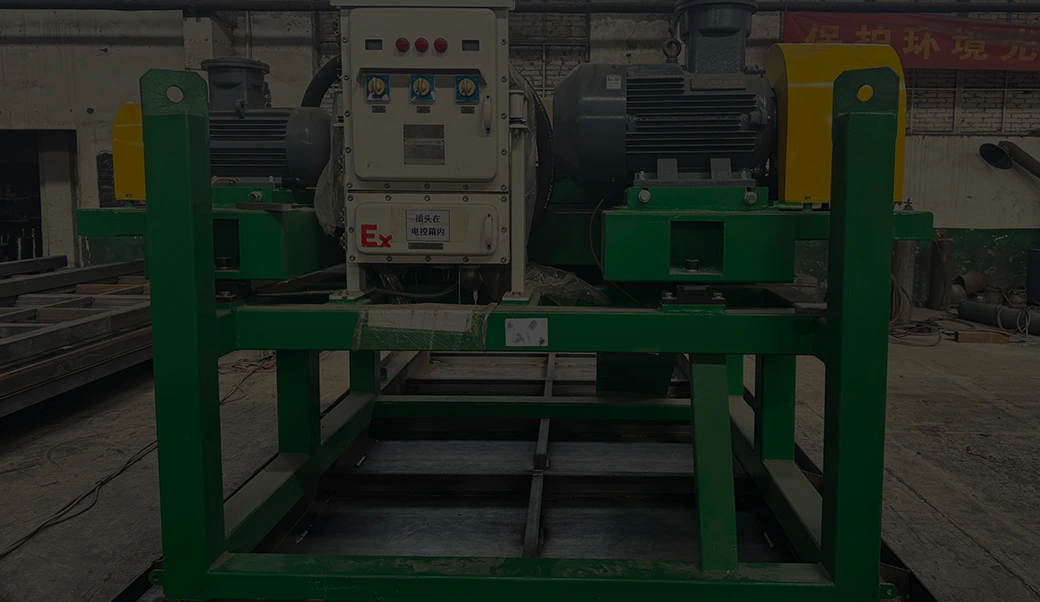
Drilling mud tanks need a mud agitator whenever the drilling fluid contains weighted solids, chemical additives, or high-viscosity materials that tend to settle out of suspension during circulation pauses. In practice, this means nearly every active tank in an oil and gas, geothermal, or HDD operation requires one. Without continuous agitation, weighting agents like barite sink to the tank floor within minutes, creating uneven mud density that destabilizes downhole hydrostatic pressure and accelerates equipment wear. A properly sized agitator keeps every component of the fluid in uniform suspension throughout the entire drilling cycle.


Understanding Drilling Mud Tanks and the Role of Mud Agitators
What Happens Inside a Mud Tank Without Agitation
There are hundreds of barrels of fluid in a drilling mud tank. This fluid moves drill bits, chemical additives, and weighting agents all at the same time. As soon as the flow slows down or stops, gravity starts pulling the denser solids to the bottom. Within 15 to 30 minutes, heavy barite particles can harden into a layer that is hard to break apart again. This lowers the volume of the active fluid and changes the weight of the mud throughout the system.
How a Mud Agitator Works
An impeller shaft is pushed down into the fluid by a mud agitator that sits on top of the tank. Axial and radial flow patterns are made by the spinning impeller, which keeps objects in suspension. ZHONGCHENGJIXIE units use industrial-grade helical or worm gear reducers to provide steady force at 60–90 RPM. They come with impeller widths ranging from 600 mm to 1,100 mm and motor power ranging from 3 kW to 22 kW, so they can work with tanks of different sizes and fluid densities.
Consequences of Poor Agitation
Solids settle to the bottom of the tank without proper agitation, chemical treatments stop working, and mud engineers have to add new ingredients to make up for it. The International Association of Drilling Contractors (IADC) says that fluid-related unexpected downtime costs the business millions of dollars every year. Building up sludge also shortens the life of the tank and makes cleaning it a lot harder.
When Are Mud Agitators Necessary in Drilling Mud Tanks?
High-Density and Weighted Fluids
Any mud system with a specific gravity above 1.2 needs to be mixed by machines all the time. When the density is high, barite and other weighting agents settle down quickly. Even a short break in mixing can lower the effective mud weight in the back part of the tank by 0.1 to 0.2 SG. This means that wellbore pressure control is directly affected.
Large-Capacity and Multi-Compartment Tanks
When a tank has more than 50 barrels in each section, pump flow alone is not enough to get to every part of the vessel. There are dead zones at the edges and close to the walls. Multiple agitators spaced out according to the shape of the tank are the standard way for the industry to get rid of these areas and keep the fluid's properties equal throughout.
Batch-Mixed Chemical Systems and HDD Applications
When viscosifiers, lubricants, and fluid-loss agents are mixed in batches with a base fluid, they need to be stirred continuously to make the result homogeneous. The same idea applies to horizontal directional drilling (HDD) operations. Bentonite slurries must stay mixed in recycling tanks so that sediment doesn't build up and clog pipes during long-distance pulls.
Types and Design Principles of Mud Agitators for Drilling Tanks
Gear Reducer Selection: Helical-Bevel vs. Worm Gear
Helical-bevel gear reducers are a suitable choice for a mud agitator used in demanding 24/7 drilling cycles because they can provide transfer efficiency of up to 95% and generate less heat during extended operation. Worm gear reducers are more compact and less expensive, making them suitable for light-duty mud agitator applications where tank volume and mud density are moderate. ZHONGCHENGJIXIE mud agitator units are available with both reducer options, allowing engineers to select the configuration that best matches their tank size, mud properties, operating hours, and performance requirements. Choosing the appropriate mud agitator and gearbox combination can help support reliable mixing performance throughout continuous drilling operations.
Impeller Design and Dynamic Balance
Since the turbine is the part that touches the fluid directly, how well it mixes is determined by its shape. Canted-blade impellers encourage axial downward flow, which moves things around on the tank floor and stirs up things that have settled. All of ZHONGCHENGJIXIE's agitator shafts and impellers are tested for dynamic balance according to ISO 1940 guidelines. This makes sure that the shaking levels stay low enough to protect the gears and mounting structure even after years of use.
Explosion-Proof Motor Standards
If you're drilling in the United States, you have to follow the rules for NEC Class I, Division 1 dangerous areas. Every mud stirrer that is put into a working mud system needs to have a motor that is approved not to explode and is rated for Zone 1 or something similar. Besides having full ISO 9001/14001/45001, HSE, TÜV, and BV certifications, ZHONGCHENGJIXIE agitators also meet ATEX and IECEx standards. This means they can be used for both domestic and foreign projects.
Selecting the Right Agitator for Your Operation
Matching Power to Tank and Fluid Parameters
A standard point of reference that drilling engineers often use is 15 kW for a 100-barrel tank section with 2.0 SG mud in it. A 5.5 kW or 7.5 kW unit is often enough below that density or volume. To do it right, you should figure out how much power you need by looking at the specific gravity of the mud, the size of the tank, and the lowest speed at which the weighting material needs to be moved around. Then, you should choose the standard motor size that is closest to that number.
Key Performance Factors Worth Evaluating
Often, procurement teams want to know what makes one stirrer provider different from another. Here are the most important technical factors that affect how well a field does:
- Gear reducer efficiency: Helical-bevel gears reduce heat buildup and extend service intervals compared to lower-efficiency alternatives, directly lowering long-term maintenance costs.
- Material specification: Shafts, impellers, and housings built from wear-resistant and corrosion-resistant alloys resist the abrasive and chemically aggressive nature of weighted drilling fluids, extending service life in harsh field conditions.
- Noise and vibration levels: Units verified to operate below 80 dB at one meter and meeting ISO 1940 balance standards protect both personnel and adjacent equipment from fatigue damage during extended campaigns.
- System compatibility: An agitator that integrates directly with an existing solids control system—including shale shakers, desanders, and mud cleaners—avoids costly field modifications and reduces installation time.
When looked at as a whole, these factors show whether a stirrer works consistently over a multi-year project or causes frequent downtime. Most of the time, equipment that meets all four factors has a lower total cost of ownership over the course of the digging program.
Procurement and Supplier Qualification
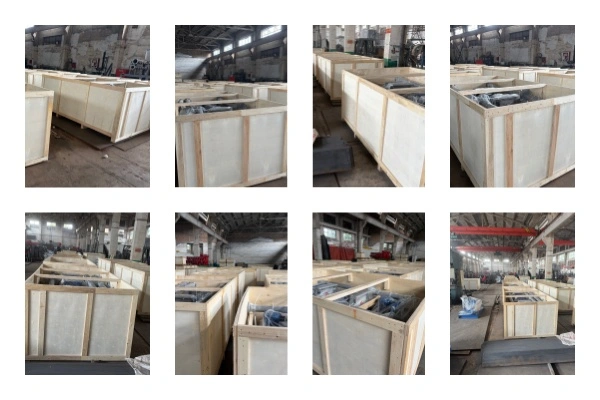
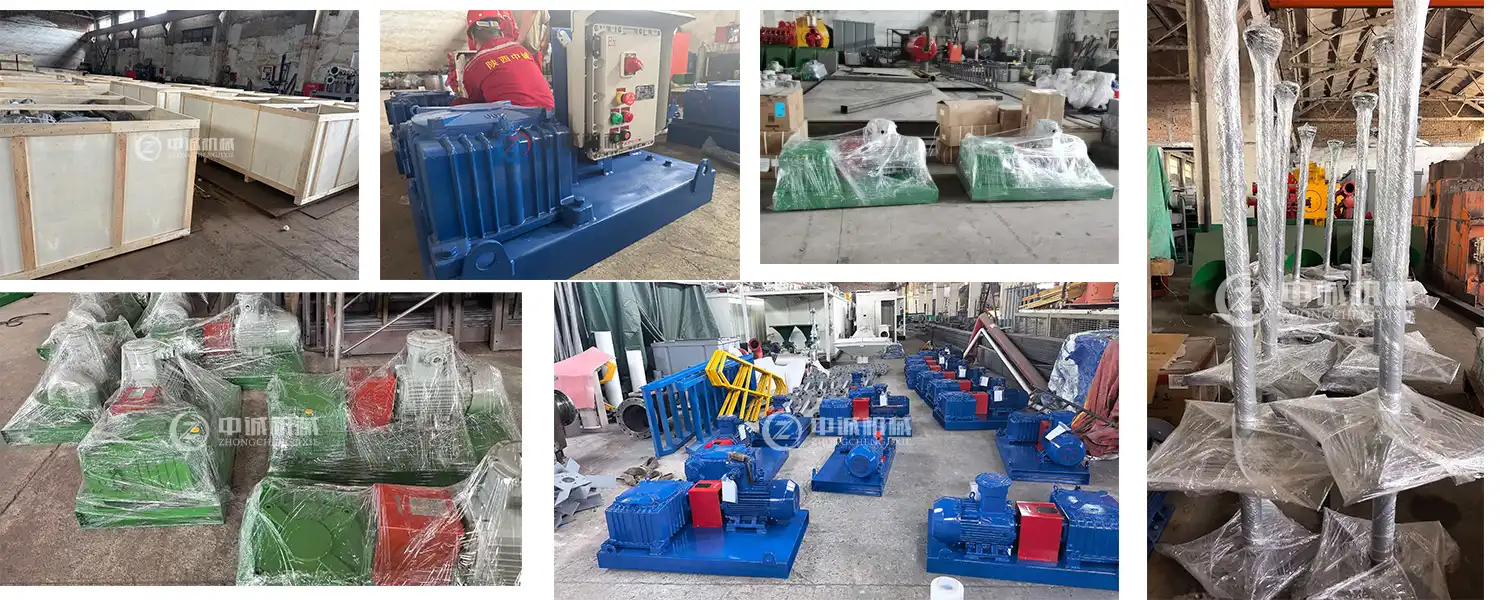
In addition to technical specifications, procurement managers need to make sure that suppliers can deliver the required mud agitator equipment on schedule. ZHONGCHENGJIXIE ships standard mud agitator models that are in stock within three days and completes custom configurations within fifteen days. Each mud agitator is shipped in secure packaging that can be handled easily, including plastic film, rainproof tarps, and strapping. Depending on the requirements of the shipment, pallets or wooden crates can also be used to protect the mud agitator during transportation. Every order comes with complete technical documentation, such as engineering drawings, component diagrams, and operation instructions, helping users install and operate the mud agitator correctly.

Installation, Maintenance, and Troubleshooting
Installation Best Practices
Place the agitator on a tank top pad that is structurally reinforced to spread the load out evenly. Before starting up, compare the shaft's submergence depth to the manufacturer's recommendations. If there isn't enough submergence, vortexing happens, which lets air into the mud system. Before you load the system, make sure that all of the mounting bolts are tightened to the recommended levels and that the motor is turning in the direction that the impeller was designed to go.
Routine Maintenance Schedule
Every 2,500 hours of use, the gearbox oil needs to be changed, and at every planned repair stop, the oil seals should be checked for signs of leaking. Every 500 hours when working with high-solids or high-SG fluids, check the propeller blades for erosion wear. During walkaround inspections, listening for bearing noise or feeling for unusual shaft heat can give you early warning before minor wear turns into a failure.
Common Troubleshooting Scenarios
Most of the time, too much shaking is caused by one of three things: a shaft that has been bent from impact, an impeller that isn't fully buried, or fixing hardware that is loose. If the motor in a properly stated unit gets too hot, it's usually because the airflow is stopped or the oil level in the gearbox has dropped below the minimum level. Taking care of both problems takes only a few minutes of inspection but keeps the system from being down for hours without warning.
Benefits of Using Mud Agitators in Drilling Mud Tanks
Consistent Mud Quality Across the System
Since the density of the fluid is the same from tank to tank, every barrel pumped downhole provides the hydrostatic pressure that the drilling expert set. Because of this consistency, mud weight corrections are done less often, fewer additives are used, and drilling fluid costs stay the same over a long campaign.
Reduced Downtime and Lower OPEX
If solids stay in solution, tank cleaning times get a lot longer, and centrifuge loads stay the same. This lets solids control equipment further downstream work as efficiently as it was meant to. Over the life of a well, operational costs go down directly because of less emergency maintenance and fluid waste.
Environmental and Compliance Benefits
In the US, oilfield operators are getting more and more attention from regulators over how they get rid of mud and recover fluid. When the fluid system is properly stirred, it stays active and can be recovered. This lowers the amount of waste that needs to be treated away from the site and helps operators meet environmental compliance goals without having to buy more process equipment.
Conclusion
Drilling mud tanks need a mud agitator whenever weighted, chemically treated, or high-viscosity fluids are in use—which describes the majority of modern drilling programs. The equipment prevents solids from settling, keeps mud properties uniform, and reduces both fluid waste and unplanned downtime. Selecting the correct agitator requires matching motor power, impeller size, and gear reducer type to actual tank dimensions and mud density. With proper installation, routine oil changes, and periodic impeller inspections, a quality unit will deliver years of dependable service across oil and gas, geothermal, and HDD applications.
FAQ
How often should I service the gearbox on a mud agitator?
Change gearbox oil every 2,500 operating hours under standard field conditions. In high-ambient-temperature environments or where the unit runs under heavy continuous load, shorten that interval to 1,500–2,000 hours. Check oil seals at each scheduled maintenance stop to catch minor leaks before they contaminate the mud system.
Can an agitator be retrofitted to an existing tank?
Yes. Most standard tank tops can accommodate a bolt-on agitator mounting pad without structural modification, provided the top plate thickness meets load requirements. A qualified engineer should verify the structural capacity and confirm shaft length against actual fluid depth before ordering the unit.
What power source options are available?
Electric motors are the standard choice for onshore operations due to efficiency and ease of control. Pneumatic drives are available for locations where electrical infrastructure is limited or hazardous area classification makes electric installation impractical. For most applications running 2.0 SG mud in a 100-barrel tank section, a 15 kW electric motor delivers the appropriate torque and turnover rate.
How do I know if my current agitator is undersized?
Visible solids accumulation on the tank floor during operation, inconsistent mud weight readings between compartments, or increasing frequency of barite additions are the clearest field indicators that the installed mixing capacity is insufficient for the current fluid and tank combination.
Get a Customized Mud Agitator Quote from ZHONGCHENGJIXIE
The company ZHONGCHENGJIXIE makes mud agitators that are used in HDD, geothermal, oil and gas drilling, and base building. We are a direct manufacturer of mud agitators and have ISO 9001/14001/45001, TÜV, and BV certifications. We back up every unit with a one-year guarantee, full technical documentation, and quick customer service after the sale. In-stock items are sent out within three days. Our engineering team will help you choose the best configuration for your project based on the size of your tank, the density of the mud, and the type of rig you have. To get a price, email us at oliver@zcgukong.com or go to zcsolidscontrol.com.
References
1. International Association of Drilling Contractors (IADC). Drilling Manual, 12th Edition. IADC, 2015.
2. American Petroleum Institute. API RP 13C: Recommended Practice on Drilling Fluids Processing Systems Evaluation. API, 2010.
3. Bourgoyne, A.T., Millheim, K.K., Chenevert, M.E., and Young, F.S. Applied Drilling Engineering. Society of Petroleum Engineers, 1986.
4. Caenn, R., Darley, H.C.H., and Gray, G.R. Composition and Properties of Drilling and Completion Fluids, 7th Edition. Gulf Professional Publishing, 2017.
5. Mitchell, R.F., and Miska, S.Z. Fundamentals of Drilling Engineering. Society of Petroleum Engineers, 2011.
6. Lyons, W.C., and Plisga, G.J. Standard Handbook of Petroleum and Natural Gas Engineering, 3rd Edition. Gulf Professional Publishing, 2016.