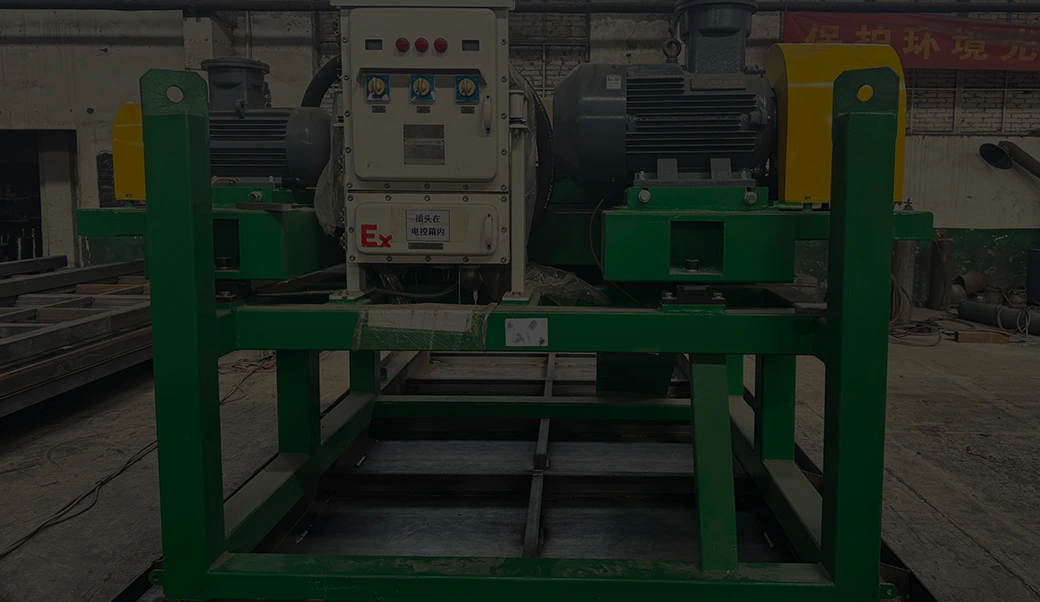
When drilling operations depend on precise fluid properties, a jet mud mixer becomes one of the most important pieces of equipment on the rig floor. This device handles new drilling fluid preparation, rapid mud weighting, and chemical formulation for challenging formations — all at a dispensing speed of 60 to 100 kg/min. Whether you manage procurement for an oilfield contractor or oversee rig operations across multiple sites, understanding how this equipment works and what separates a quality unit from an average one directly affects your project's bottom line.
Understanding Jet Mud Mixers and Their Operating Principles
Venturi is the idea behind how a jet mud mixer works. A nozzle lets high-pressure fluid run through it, creating a vacuum that pulls dry additions like barite, bentonite, and polymers straight from the bin into the moving mud stream. This creates strong shear forces that separate solids into smaller pieces without the need for mechanical paddles.
How the Venturi Nozzle Drives Performance
The tip is what makes the machine work. A Venturi nozzle that is properly designed creates a low-pressure zone that is strong enough to continuously take in dense materials. ZHONGCHENGJIXIE's improved ejector flow path keeps the material flow high and prevents clogging, which is a typical place where standard designs fail.
Capacity and Power Parameters
As long as the motor power is between 37 and 55 kW, the unit can drill from 1,000 m to 9,000 m deep. The system stays stable even when formation conditions and mud weight needs change because it can handle 120 to 240 m³/h and has an input pressure of 0.25 to 0.4 MPa.
Single-Jet vs. Dual-Jet Configurations
You can get the equipment in either a Single-unit (one hopper and one pump) or a Dual-unit (two hoppers and two pumps) configuration. The hopper and pump set can be mounted on a skid together or separately through pipes, which gives rig managers options when there isn't much room on the tank top.


Jet Mud Mixer vs. Conventional Mixers: A Comparative Analysis
A lot of the time, drilling teams want to know if a jet-type mixing unit works better than paddle mixers or regular agitators. The answer is different for each application, but in most high-volume situations, the performance gap is big.
Speed and Energy Efficiency
Jet mud mixers mix the additives all at once, which is something paddle mixers rarely do. Longer contact times are needed for paddle agitators to break down materials, which means they use more energy per unit of blended fluid. A Venturi-based unit mixes things more thoroughly and uses less power during each turn, so it dissolves everything faster.
Addressing "Fish-Eye" Formation
"Fish-eyes," which are clumps of polymers, happen when there isn't enough shear during mixing. This problem is solved by jet-type equipment that sends ingredients to the middle of the fast-moving stream, where shear forces are strongest. This effect can't be achieved with paddle mixers or low-energy agitators, which causes the rheology of the mud to be irregular.
Role of Shale Shakers in the System
Shale shakers work together with solid control circuits, not against them. Before the fluid goes back to the active pit, shakers remove drill cuttings mechanically. Upstream, the jet mixing unit re-weights and treats the fluid with chemicals. They keep the mud's qualities up, which keeps the wellbore stable.
Optimizing Jet Mud Mixer Performance for Enhanced Drilling Efficiency
To get regular results from fluid mixing tools, you need to pay attention to both how well it was designed and how it is used every day. Here are the most important things you can do to keep your tools working well over time.
- Monitor inlet pressure regularly. Pressure below 0.25 MPa weakens suction at the hopper, slowing the dispensing rate and reducing mixing uniformity. Checking centrifugal pump output before each shift prevents this issue.
- Inspect nozzle wear on a scheduled basis. High-chromium alloy nozzles typically deliver 1,500 to 2,500 operating hours before degradation. Tracking hours and replacing nozzles on schedule prevents gradual drops in shear performance that go unnoticed until mud quality suffers.
- Use the correct nozzle material for the mud type. For high-salinity or corrosive muds, stainless steel (SS316) construction throughout the hopper and valve assembly prevents accelerated wear. ZHONGCHENGJIXIE offers full stainless steel versions specifically for offshore salt spray and high-chloride environments.
When done regularly, these maintenance steps cut down on unplanned downtime and make the equipment last much longer than the standard insurance period.
Procurement Guide: How to Choose and Source the Right Jet Mud Mixer
Choosing a drilling fluid mixing unit is a technical choice that will affect your costs in the long run. Before sending out a purchase order, procurement managers and drilling engineers should look at a number of factors that tell the difference between dependable suppliers and ordinary sellers.
Match Equipment Configuration to Rig Type
Different drilling rigs, from ZJ30 to ZJ90, require different tank layouts, processing capacities, and power system configurations. If a supplier only offers equipment in fixed sizes, procurement teams may have to make unnecessary compromises. ZHONGCHENGJIXIE provides skid-mounted designs with flexible piping options that can be configured for both smaller onshore rigs and larger offshore installations. A properly configured jet mud mixer can be matched to the available tank layout and processing requirements, helping operators achieve consistent mud preparation across different rig configurations. For projects with changing operating conditions, the flexibility of a jet mud mixer can also simplify equipment integration and installation. By selecting the right jet mud mixer configuration in advance, drilling contractors can better align mixing performance with the requirements of ZJ30 to ZJ90 rigs. A reliable jet mud mixer therefore provides a practical solution for projects that require adaptable mud mixing equipment.
Verify Certifications and Protection Ratings
When used in possibly dangerous environments, equipment must meet established safety standards. The ZHONGCHENGJIXIE jet mixing machine is certified by ISO 9001, ISO 14001, and ISO 45001, and it also meets HSE standards and is approved by TÜV and BV. The level of electrical protection is at least IP55, and there are explosion-proof motor choices for Zone 1 and Zone 2 safety zones.
Evaluate Total Cost of Ownership
Purchase price is one factor; the real cost is determined by the warranty terms, the availability of spare parts, and how often the nozzles need to be replaced. ZHONGCHENGJIXIE offers a full warranty for one year, keeps standard units in stock for quick delivery within three days, and provides custom configurations within 15 days. Plastic film, rainproof tarps, strapping, and, if desired, pallets or wooden boxes are all used for transport packing.
Applications and Case Studies: Real-World Examples of Jet Mud Mixer Effectiveness
Jet-type mixing equipment has shown measurable results in a number of different digging areas. In all of these uses, the main thing that is the same is that the fluid preparation time is shorter, and the mud properties stay the same at depth.
Oil and Gas Drilling Operations
Rapid mud weighting is not just a matter of taste when it comes to coastal oil and gas projects; it is also a matter of well control. When drilling in high-pressure formations, kicks can be avoided by quickly increasing the density of the fluid with barite. It is much faster for a dual-jet unit moving at 100 kg/min to re-weight a 240 m³/h circulation system than any paddle-based alternative.
Geothermal and Natural Gas Exploration
During geothermal drilling, high-temperature formations can alter mud chemistry and create additional demands on fluid treatment. Adding polymers that help maintain stable rheological properties under thermal stress requires reliable mixing equipment, and a properly configured jet mud mixer can provide consistent blending performance. In shale gas and coalbed methane operations, chemical additives must also be mixed carefully to achieve the desired drilling-fluid properties. The Venturi-based mixing method used in a jet mud mixer can support efficient incorporation of polymers, weighting agents, and other additives into the mud system. For demanding drilling applications, selecting the appropriate jet mud mixer can help maintain consistent fluid quality and support stable treatment performance. A well-designed jet mud mixer is therefore a practical option for geothermal, shale gas, and coalbed methane drilling operations where reliable additive mixing is required.
Foundation and Geotechnical Projects
Slurries made from bentonite are used by big foundation and piling builders to keep hollow walls stable. A jet mixing device is built right into compact mud recycling units. It quickly hydrates bentonite and keeps the slurry's density constant during long pile operations. This cuts down on waste and keeps production steady.

Conclusion
A properly specified jet mud mixer cuts down on the time it takes to prepare the fluid, keeps the mud's density accurate, and lowers the risk of wellbore instability caused by mixing that isn't done right. In a wide range of applications, such as oil and gas drilling, geothermal exploration, and foundation building, this type of equipment performs better than traditional options. ZHONGCHENGJIXIE makes certified, field-proven units in both single and dual configurations. They come with full technical support, proof of compliance, and quick service after the sale.
FAQ
Why is suction weak at the hopper?
Most of the time, a weak hopper flow is caused by either not enough entry pressure or a partly blocked nozzle. Before looking into other reasons, make sure the centrifugal pump works within its recommended 0.25 to 0.4 MPa range.
How does this equipment prevent polymer clumping?
The high-shear Venturi nozzle pulls the additives into the middle of the fast-moving stream. By slowly adding polymers to this area, clumps are broken up before they can form in the mud tank.
Can it handle corrosive or high-salinity mud?
Yes, units made with hoppers made of SS316 stainless steel and chemically resistant butterfly valves work well in saltwater muds and marine settings where they are constantly exposed to salt spray.
What is the typical nozzle service life?
Under standard abrasive conditions, a high-chromium metal nozzle lasts between 1,500 and 2,500 hours of use. Tracking hours and refilling on time keeps mixing performance high.
Does the unit meet hazardous area electrical requirements?
To meet the safety standards for Zones 1 and 2, standard units come with motors that won't explode and anti-static parts. The level of electrical safety is at least IP55.
Partner with ZHONGCHENGJIXIE for Your Next Jet Mud Mixer Purchase
ZHONGCHENGJIXIE offers certified jet mud mixer solutions made for tough drilling and oilfield conditions. We have been making products for over 30 years, have our own patents, and offer a full range of products, including single- and dual-jet configurations. Our prices are competitive, and we can ship stock items within three days. We also provide full technical documentation. Get a price right away by emailing our team at oliver@zcgukong.com or going to zcsolidscontrol.com.
References
1. API Recommended Practice 13C — Drilling Fluids Processing Equipment, American Petroleum Institute, 2010.
2. Bourgoyne, A.T. et al. — Applied Drilling Engineering, Society of Petroleum Engineers Textbook Series, 1986.
3. Darley, H.C.H. & Gray, G.R. — Composition and Properties of Drilling and Completion Fluids, Gulf Professional Publishing, 1988.
4. Mitchell, R.F. & Miska, S.Z. — Fundamentals of Drilling Engineering, Society of Petroleum Engineers, 2011.
5. Drilling Contractor Magazine — "Solids Control Best Practices in High-Pressure Drilling Environments," IADC, 2019.
6. ISO 9001:2015 — Quality Management Systems: Requirements, International Organization for Standardization, 2015.