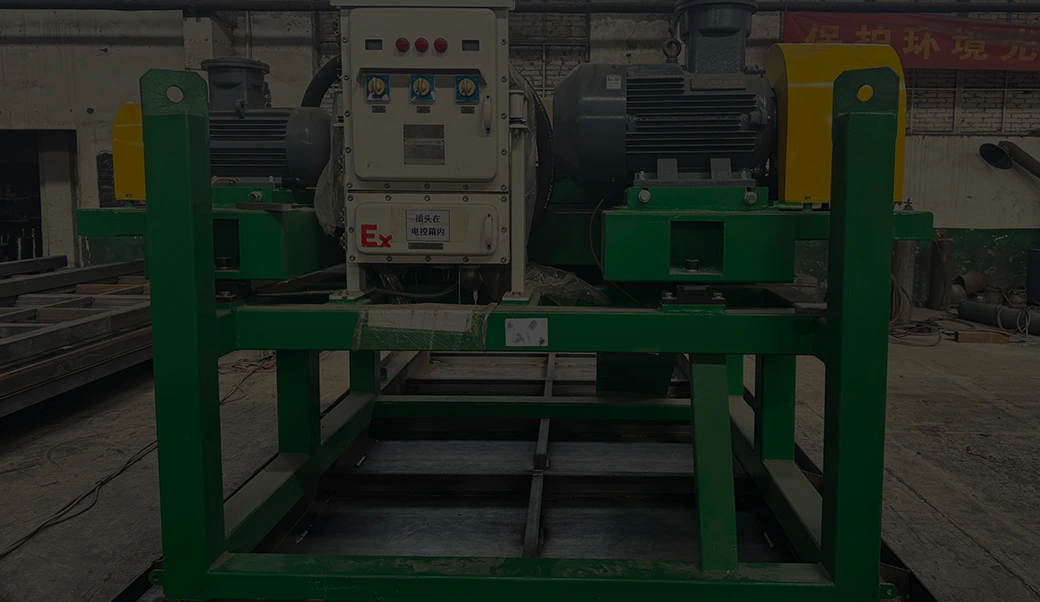
The short answer is yes — but only when the right pump is selected and properly maintained. A centrifugal pump engineered for abrasive service uses hardened wetted components, optimized hydraulic geometry, and robust sealing systems to resist wear from sand, cuttings, and solid-laden drilling fluids. In oilfield applications, where drilling fluid carries sharp particles at high velocity, an improperly specified pump fails within weeks. A well-matched unit, however, sustains continuous operation across demanding duty cycles with significantly reduced intervention intervals.

Understanding the Challenges of Pumping Abrasive Fluids
Fluids that are abrasive are not just dirty fluids. They carry objects in suspension, such as drill bits, silica particles, barite, or fine sand, that cut every interior surface they touch like tiny knives.
What Makes a Fluid "Abrasive" in Industrial Drilling?
Heavy solids usually make up between 5% and 25% of the volume of return mud used in oil and gas drilling, creating significant wear challenges for a Centrifugal Pump. At these solids concentrations, the impeller surfaces can wear rapidly, mechanical seals may lose proper contact with the housing faces, and bearing housings can experience increased radial loads. For a Centrifugal Pump operating in slurry service, these wear mechanisms can significantly increase maintenance requirements and reduce service life. According to the Hydraulic Institute, more than 40% of unexpected pump breakdowns in slurry service are caused by wear and tear. This figure shifts the procurement discussion from the initial purchase price of a Centrifugal Pump to its total lifecycle cost, helping managers evaluate long-term maintenance, reliability, and operating expenses more effectively.
In addition to removing material, abrasive media speeds up cavitation damage when the Net Positive Suction Head (NPSHa) falls below what the pump needs. When a vapor bubble pops, it puts extra stress on turbine vanes that are already under a lot of stress. This makes them wear out faster and reduces the average time between breakdowns. When drilling engineers are aware of these processes early on, they can choose tools with enough NPSH margins and the right material grades before a project starts.

Key Design Features That Make a Difference
A standard pump body is not enough to handle abrasive slurries without having to replace parts all the time. Every place where solid bits touch moving metal must be taken into account in the design.
Material Selection: Where Durability Begins
The main materials used to make abrasion-resistant pump cases and impellers are ductile iron, chromium white iron, and high-chrome metals. Because it is both tough against pressure and easy to work with, ductile iron is the best material for drilling mud service casings. The casing and all wet parts of our Centrifugal Pump are made of ductile iron, which gives them measured strength to both impact and abrasion under constant digging conditions.
Seal and Bearing Engineering for Harsh Environments
For abrasive service, mechanical seals need hard-face materials like silicon carbide or tungsten carbide, along with controlled flush arrangements that keep particles away from the seal faces. Bearing housings have to be able to handle the extra radial loads that happen when fluids that are full of solids move through areas that are not at their best efficiency (BEP). Running a pump close to its BEP cuts down on internal flow and makes seals and bearings last a lot longer.
One of the best things about the Zhongcheng Centrifugal Pump is its design:
- Ductile iron casing and wetted parts don't get damaged by impact or abrasion in sand-heavy drilling fluids, so the parts last longer than cast iron ones.
- Hydraulic construction optimized for stable flow lowers internal turbulence, which saves energy and keeps the turbine shape from wearing away too quickly.
- Usable as an auxiliary mud priming pump, giving operators the freedom to use it in solids control feeding, mud mixing, jetting, and mineral processing plant circuits.
- Core specifications covering Head: 21–40 m, Capacity: 28–320 m³/h, and Motor Power: 5.5–75 kW can fit drilling rigs from ZJ30 to ZJ90 without having to have the hydraulics redesigned from scratch.
These benefits directly address the practical problems that drilling companies face, such as equipment that is rigid and can't be changed to fit different rig sizes, unplanned shutdowns, and high wear-parts costs.

Maintenance Strategies That Reduce Downtime
When used in rough conditions, even the most durable pump needs to be maintained in a strict way. It is not possible to get rid of all wear, so the goal is to find it and deal with it before it causes something to fail.
Inspection Intervals and Predictive Monitoring
In continual pump service, vibration analysis is still the most accurate early warning sign. A change in the sound signature at bearing frequencies usually happens 200 to 400 hours before a mechanical seal fails, giving you enough time to schedule a repair. Thermal imaging of bearing housings adds an extra layer of data that helps find greasing problems before they lead to bearing failure. When you use these two non-intrusive methods together, inspection costs stay low and you can still see what's going on.
When the suction line and casing are flushed regularly after planned shutdowns, settled solids that speed up static corrosion between operating cycles are removed. Using a parts usage log to keep track of when to replace wear rings, impellers, and shaft sleeves lets maintenance funds be planned instead of being reactive. When procurement managers include these plans in their contracts with suppliers, they get more certainty, which directly leads to lower costs for drilling downtime.
Comparing Centrifugal Pumps with Alternative Solutions
People often suggest positive displacement pumps as an option for gritty slurry service, and there are times when they make sense. If the viscosity is higher than 500 cP or the volume needs to be measured accurately, a progressing cavity or diaphragm pump might work better than a centrifugal unit. Centrifugal Pumps, on the other hand, work better in the high-volume, continuous-flow setting of a drilling rig mud system.
The stator and rotor of positive displacement pumps are always in contact with an abrasive substance at a slow speed. This causes even but fast wear. Centrifugal Pumps, on the other hand, move fluid more quickly through a wider area, which spreads wear out more evenly. With solids loadings below about 30% by weight, a properly designed Centrifugal Pump lasts longer than comparable positive displacement designs in drilling fluid service.
Horizontal configurations are most common for onshore drilling installations because they are easier to align and get to the motor couplings. Vertical submarine versions work well in pit-mounted setups where floor room is limited. Which one to use depends on how the rig is set up, which suction heads are available, and how easy you want to make servicing access.
Selecting the Right Pump: A Practical Procurement Guide
To find the right pump for a rough job, you need to do more than just pick one from a catalog. NPSHr, flow rate (Q), and total dynamic head (H) are the three things that make up the hydraulic environment. Before a specification is finalized, all three must be worked out based on how things really are on the site, not how they should be.
After hydraulic size comes material matching. Ductile iron works well for most drilling mud uses that use water. When fluids that are acidic or high in chloride are present, higher metal types are needed. Making sure the supplier has written material test reports (MTRs) and follows ISO 9001 quality management rules will keep specifications from changing between the order and the delivery.
The total cost of ownership should be calculated by adding up the purchase price, the expected number of times that wear parts will need to be replaced, the amount of energy used, and the time it takes for suppliers to send extra parts. A pump that costs 15% less than the market average but needs to have its impeller replaced twice as often doesn't really save you money over 36 months of use.
Conclusion
Centrifugal Pumps can handle rough drilling fluids as long as they are made of the right materials, have the right hydraulic geometry, and have an organized repair program. With its ductile iron construction, stable-flow hydraulic design, and regular inspection intervals, this system can keep working even during busy oilfield duty cycles. When making purchases, choices based on lifecycle cost instead of original price always lead to better business results. Drilling contractors who work in remote or high-pressure areas can lower their risk even more by choosing a manufacturer with certified quality systems and quick technical support.
FAQ
What particle size can a centrifugal mud pump handle without rapid wear?
Most oilfield Centrifugal Pumps can handle particles up to 50 mm in diameter without damaging the structure, as long as the rotor and casing are made of ductile iron or high-chrome metal. As important as particle size is, so are particle concentration and hardness. Formations that are high in silica make cuts that are sharper and wear away faster than solids that are high in clay, even when the amounts are the same.
Does operating speed affect wear rate in abrasive slurry service?
The rate of wear goes up about as a cube of the speed through wet passages. In high-solids situations, slowing down the rotational speed by 10% can add 25–35% to the life of the impeller. Variable frequency drives (VFDs) let workers match the speed of the pump to the real flow demand. This keeps the pump from wearing out too quickly when the drilling rate is low.
How does NPSH relate to abrasive fluid pumping?
When there isn't enough NPSHa, cavitation happens, which wears down the rotor vanes without using friction. In rough service, both wear processes work at the same time, which makes the damage worse. It is standard practice in drilling fluid applications to keep at least 0.5 m of space between NPSHa and NPSHr.
What certifications should a reliable mud pump supplier hold?
For reliable oilfield equipment suppliers, the minimum requirements are ISO 9001 for quality management, ISO 14001 for environmental management, ISO 45001 for health and safety at work, HSE standards, and third-party approvals from TÜV or BV.
Partner With Zhongcheng for Your Next Drilling Project
Centrifugal Pump options designed especially for oilfield Solids Control Systems are available from ZHONGCHENGJIXIE We offer a thorough 1-year warranty, comply with ISO 9001/14001/45001, TÜV, BV, and HSE standards, and have units in stock that can be shipped within 3 days. This means that we can supply reliable equipment on time for drilling projects. We are a direct manufacturer of Centrifugal Pumps with more than 30 years of experience in the field. We offer full technical support from installation to commissioning. Visit zcsolidscontrol.com or email oliver@zcgukong.com to talk about how your rig is set up and get a personalized list of tools to use.

References
1. Hydraulic Institute. Pump Life Cycle Costs: A Guide to LCC Analysis for Pumping Systems. Hydraulic Institute, 2001.
2. Karassik, I. J., et al. Pump Handbook, 4th Edition. McGraw-Hill, 2008.
3. Shah, S. N., et al. "Rheological Characterization of Drilling Fluids." SPE Drilling & Completion, Society of Petroleum Engineers, 2010.
4. Gülich, J. F. Centrifugal Pumps, 3rd Edition. Springer, 2014.
5. American Petroleum Institute. API RP 13C: Recommended Practice on Drilling Fluids Processing Systems Evaluation. API Publishing Services, 2010.
6. Bourgoyne, A. T., et al. Applied Drilling Engineering. Society of Petroleum Engineers Textbook Series, 1986.