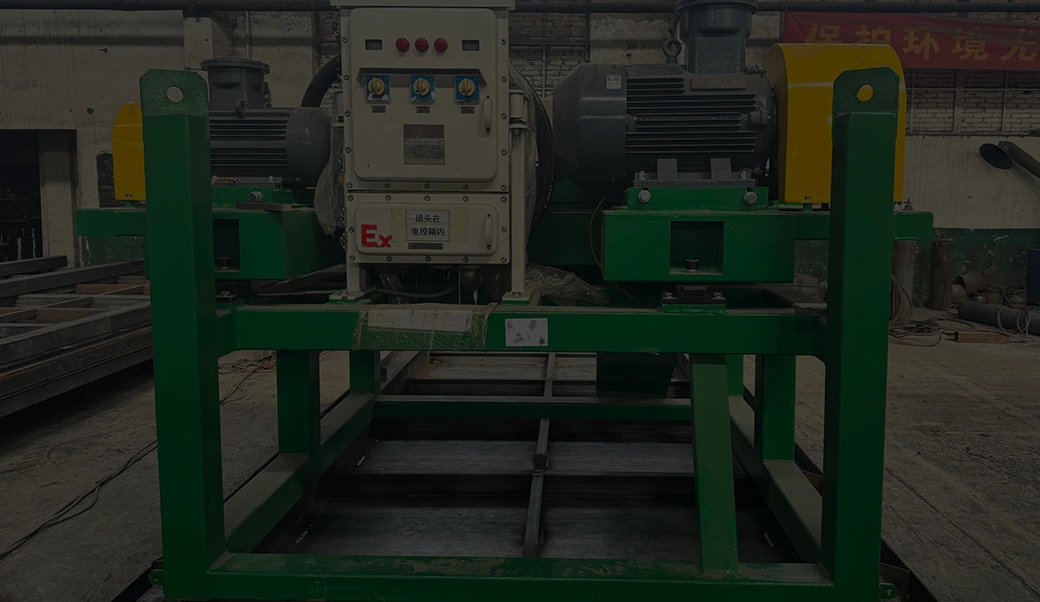
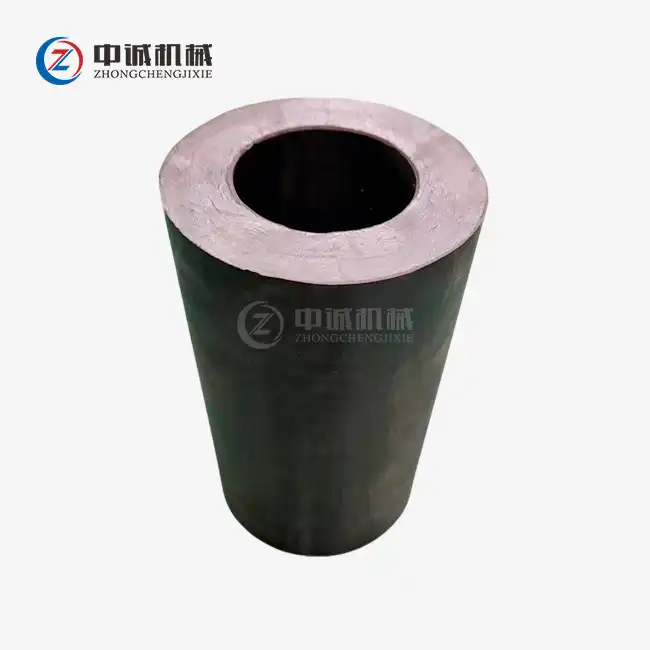
A Accessories/vibration-isolation-rubber-spring">Vibration Isolation Rubber Spring helps to reduce noise from vibrating screens by placing an elastic, energy-absorbing layer between the screen and its support structure. When the screen shakes, it’s the rubber that bends and converts some of the shaking into heat. Then less force goes to the steel frames, chutes, and foundations, and those parts generate less secondary noise. The best spring action consists of matching the spring's natural frequency, stiffness, and load rating to the weight and speed of the screen. In this article, I will explain how the process works, how to find the real source of the noise, and how to select, test, and buy the best rubber isolator.
How Rubber Isolation Springs Cut Vibrating Screen Noise?
Interrupting the Transmission Path
Two kinds of noise are made by a screen that shakes. The deck and exciter send sound into the room. The shaking goes through the mounts and into the steel that holds up the structure. The steel then sounds like a drum. The second path is taken care of by a rubber isolator. When the rubber is compressed, sheared, or a mix of the two, it bends, stores energy, and slowly releases it. Part of that energy is turned into heat by hysteresis, which is internal friction. Less force is acting on the frame, platforms, hoppers, and pipes nearby, so they make less noise and vibration. I tell buyers that isolation first cuts down on noise that comes from structures. Noise from the deck in the air needs other solutions.
Natural Frequency and Stiffness
Isolation is based on the difference between how fast the screen works and how fast the spring system naturally works. Engineering books like Harris' Shock and Vibration Handbook say that isolation starts when the frequency ratio goes above 1.4 and gets better as it goes up. To get a rough idea of the natural frequency, divide 5 by the square root of the static deflection in inches. If you put weight on a spring and it bends an inch, its natural frequency is about 5 Hz. Rubber also gets stiff when it shakes. It is usually 1.2 to 2.0 times as stiff when it is not moving, but this depends on the compound. Before you approve a design, I think you should check with the supplier about that factor.
Damping During Startup and Shutdown
As each screen starts and stops, it goes through a range of speeds. If the natural frequency of the spring system is in that range, the shaking can get very strong for a short time. Rubber is helpful because it has damping built in. While a steel coil spring is close to 0.005, a rubber one is usually between 0.05 and 0.20. The loud banging that operators often hear at startup is lessened by the higher damping, which limits the screen's peak movement as it moves through its natural frequency. At high operating speeds, there is a little more force transfer, so I weigh the benefits of damping and isolation efficiency for each job.
Diagnosing the Root Causes of Vibrating Screen Noise
Mechanical Faults That Create Noise
If the noise comes from somewhere else, new springs won't help. I start with a mechanical list. Rattles and knocks are caused by things like unbalanced exciter weights, worn bearings, loose fasteners, cracked welds, and being out of place. When material is fed unevenly, it can load one side of the deck more than the other. This makes the screen rock instead of moving in a straight line. There is also a sharp rattle from loose screen panels. These are the first things I fix because a new rubber isolator won't cover up a broken weld or a worn-out bearing.
Airborne Noise Versus Structure-Borne Vibration
A Vibration Isolation Rubber Spring helps reduce structure-borne noise caused by vibration from the deck, motor, and material impacts. Airborne noise travels through the atmosphere, while structure-borne vibration moves through steel and concrete before radiating from large surfaces such as platforms, skid walls, and tank covers. I compare the screen frame, support steel, foundation, chutes, guards, and pipes to identify the transmission paths. If the support steel vibrates at nearly the same frequency as the screen, the isolation system may be compromised, and the mounts may require repair. If the supports remain quiet but noise levels are still high, airborne noise is more likely, making an enclosure or barrier a better solution. Worker exposure is also critical. NIOSH recommends an 85 dBA limit, while OSHA sets a 90 dBA limit for an eight-hour shift.
Baseline Records and Spring Condition
I always write down the operating speed, screen weight, excitation force, vibration amplitude, and sound levels in the same places before I change anything. I also check the springs that are already there. Rubber has aged when it cracks, hardens, swells, and sets permanently. Oil, ozone, and heat speed up this damage. This is shown by oil-based mud. Petroleum oil doesn't stick to natural rubber or EPDM well, but nitrile rubber does. A baseline also lets you see if things got better over time and keeps you from having to replace parts that weren't broken in the first place.
Design Principles for a Vibration Isolation Rubber Spring
Load per Support Point
Design starts with what each support is meant to hold. To get a rough idea, I add up the weight of the screen, the mat on the deck, and the exciter forces, and then divide by the number of isolators. Some mounts can be pushed well beyond that average by startup surges, impact loads, and uneven weight, so I compare the result to the supplier's load-deflection curve and add a safety factor. The center of gravity is important. For the feed end of the screen to hold more weight, the mounts there need to be bigger or the layout needs to be changed. If you try to guess the load, you'll quickly buy a spring that doesn't work or stays too stiff.
Compound Selection and Hardness
The spring acts in the field based on the rubber compound. Natural rubber is very flexible and lasts a long time when it gets worn down. Neoprene can stand up to weather and some oil. Nitrile doesn't react with oils, and EPDM works well with weather and ozone but not with oil. According to ASTM D2240, the hardness ranges from 40 to 75 Shore A. A softer compound bends more when the same load is put on it. Heater places need silicone or fluororubber instead of standard compounds from -40°C to +80°C. If I'm drilling in mud, diesel, and sunlight, I don't match the compound to a catalog default. Instead, I match it to the exposure.
Geometry, Shape Factor, and Bonding
As important as the material is, the shape is. The shape factor tells you how stiff a rubber block feels when you squeeze it. It is found by dividing the loaded area by the free surface area. To adjust the stiffness in both the vertical and horizontal directions, engineers use geometry. A tall, narrow spring made of the same material is less stiff than a short, wide one. When it comes to rubber-to-metal types, the quality of the bond is very important. ISO 813 describes a peel test for sticking to a rigid surface. Bonded plates make it easier to bolt things together and keep the load in the middle. Before I place an order, I always compare the measurements, bolt patterns, and clearances to a drawing or sample.
Choosing and Sourcing the Right Rubber Isolator
Information to Gather Before You Request Quotes
Give them the right information, and they can recommend a good fit. I write down the total weight of equipment and materials, number and placement of mountings, frequency and amplitude of operation, installation space, temperature range, chemicals that will be exposed, and expected service life. You will save time by taking a picture of the existing spring and the screen nameplate. In exchange, the supplier shall submit load-deflection curves, compression and shear stiffness, allowable amount of deformation, compound specifications, and temperature limits. When it trades, it is more likely that each side fits the first sample.
Rubber Springs Versus Coil Springs, Air Springs, and Standard Mounts
Each isolation option has its own advantages and limitations. Steel coil springs are not ideal for maintaining alignment under significant bending, which is why they often require separate dampers and corrosion protection. Air springs offer several adjustment options but need an air supply, controls, and additional maintenance. Standard rubber mounts can support equipment weight but may not handle the frequent movement of vibrating screens effectively. A Vibration Isolation Rubber Spring designed specifically for this application offers a practical middle ground. It requires no oiling or separate damping and can be configured with integrated mounting plates to accommodate non-standard loads and dimensions. I make selections based on the operating environment, load, movement, and maintenance requirements.
Evaluating a Supplier and Total Cost
The unit price doesn't tell the whole story. I look at tooling, freight, downtime, replacement frequency, and consistency of quality. A direct manufacturer is better able to handle custom sizes, repeat orders, and drawing control than a trading middleman. Ask for records of inspections, test reports, lead times, minimum order quantities, and information on how to package goods for export. For a very important screen, you should also check a backup source. ZHONGCHENGJIXIE has been making solid control equipment directly for more than 30 years and helps buyers with drawings, manuals, and ISO 9001, ISO 14001, and ISO 18001 management systems.
Testing, Installation, and Mistakes to Avoid
Quality Control Checks Before Delivery
Simple tests show that rubber springs are good. ASTM D395 compression set tests show if the rubber can recover its original shape after being loaded for a long time. ISO 813 adhesion testing is used to prevent bonded parts from separating. Hardness is checked by durometer reading according to ASTM D2240, and dimensional inspection confirms the shape factor is consistent with the calculated spring rate. Long-term behavior may be indicated by rapid oven aging. The stiffness is consistent from order to order due to consistent molding. I ask suppliers what tests they do and ask for the reports with each batch.
Measuring Noise Reduction on Site
I measure the size before and after. First, I measure sound pressure, vibration speed, displacement, working speed, and material load at constant points. After installation, I check for static settlement, load sharing, uniform compression, and alignment. Then I look at startup, steady state, loaded, empty, and shutdown conditions. Therefore, the support steel should be exposed to less noise and vibration, while the screening should still perform as well as it has in the past. I also keep track of installation dates and regularly check the set for cracks, deformation, loose hardware, and corrosion so the team knows when to replace it.
Installation Mistakes That Cancel the Benefit
Good isolation is ruined by a series of mistakes. If you only consider size or price, the screen may be too stiff or too soft. If mount count or layout is wrong, supports are overloaded. If the screen is attached to rigid pipes, chutes, guards, cable trays, or platforms, they can interfere with the springs. Ensure that you have adequate space and flexible connections. Teams also forget about emergency stops and material surges that can cause movement to happen too quickly. Finally, rubber springs perform best with balanced exciters, well-maintained bearings, controlled feed, and, if necessary, acoustic enclosures. Isolation reduces one path for noise. It doesn’t replace regular maintenance.
Conclusion
The sound of a vibrating screen is transmitted to the ear through the air and through the structure. Vibration Isolators Rubber Spring mainly decrease the load on the structure by absorbing energy and limiting the force transmitted to the base. The results are not just about price or softness; they are also about natural frequency, damping, compound, shape, and how well it calculates the load. Finding the source is cheaper than replacing it. Comparing rubber with coil springs, air springs, and standard mounts makes it clear what fits best. Standard tests such as ASTM D395 and ISO 813, and after-measurements, prove quality and performance. As long as the isolation is done correctly, has flexible connections, and is maintained on a regular basis, it works.
FAQ
Can a rubber spring remove all vibrating screen noise?
No, it lowers the noise from the steel and foundations and the vibrations that come from the structure itself. Noise in the air from the motor, the deck, and the impact of materials still needs to be fixed, blocked off, or contained.
Is the softest spring always the best choice?
No, a spring that is too soft can let too much movement happen during startup, shutdown, and material surges. I pick the stiffness based on the load, the operating frequency, and the allowable deflection. Then I check it with the load-deflection curve from the supplier.
How do I choose between natural rubber, neoprene, and other compounds?
Match the compound to the weather, temperature, oil, and ozone. Rubber made from natural rubber is good for many general uses. Neoprene adds weather resistance, nitrile blocks oil, and silicone or fluororubber is better for hotter places.
Can I replace a spring with a standard rubber mount?
Once the requirements for load, stiffness, deflection, mounting, and vibration have been confirmed. If you keep moving the screen on a mount that was made to hold things still, it might break soon.
Request a Vibration Isolation Rubber Spring Recommendation from ZHONGCHENGJIXIE
Looking for a company that can supply you with Vibration Isolation Rubber Springs for your shale shaker or vibrating screen? To get your screen model, load, frequency, and delivery location, email ZHONGCHENGJIXIE at oliver@zcgukong.com. We are a direct manufacturer with more than 30 years of experience in the field. We offer customization, 3-day shipping for in-stock items, 15-day delivery for custom orders, drawings, manuals, and a warranty that lasts for one year. For more information, go to zcsolidscontrol.com.
References
1. Harris' Shock and Vibration Handbook, 2010
2. Mechanical Vibrations (Rao), 2017
3. Occupational Noise Exposure, 29 CFR 1910.95 (OSHA), 1983
4. Criteria for a Recommended Standard: Occupational Noise Exposure (NIOSH), 1998
5. ASTM D395 Standard Test Methods for Rubber Property—Compression Set, 2018
6. ISO 813 Rubber, Vulcanized or Thermoplastic—Determination of Adhesion to a Rigid Substrate—90° Peel Method, 2019