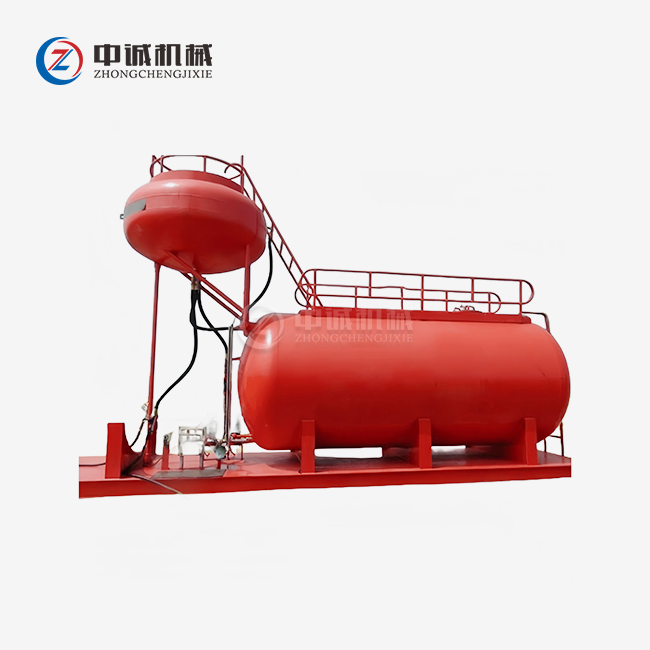
With an elevated base, an Elevated Diesel Tank can bring fuel to work sites. It works like a storage tank. When there isn't an electric transfer pump, diesel flows through the air vent, filter, and line. In some places, like oil fields, mines, remote construction sites, and emergency power sources, there may not be service workers or electricity nearby. It works well there with this setup. There should be enough room for the system to work well, a stable base, and ways to keep spills from happening. It should also follow all fire and environmental rules in the area. This guide was made to help procurement teams compare setups and know what to look for before placing an order.
What Is an Elevated Diesel Tank and How Does It Work?
How Head Pressure Moves Diesel
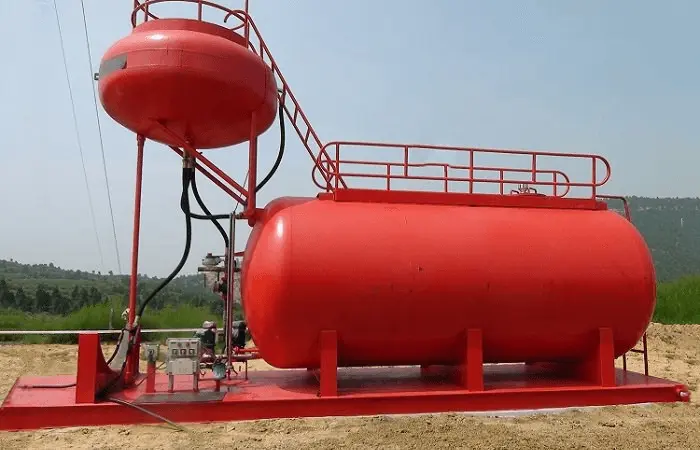
The name for a storage tank that is raised off the ground and set on a frame, skid, or platform is "Elevated Diesel Tank." There is a lot of water flow at that height on the exit. Diesel is 0.83 kg/liter dense, which means that the head pressure goes up by 0.08 bar for every meter of height. The pipe, valves, filter, hose, and tip all rub against each other, which lets some of that pressure go away. As the fuel level drops, the flow slows down. That's why I believe the exit height should be set for the least amount of gas you want to pour out, not for a full tank.
Main Components of a Gravity-Fed System
A diesel tank package can do more than just hold fuel. Parts that are used most often are the tank cover and vent, filter, hose, nozzle, level gauge, vent, and exit isolation valve. A water separator, an enclosure, or an emergency stop is often added at these points. It is harder for the water to move through parts that are too small or too long. This slows down the flow. When I look over a job, I make a list of all the parts that go from the tank's edge to the equipment's beginning. Why does this happen? The speed of refilling is based on the link that is the weakest.
Gravity-Only, Pump-Assisted, and Hybrid Operation
For one-way systems to work best, the part that takes in water should be below the part that lets it out, and the pipe run shouldn't be too long. When the pipes are long, or there are a lot of people who need fast flow, these ways work best. If speed is important, a combination design can have a pump added so that it works with gravity instead. There is no pump on the ZC Elevated Diesel Tank. The transfer pump doesn't get in the way of the fuel because it empties by gravity. In other words, the motor for the pump can't get weak or break. We will test gravity on its own to see if it can handle long lines or a lot of flow on your site.
Key Benefits of Elevated Diesel Tank Systems for Industrial Sites
Fuel Access Without Continuous Power
In the country, generators are often used in quarries, drilling pads, and building sites. When the power goes out, they need fuel to get going again. Diesel keeps coming from a tank that is filled by gravity, even if the power goes out or a pump motor breaks. It's easier to fix things and uses less electricity when there are fewer moving parts. There are still some parts that can stop a refill, but it's not as important to check the design. They like how easy it is because every hour that an engine or rig isn't being used costs money.
Capacity and Footprint for Field Operations
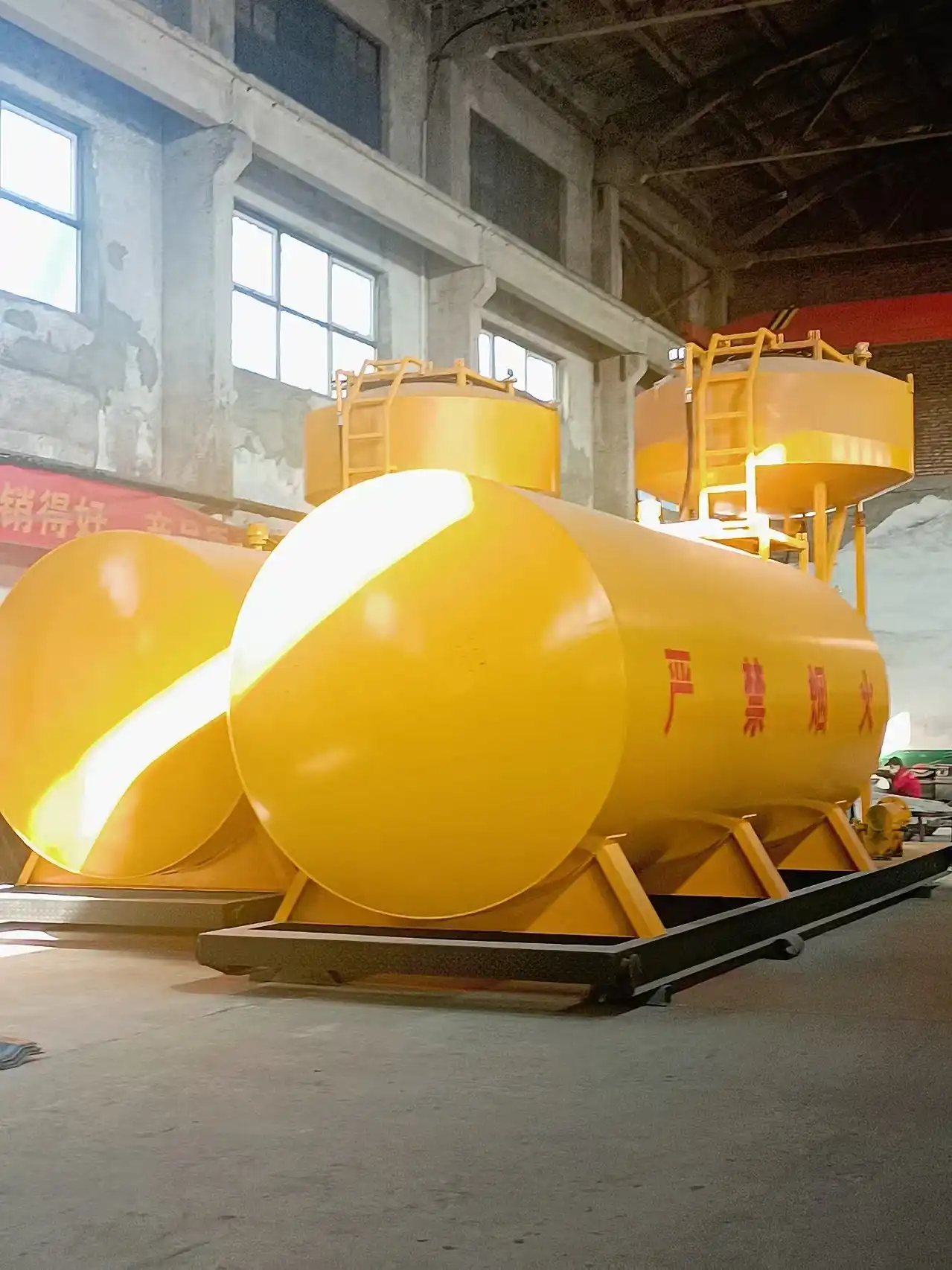
There are 5 to 50 m³, or about 1,320 to 13,200 US gallons, of space that the ZC Elevated Diesel Tank can fit in. Keeping the ship off the ground saves room on the floor and keeps it out of the water below, which can speed up the rusting process. It's easier to move and take with you if you can take off the skid stand. To figure out how much fuel to buy, multiply the amount of fuel used each day by the number of days between fill-ups. This will give you a safety cushion. A building in the US that stores more than 1,320 gallons of oil above ground may have to follow the EPA's SPCC rule. Check that before you pick the size.
Comparing Wall Construction, Material, and Orientation
Single-wall tanks need their own way to keep things inside, like a bund or a spill box. Double-wall tanks, on the other hand, are made to be secondary containment from the start. Polyethylene is lighter than steel, which makes it easy to move around. This makes it better for big set setups. It's simple to get to tanks that are lying flat, but tanks that are standing up save ground space and are easier to get to. A lot of rules say that the control should be about 110% of the tank's capacity. But each area has its own rules, so be sure you know the ones that apply to you. You shouldn't guess what kind of wall and material you want for your order. Instead, talk to our pros.
Designing, Installing, and Securing an Elevated Diesel Tank System
Start With Fuel Demand and Flow Calculations
For good planning, the first thing that should be done is to make a list of all the devices that are linked, along with their availability, reserve days, and refill times. Next, you need to figure out how the minimum fuel level, pipe thickness, pipe length, filters, valves, and fittings affect the flow. It doesn't matter how tall the stand is if the line is short or the filter is full. Still, it will take longer to fill up. Drilling sites with a lot of engines, motors, and a good control system can send us a list of the tools they use. Our engineers make sure the stand's height and outlet size are right for the load once everything is up and running. This is used to make sure that refills don't take too long.
Foundation, Support, and Site Layout
It's heavy when the tank is full. Before the steel is added, a 50 m³ tank can hold about 41,500 kg of diesel, which weighs 0.83 kg per liter. There must be enough strength in the foundation and wind to hold up that load. A trained expert should check the anchoring and the strength of the dirt. Make sure that maintenance workers can get to the area and that there is a safe place to fill up. Fire codes, such as NFPA 30, say how far tanks must be from buildings and property lines. These rules change based on where and how big the tanks are.
Safety Configuration and Compliance
NFPA 30 and the International Fire Code have rules about how to store dangerous and flammable liquids. For example, they say how far apart they should be kept, how they should be vented, and how they should be kept safe from fire. Most of the time, diesel is a Class II hazardous fuel. NFPA 77 says that while the tank is being filled, the pipes, dispensing equipment, and tank itself can be grounded and bonded to keep static electricity from building up. The plan is finished with the right-sized vents, emergency shutoffs, lines that work together, fire extinguishers, spill-response gear, and warning signs. Our goods have been certified to ISO 9001, 14001, 45001, HSE, TÜV, and BV, and the ZC units have everything they need to be safe. There's still work to be done before the city government lets you use that spot.
Maintenance and Selection Guidance for an Elevated Diesel Tank
Maintenance Checklist for Daily, Monthly, and Annual Work
If you check on it often, the tank stays safe, and the fuel stays fresh. Make sure there are no leaks, rust, deformation, broken lines, valve problems, or liquid inside the containment every day or before you use it. Each month, make sure to check the nozzle shutoff, emergency controls, filters, water separators, vents, grounding connections, labels, and water separators. Every year, check the base, pipes, coats, welds, support frame, and bolts. If the temperature changes, condensation forms on the water and sand in the tank. Leaving water there for a long time helps germs grow. ASTM D975 tells you what kind of diesel fuel it is, and keeping it clean is important to keep it that way.
Selecting the Right Elevated Diesel Tank for Your Site
To begin, fill out the form. Crews in mines and oil fields need tanks that are strong and won't break easily. These tanks need to be able to hold power tools and mud pumps. Building sites that are far away need to be able to roll out quickly, and emergency power sites need to be able to run for a long time. It's important to compare the sizes, flow rates, heights, containment, filtering, environmental protection, wait times, installation scopes, warranties, and availability of extra parts. Then don't just look at how much the car costs; also look at how much it costs to own. We usually send things that are in stock within three days. It takes fifteen days for special orders to be sent out after they are made.
Common Mistakes and How to Avoid Them
Most of the time, people pick an amount without first figuring out how much they will need. Some people depend on gravity flow without considering the resistance of the pipe and filter, or they think that compliance is guaranteed because there are two walls. Anchoring, foundation loads, access platforms, and how much it will cost to move and set up the structure are all things that some people forget to think about. You might not get filters, meters, containment, documents, or certification if you get a low quote. Look at how much it will cost to put everything together, get plans and written performance data, and make sure you know what your building needs. This will help you decide what to buy.
ZC Elevated Diesel Tank Applications and Supplier Support
Where the ZC Elevated Diesel Tank Fits
The ZC Elevated Diesel Tank doesn't need a pump and can hold fuel by gravity, making it perfect for work in the field. It's good for drilling in oil fields, mining, building in the middle of nowhere, and having backup power. Strong control systems are already in place, and it works with them. It has a lot of space for diesel and gas drilling tools. For rigs ZJ20 to ZJ90 and XJ350 to XJ750, our business makes pieces for solids control and mud flow. We now understand where to put fuel and how everything else on a drilling site works.
Core Advantages of the Design
The ZC Elevated Diesel Tank is great for field crews for these reasons:
- The transfer pump is taken out of the fuel path by this system, so there is no pump. This gets rid of a common point of failure and lets teams refuel even when the job site doesn't have power. The skid stand is easy to take apart and move, which is helpful for drilling or building work that needs to be moved from one site to another over time.
- Rust-proof and airtight: Strong materials that don't rust keep oil damage, weathering, and crashes from the outside. With this design, oil doesn't leak, which is good for the environment. These qualities are important in places that get dirty, wet, or windy because coatings and seals are always getting hit with dust, rain, wind, and big changes in temperature.
- Things that make it safer: For a mud drainage plan to work, the tank is safe, easy to set up and keep up, and works with strong control systems that are already in place. We can change the size and volume so it works with your drilling rig and the job site.
When plans go wrong, there is downtime, and there is a chance of leaks that can slow down fuel supply in rural places; these perks can help.
Custom Orders, Export Delivery, and After-Sales Support
The company ZHONGCHENGJIXIE has been in business for more than 30 years and is a direct manufacturer. It has a plant that is 6,300 square meters and ships goods to other countries. They also help you after the sale. We can use standard export packaging or make something that fits your needs. We can easily ship to the ports in Tianjin and Shanghai. You get training in the field, a one-year warranty, drawings, flowcharts, operation and maintenance manuals, and more as part of the professional help. This will help us give you the best price. Please tell us how much room you need, the height you want, the flow rate, the number of dispensing spots, the temperature on the site, the standards that should be used, where the product is going to be delivered, and the date you want it delivered.
Conclusion
Because it is elevated, an Elevated Diesel Tank is a good way for businesses to store and move diesel because it allows the diesel to flow by gravity. Without the use of a transfer pump, refueling cars, equipment, and machinery at industrial sites is made easier by an Elevated Diesel Tank. This is especially important in places where there isn't always a stable power source. But the tank's height doesn't tell you anything about how well it works in general. When picking an Elevated Diesel Tank, buyers should think about how much fuel is used every day, how strong the support structure is, secondary containment, ventilation, grounding, and making sure the tank meets local fire safety and environmental rules. When picking the tank wall design, building materials, and placement site, you should also think about how much weight it can hold, how easy it is to get to, and how safe it is from damage from the outside. Checking the equipment often is the best way to find issues like water getting into the fuel, sediment buildup, fuel leaks, and rust before they hurt the fuel or the way it works. An Elevated Diesel Tank with the right safety features and a gravity-fed design can help cut down on the need for pumping equipment and improve fuel supply for oil fields, mines, remote industrial sites, and emergency power uses. If you want to get the best Elevated Diesel Tank, you should think about more than just the price of the tank shell. You should also think about how much the fuel storage and distribution system costs. This method helps people store diesel safely, more efficiently, and for longer periods of time.
FAQ
How does height affect flow rate?
The head pressure of diesel goes up by about 0.08 bar for every meter of height. When the tank is empty, the pipe, filter, hose, and tip rub against each other, which slows down the flow.
Can an elevated tank store petrol?
Not very often, no. You should get a tank made for gasoline because it is more likely to catch fire.
Do I need secondary containment?
A lot of places do. Many rules say that the limit should be around 110% of the tank's size. The EPA SPCC rule may need to be followed by oil tanks that hold more than 1,320 gallons of oil. Find out what the rules are where you live.
How do I manage water in diesel storage?
Every once in a while, get rid of the water and mud. Though changes in temperature cause mist to form. Before you place your order, please call us to find out about the drain and filter options.
What volumes does ZC offer?
It is possible to make the ZC Elevated Diesel Tank fit your needs. It can hold 5 to 50 m³.
Request a Customized Elevated Diesel Tank Quote
Looking for an Elevated Diesel Tank manufacturer that can match your rig, mine, or construction site? ZHONGCHENGJIXIE offers customizable 5–50 m³ pump-free units, a one-year warranty, 3-day shipment for stocked products, and about 15 days for customized orders. Send your capacity, flow rate, and destination to oliver@zcgukong.com, or visit zcsolidscontrol.com for details. Our engineers will recommend a suitable configuration.
References
1. NFPA 30: Flammable and Combustible Liquids Code, National Fire Protection Association, 2024
2. International Fire Code, International Code Council, 2021
3. NFPA 77: Recommended Practice on Static Electricity, National Fire Protection Association, 2019
4. Spill Prevention, Control, and Countermeasure (SPCC) Guidance for Regional Inspectors, U.S. Environmental Protection Agency, 2013
5. ASTM D975: Standard Specification for Diesel Fuel, ASTM International, 2023
6. Fluid Mechanics, 8th Edition, Frank M. White, McGraw-Hill Education, 2016