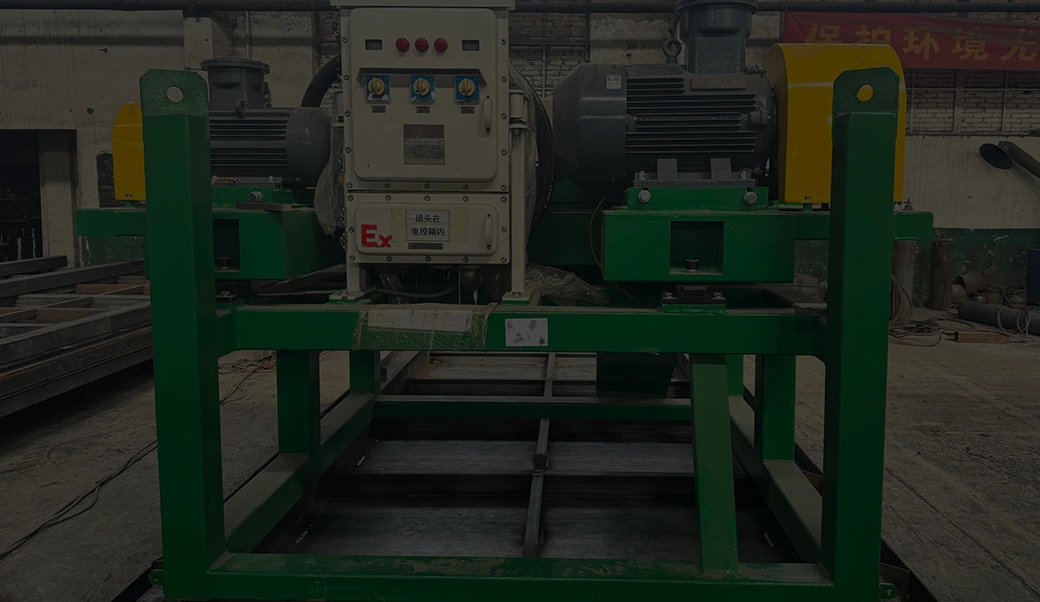
To select an Accessories/explosion-proof-vibration-motor">Explosion-proof Vibration Motor for an oilfield drilling rig, start with the hazardous-area classification, then match the protection method and certificate to that classification. Next, confirm the excitation force, speed, voltage, and duty cycle that your shale shaker or screen needs. Check the enclosure rating, temperature class, and corrosion protection against real site conditions. Finally, review the supplier's documentation, spare parts, and service support. Do not buy on power rating or the words "explosion-proof" alone. I walk through each step below so your procurement and engineering teams can compare options with confidence.
Introduction: Why the Correct Explosion-Proof Vibration Motor Matters on a Drilling Rig?
Parts that clean the mud are moved by the motor that makes the drilling rig shake. If you make the wrong choice, screening will take longer, maintenance costs will go up, or a fire source could be created.
How Vibration Motors Support Solids Control?
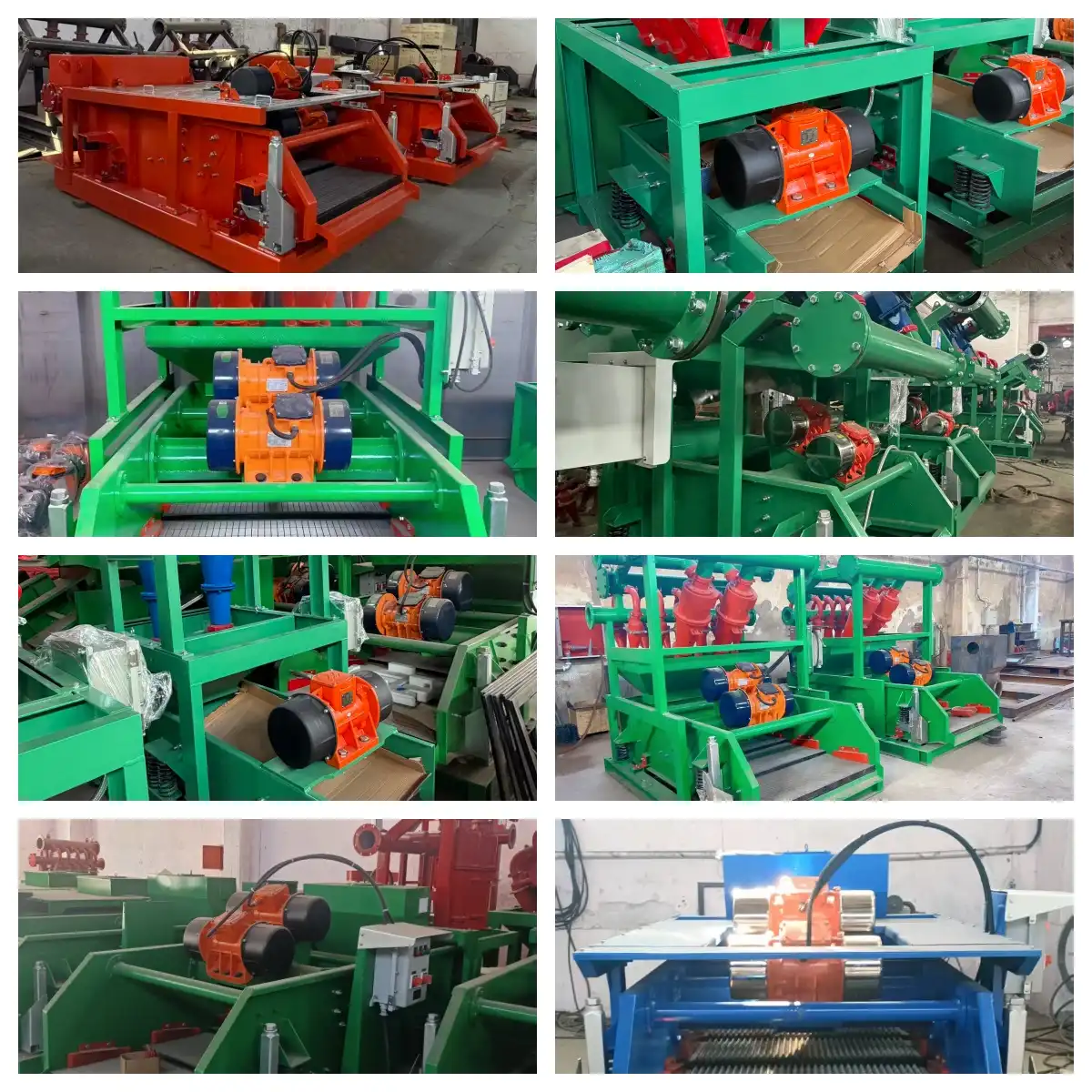
Some machines that work by moving are screens, feeders, conveyors, shale shakers, and shaking machines. Weights that aren't attached to the tube move the screen deck around. This lets the drilling fluid go through and the bits of rock slide off the edge. The cleaner fluid goes back into the system that does the work and keeps the mud's properties stable. The motor for the shaker is at the start of the solids-control line, so if it breaks, it affects every step after it. People rarely only need one thing when they buy something. On a rig that works around the clock, wet cuttings, screen blinding, and more fluid loss will quickly show up if the motor is weak or too hot. There are different points of view when it comes to performance in vibration, safety in dangerous areas, durability, and total cost of ownership. You might not be able to check a cheap motor if it has the wrong markings. Screen space is lost when a motor is too well covered and doesn't have enough force. Things like bearings, lead time, and paperwork also change the real cost over time and over a number of years. So that engineering, operations, and buying can look at each quote the same way, I believe the questions should be asked in a set order. What you need to do to get certified depends on the end user's technology standards, the type of place, the country, and the project.
The Procurement Challenge
People rarely only need one thing when they buy something. On a rig that works around the clock, wet cuttings, screen blinding, and more fluid loss will quickly show up if the motor is weak or too hot. There are different points of view when it comes to performance in vibration, safety in dangerous areas, durability, and total cost of ownership. You might not be able to check a cheap motor if it has the wrong markings. Screen space is lost when a motor is too well covered and doesn't have enough force. Things like bearings, lead time, and paperwork also change the real cost over time and over a number of years. So that engineering, operations, and buying can look at each quote the same way, I believe the questions should be asked in a set order. What you need to do to get certified depends on the end user's technology standards, the type of place, the country, and the project.
The Five-Step Selection Process
Five steps are what I do: mark the area that is dangerous, make sure the certification and protection method are correct, check that the mechanical and electrical needs are met, look at the temperature and environmental protection limits, and judge the supplier's skills, documentation, and lifecycle support. This is the order of the parts that come next. Remember this at all times: never pick a motor based on its kilowatt value or a general claim that it is "explosion-proof." Two motors with the same kilowatt value can have very different force, protection type, and certified gas group. While you read, someone on our team can give you both full information and a certificate check.
Define the Operating Conditions of the Oilfield Drilling Rig
Before you compare models, write down the whole job and the area where it will be done. If you give them a clear profile, they can offer a compliant design instead of a motor that can do a lot of different things.
Identify the Equipment and Vibration Duty
The first thing you should write down for an Explosion-proof Vibration Motor is the piece of equipment you want to list: shale shakers, rotating screens, mud cleaners, sand-removal systems, feeds, or conveyors. Next, make sure you know what you need in terms of load, frequency, working angle, mounting direction, job cycle, start-stop frequency, material load, and service life. What kind of drive does the machine have? Does it have one motor, two motors that work together, or something else? When there is a shock load on a shale shaker, it keeps going. But when there are lighter loads on a feeder, it often starts and stops. If the motor was made for a regular conveyor, it might not be able to handle high-frequency service all the time. Check to see if the machine can handle the bigger job.
Assess the Hazardous Area Classification
Classification tells you what the machine can't do. In IEC and ATEX systems, gas goes through Zones 1 and 2. In North America, we use Class I, Division 1, and Division 2. Class II is for dust that can catch fire. API RP 500 and API RP 505 tell oil facilities how to sort things into groups. Gases that can catch fire, dust that can catch fire, and mixed risks should all be kept separate. Also, keep track of any changes that happen while digging, testing, or well control. Find the fire's sources, the type of gas or dust, and any hydrogen sulfide. The person who will be using the area, a hazardous-area engineer, or the site safety authority must all agree on the final rating. It's not enough for a seller to get it from the drilling business; the same tools may be in different areas.
Review Environmental Conditions on the Rig
Keep an eye on the air temperature, pressure, humidity, rain, salt spray, mud contact, dust, and amounts of mechanical shock. Offshore and coastal rigs need to be stronger to keep housings, bolts, and cable doors from rusting. Dirt, oil, and rough dust can also wear down seals and coatings. You can use these details to choose the IP grade, coating system, corrosion-resistant hardware, wire entry design, and mounting layout. Help your service by giving them real site data instead of lab theories. A Gulf Coast platform and a desert rig have very different needs.
Choose the Correct Explosion-Protection Certification
A certificate must match the placement site, the risk, and the full motor setup. Look for the group, zone or section, temperature class, and safety level on the nameplate and the papers.
ATEX and IECEx Requirements for International Projects
If you use technology in the European Union or on projects that follow European rules, you have to follow ATEX rules. Based on the rules in IEC 60079, IECEx is a worldwide system for making sure that things are safe, and many operators in many countries accept it. Follow IEC 60079-1 for flameproof "d" protection. It stops an explosion inside without sending flames to the outside air. Our Ex d IIB T4 motor uses this idea of safety. Gases like hydrogen and acetylene need an IIC rating, but IIB grades can also be used with IIA gases. Not just a picture of the title; ask for the whole certificate.
North American Class and Division Considerations
People who buy things in the US usually use the National Electrical Code (NFPA 70). It describes places that are Class I and Class II, as well as the Division and Zone systems. The mark Ex d IIB T4 looks like both IEC and ATEX. Ask each end user if that marking is okay with the site or if they need a UL or CSA listing for the motor in question. Foreign standards like CE, UL, CSA, ATEX, and IECEx are met by the cars we sell. You should always check the license to make sure it fits the model and danger class before you place an order. Places with Class II dust need to be kept safe from dust sparks and have temperature limits on the surface, so make sure your question is clear about the dust risks.
Explosion-Proof Versus Intrinsically Safe Protection
A building that is explosion- or flame-proof has a strong wall around it that stops the blast inside. Electrical energy is limited by intrinsically safe protection, which means that a spark or heat can't start a fire in the air. It works well for tools and sensors that don't need a lot of power, but not for motors that shake a lot. Most of the time, Ex d is the best way to go for that motor. Accessories like heat monitors, wire glands, and junction boxes must all fit in the right way. Safety can be compromised if a certified motor is put together with a non-certified gland. The temperature class is also important. The surface temperature in T4 can't go above 135°C, and it has to stay below the temperature at which the gas will ignite.
Match Mechanical and Electrical Specifications
As soon as the Explosion-proof Vibration Motor is okay, make sure it can do the job. Heat, design, force, speed, and supply all have an impact on how well the screen works and how long the motor lasts.
Excitation Force and Speed
The centrifugal force is equal to the eccentric mass times its radius times the speed of rotation squared. The force is four times stronger when you double the speed, so supply frequency is important. The speed and force of the same motor change when the power goes from 50 Hz to 60 Hz. A 4-pole motor turns at about 1,800 rpm with 60 Hz power, and a 6-pole motor turns at about 1,200 rpm. Pick the poles and weight that work best for your screen deck, the load, and the spot. There are eccentric weights that can be moved at both ends of the shaft. This means that workers don't have to change the motor to match the excitation force to the material or the speed.
Power Supply, Insulation, and Thermal Control
Make sure the voltage, frequency, phase, and wire run are all correct from the control panel. Protection from flames keeps heat inside, so getting rid of heat is important. Thermal aging can't happen with insulation classes F or H. Check to see if the case has fans or another way to get rid of the heat. Make sure the motor can handle a variable frequency drive and has thermal sensors like PTC or PT100 elements if you want to use one. This is because slower speeds make it harder for the motor to cool down. The same care should be given to bearings. On big, heavy-load bearings, heavy work can be done all the time. It should say in the instructions how often and what kind of grease to use.
Enclosure, Temperature Limits, and Corrosion Protection
Check that the rig's room and temperature limits are correct. It's sealed against dust and water jets (IP65), which is good for places that are dusty and wet. But you might need a better grade if you need to clean it with high-pressure water. As long as the nameplate doesn't say otherwise, IEC 60079-0 says that Ex equipment can usually handle temperatures between -20°C and +40°C. Ask for a bigger temperature range if you live in the poles or the desert. For use near or in water, add tools and finishes that won't rust. Be sure that the wire opening closes all the way. Water and dust can get to the end area if the gland is broken or doesn't fit right.
Assess Supplier Capability, Documentation, and Lifecycle Support
A good motor still needs a service provider that can make sure it is recorded, sent, and backed up. Directly ask about spare parts, lead times, and certificates.
Evaluate the Product and Its Fit
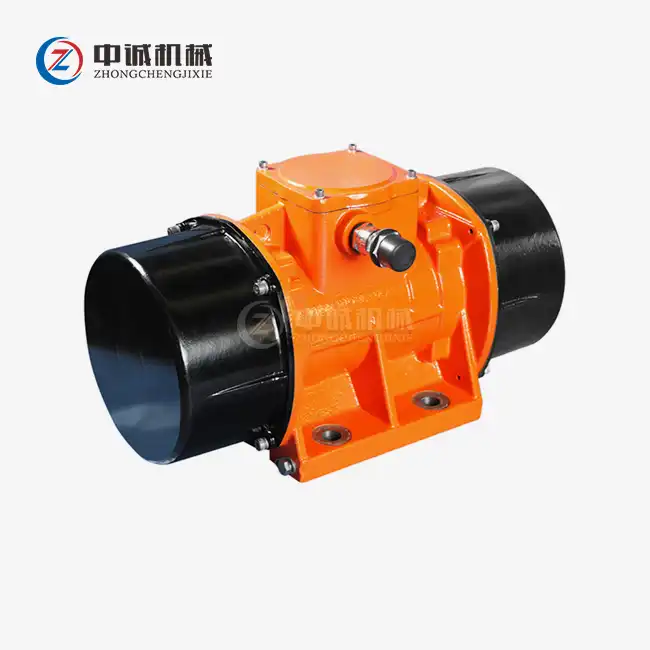
Our Explosion-proof Vibration Motor is the main piece of power that moves our screening equipment. The rating for it is Ex d IIB T4, and the case is IP65. You can change the excitation force by moving the eccentric weights on either end of the shaft. Solid-control equipment that is run at high pressure 24 hours a day can stay stable for a long time because it is built with many safety features and a structure that lets heat escape. Some of the brands we sell are well-known in China, and some are well-known in other countries. This way, buyers can find something that fits their wants and price. We sell right from our plant and are here to help you in any way we can.
Check Documentation, Certifications, and Compliance
Don't place an order until you have the explosion-proof license, drawings, wiring diagrams, and instructions for use and upkeep. ISO 9001, ISO 14001, and ISO 18001 have been used by ZHONGCHENGJIXIE since 2019. Also, HSE, TÜV, and BV have approved our goods. They also follow the rules set by EAC, ISO, IEC, and ATEX. Each model has a different certification scope, so let us know your zone or division, gas group, and voltage. Then, before you sign, we'll make sure the documents are correct. A supplier you can trust will be happy to have you look over their certificate.
Delivery, Customization, and Lifecycle Support
Downtime costs more than the motor itself, so find out about wait times and extra parts as soon as possible. When an item is in stock, we ship it within three days. For special orders, it usually leaves within fifteen days. Logistics partners and easy access to the ports in Tianjin and Shanghai make it easier to move goods around the world. We've been a straight maker for more than 30 years and have a 6,300-square-meter plant in Xingping, Shaanxi. We also have more than 12 patents. We can change the motors' sizes, shapes, and names to fit your rig. We also provide flowcharts, component diagrams, training for the field, and a warranty that lasts for one year.
Conclusion
An oilfield rig's is not a single standard, but a set of checks. Here's how to choose an explosion-proof one. The rating for the dangerous place determines the licensing needs. The end user or the safety body confirms the rating. It could be ATEX, IECEx, or North American Class and Division. This means that the motor can work in continuous duty if it has the right excitation force, speed, supply frequency, insulation, and thermal design. For the container to work at the site, its grade, temperature class, atmospheric limits, and corrosion protection must all be right. Last but not least, the long-term cost of ownership includes things like insurance, paperwork, shipping, and replacement parts. A sound buy can't be based on a sign that says it's explosion-proof or how much power it has. Buyers who do these things are less likely to get equipment that doesn't work, downtime that they can avoid, and protection that doesn't fit.
FAQ
What is the difference between IIB and IIC ratings?
IIC is a higher grade than IIB and has gases that are easier to light, such as hydrogen and acetylene. Still, you can't switch out an IIB motor for an IIC motor. Make sure you know what gas group your spot needs before you place your order.
Can I use a variable frequency drive with this type of motor?
There is a chance that the motor can be used with a VFD if it has temperature monitors like PTC or PT100 elements. Cooling goes down as speeds go down, so keeping an eye on the temperature keeps the winding safe.
How often should I lubricate the bearings?
The time between events changes when people are on duty. High-temperature grease that doesn't wear down should be used on flameproof seals about every 2,000 to 4,000 hours. Make sure you always read and follow the directions that came with your brand.
Does the excitation force fade over time?
It doesn't matter as long as the eccentric weights are set up correctly. Most of the time, what seems like loss is actually worn-out mounting parts or loose bolts, so make sure to check both during regular maintenance.
Get the Right Explosion-proof Vibration Motor for Your Rig
Are you ready to find your rig's best motor? Direct Explosion-proof Vibration Motors are made by the company ZHONGCHENGJIXIE. They have a lot of different Ex d IIB T4 models. Stock things can be sent out in 3 days, and custom orders can take up to 15 days. So that they can look over your datasheet and certificate, email oliver@zcgukong.com with your zone or division name, gas group, voltage, and screen size. Go to zcsolidscontrol.com to learn more.
References
1. API RP 500: Recommended Practice for Classification of Locations for Electrical Installations at Petroleum Facilities Classified as Class I, Division 1 and Division 2, 2012
2. NFPA 70: National Electrical Code, 2023
3. IEC 60079-0: Explosive Atmospheres, Part 0: Equipment, General Requirements, 2017
4. IEC 60079-1: Explosive Atmospheres, Part 1: Equipment Protection by Flameproof Enclosures "d", 2014
5. IEC 60529: Degrees of Protection Provided by Enclosures (IP Code), 2013
6. Drilling Fluids Processing Handbook, ASME Shale Shaker Committee, 2005