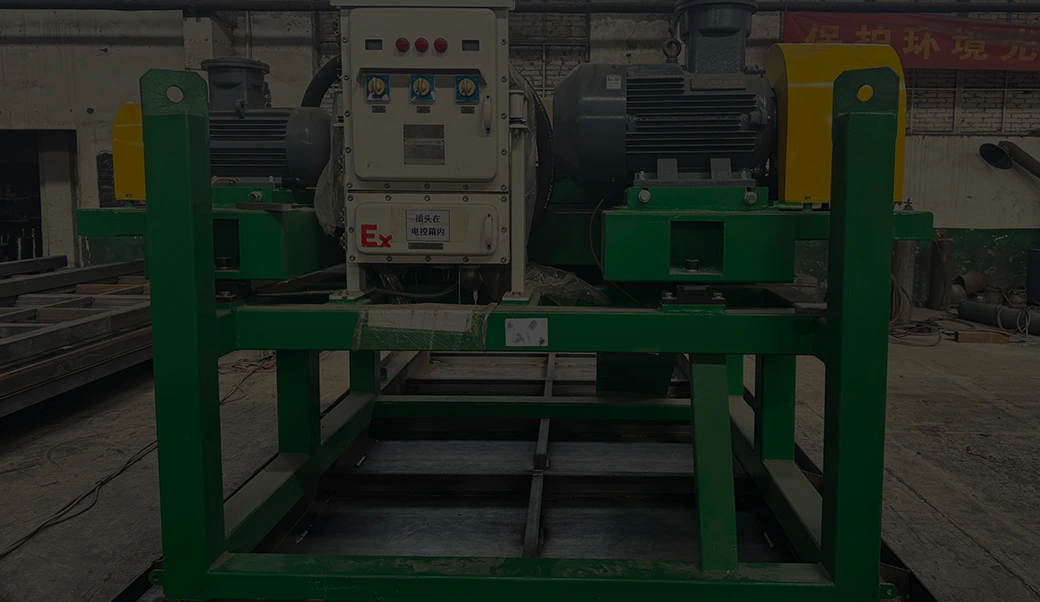
When drilling operations generate thousands of tons of waste per well, how that waste gets moved between sites directly impacts your project budget, environmental record, and regulatory standing. A properly engineered cuttings box is the primary piece of equipment that makes safe, efficient drilling waste transport possible. At ZHONGCHENGJIXIE, we manufacture sealed drilling waste containers built to handle the physical demands of both offshore platforms and high-standard onshore drilling sites, giving procurement teams a direct-manufacturer source they can count on.
Understanding the Challenges of Transporting Drilling Waste Between Well Sites
It is a lot harder to move drill bits and dirty mud from one place to another than it is to load things onto a truck. There are environmental, legal, and practical issues at every step of the process that can slow down projects and cause costs that were not expected.
Environmental Contamination Risk
Hydrocarbons will leak out of oil- and synthetic-based drilling solutions and into the ground and rivers if containment breaks during transport. The Resource Conservation and Recovery Act (RCRA) covers some drilling waste streams according to the U.S. Environmental Protection Agency. This means that if there is a spill while they are being transported, the federal government can take action and fix the problem, which will cost a lot more than the equipment savings.
Regulatory Compliance Pressure
MARPOL Annex V says that solids that have been contaminated with oil can't be dumped at sea. Land-based rules in Texas, North Dakota, and New Mexico make it very hard to transport and store dangerous drilling waste without following strict rules. According to the U.S. Bureau of Safety and Environmental Enforcement (BSEE), procurement managers who choose transport barrels that aren't properly covered can get fined up to $40,000 per day for each violation.
Operational Downtime From Equipment Failure
Waste containers that are prone to corrosion or have weak structures break down in the middle of a cycle, stopping work on the rig until new equipment can be found. It can cost anywhere from $15,000 to $50,000 for a mid-sized U.S. land rig to be down for one day. Picking the right drilling trash bin from the start is a direct way to cut costs.
Evaluating Cuttings Boxes: Key Features and Functional Requirements
Not every trash can that is covered works the same way in the field. Before committing to a supplier, buyers need to look at a number of technical factors. These are the main things that set skilled tools apart from average ones.
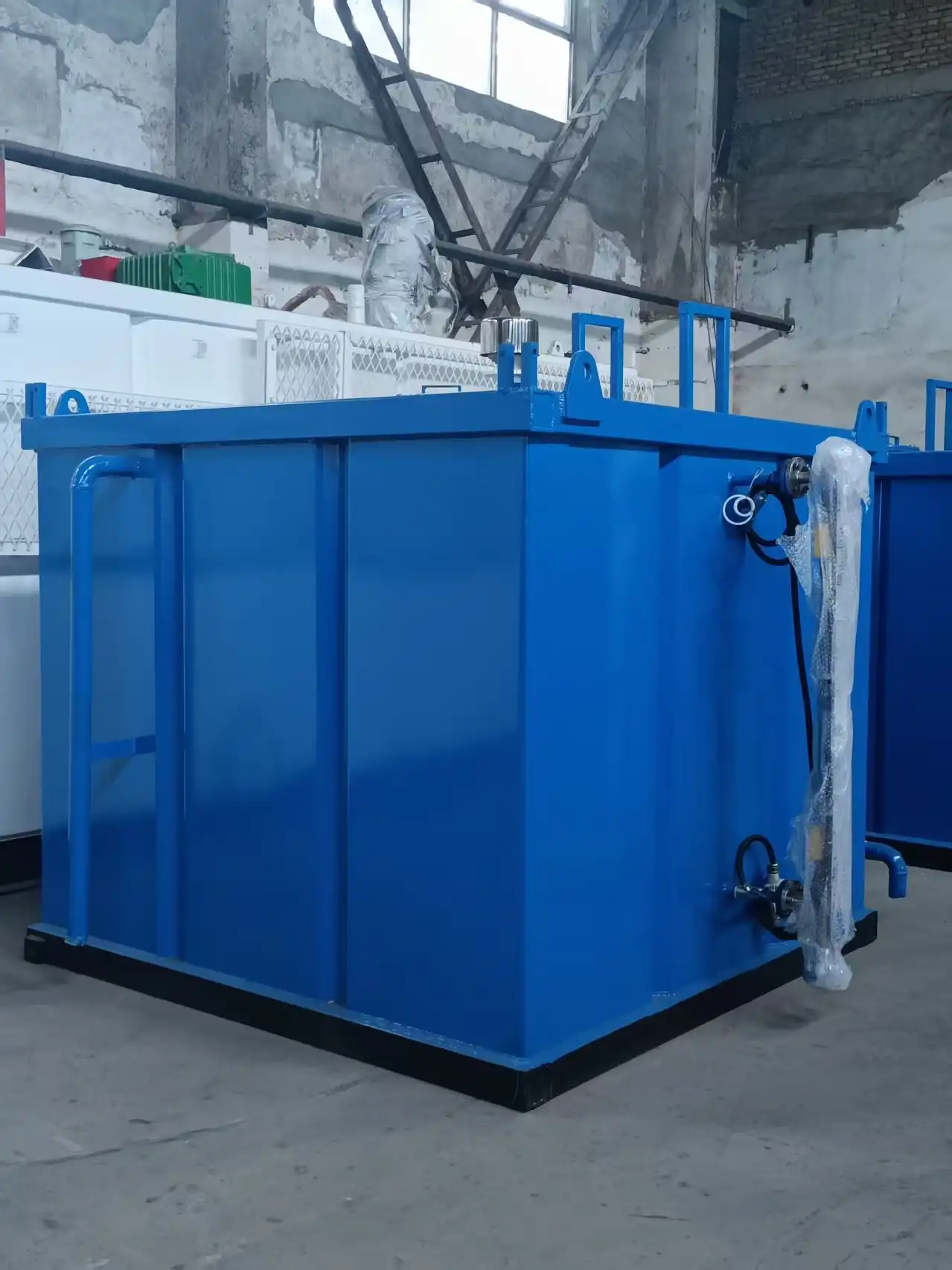
- Material and structural grade: Heavy-duty carbon steel construction (S235JR or S355J2) provides the base load-bearing capacity. Boxes rated to a Maximum Gross Weight (MGW) of 10,000 kg give operations the volume flexibility they need without overbuilding freight costs.
- Sealing system quality: Oil-resistant nitrile or neoprene gaskets on vacuum-tight lids prevent volatile organic compound (VOC) emissions during transport. This detail alone determines whether a unit passes hydrostatic leak testing and satisfies port-of-call inspectors.
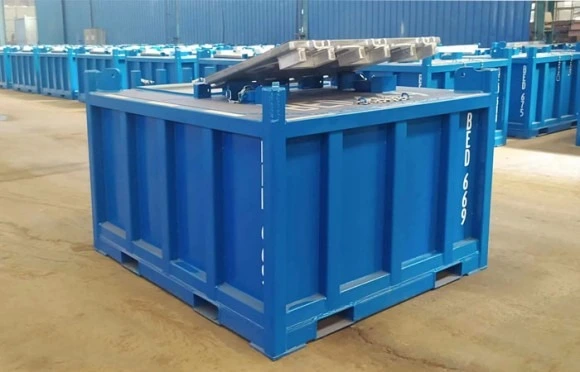
- Handling compatibility: Integrated forklift pockets combined with four-point lifting lugs allow the same unit to be moved by crane on an offshore deck or by forklift at an inland transfer facility. This dual handling capability reduces the number of transfers required and lowers the chance of damage.
- Stackability: A design that allows three-high empty stacking and two-high full stacking maximizes deck and yard storage efficiency, which matters greatly when 40 or more units rotate through a single project.
- Corrosion protection: Anti-corrosive coating systems compliant with ISO 12944 C5-M category extend unit lifespan in saline offshore environments to 8–12 years with proper maintenance.
Quality of the sealing system for a Cuttings Box: Vacuum-tight lids with oil-resistant nitrile or neoprene seals stop the release of volatile organic compounds (VOCs) while they are being transported. This is the only thing that port-of-call inspectors look at to see if a unit passes the hydrostatic leak test.
Handling compatibility: Built-in forklift pockets and four-point lifting lugs make it possible to move the same unit by crane on an offshore deck or by forklift at a domestic transfer station. This ability to handle two things at once cuts down on the number of moves that need to be done and the risk of damage.
Comparing Traditional vs. Modern Cuttings Box Solutions
In the past, open-top skip bins from earlier times were the standard way to move drill cuttings. They were easy to make and didn't cost much, but they caused a lot of problems in the field.
Limitations of Conventional Open Containers
Standard skips don't protect against leaks. It takes more trash to be thrown away because rain water dilutes the trash. Dry cuttings get blown around on the rig floor or deck by the wind. Under the zero-discharge operational standards in place today, neither result is appropriate. Also, open containers rust faster because water and drilling mud are always touching steel areas that haven't been cleaned.
Advantages of Modern Sealed Units
There are many problems with the open-skip design that are fixed by modern drilling waste boxes. The sealed lid method keeps all the fluid inside, so there is no chance of spills during crane lifts or transport by road. Using high-quality steel and high-performance anti-corrosion treatments makes this skip last a lot longer than regular ones. In terms of structure, they are made to withstand multiple crane lifts, which is a loading situation that regular containers are not designed to handle.
Measurable Field Outcomes
When operators on offshore Gulf of Mexico projects switched from open skips to sealed waste containers, they reported a 20% drop in the amount of waste they had to get rid of because the containers were better at keeping fluids in. They also got rid of several regulatory non-conformance events per project cycle. The difference in price between a basic skip and a properly engineered sealed unit is usually made up for in the first two or three projects.
How to Select the Right Cuttings Box Manufacturer for Your Operational Needs?
It's just as important who made the tools as the equipment itself. Quality of production, certification status, and support after the sale are all parts of how valuable a supplier relationship is as a whole.
Production Capability and Quality Certifications
At the very least, look for makers who are certified by ISO 9001 for quality control of Cuttings Box. Environmental management under ISO 14001 and occupational health under ISO 45001 are signs that the factory meets international standards for compliance. TÜV, BV, and HSE approvals from a third party add an extra level of independent proof that is often needed during seller qualification reviews.
Customization Capacity
Standard sizes might not work for all types of rigs. If a maker has their own design team, they can change the size of the containers, the way they are handled, and the structural reinforcements to fit your solid control system plan. It takes 15 days to make special orders at ZHONGCHENGJIXIE, but only 3 days to ship standard items. They can make solutions for rigs from the ZJ30 class up to the ZJ90 class.
After-Sales Support and Spare Parts
Over the course of a container's useful life, it will need structural repairs, gasket replacements, and recertification of lifting Accessories. When a manufacturer gives you spare parts directly and technical information like maintenance manuals and engineering drawings, you don't have to rely on outside service providers as much.
Best Practices for Efficient Use and Maintenance of Cuttings Boxes
Following the right steps will protect both your investment and the safety record of your team. When these steps are taken, the working life of each unit is greatly increased.
Loading and Securing Procedures
Do not go over the rating MGW. Spread the weight out evenly across the container's floor to keep stress from building up at the ends. Before you start to lift anything, make sure that all of the lid's locking mechanisms are fully engaged.
Routine Inspection and Cleaning
Check gaskets for cuts, compression set, or chemical breakdown after every trip. To keep the seal intact, clean any leftover pieces out of the lid opening before putting the lid back in place. Every six months, do a thorough weld check and set a Non-Destructive Testing (NDT) using magnetic particle screening on main welds once a year.
Personnel Training
Crane operators, rig floor hands, and logistics coordinators who deal with trash cans all need site-specific training on where to find lift points, how to handle spills, and how much weight is allowed. Written methods kept on-site and referred to during kit talks help make sure that handling standards are the same from crew rotation to crew rotation.
Conclusion
Choosing the right drilling trash transport Cuttings Box tools can have real effects on your finances and the rules that govern your industry. Standardized bins that are sealed and made to engineering standards work better than regular skips in every way that can be measured, including containment, service life, and following the rules. When buyers compare makers based on certifications, the ability to customize, and customer service after the sale, they make purchases that keep project budgets safe throughout the entire lifetime of the equipment. With direct plant supply, proven field performance, and the technical depth to match tools to your exact drilling conditions, ZHONGCHENGJIXIE is the company to go to.
FAQ
What materials are used in manufacturing a sealed drilling waste container?
Most structure shells are made of heavy-duty carbon steel types S235JR or S355J2. Nitrile or rubber gaskets that don't get oily are used in lid covers. For offshore corrosion resistance, external coatings must meet the requirements of ISO 12944 C5-M.
How do I verify that a manufacturer meets environmental regulations?
You can ask for copies of the ISO 14001 certification, the HSE compliance paperwork, and any third-party approvals from BV or TÜV. For the units you want to buy, ask for hydraulic leak test certificates.
What customization options are available?
You can change the volume, the structural supports, the lid shapes, and the features that make it easier to carry. Manufacturers like ZHONGCHENGJIXIE can make designs that are specific to the type of rig and the transportation needs of the site.
How long does a sealed waste container typically last?
If you take care of the C5-M coating and have NDT checks once a year, units in offshore settings should last between 8 and 12 years.
How often should gaskets be replaced?
After each trip, check the seals. If you use the unit normally, you should replace them every 12 to 18 months. If it deals with high-aromatic oil-based muds, you should do it sooner.
Partner With ZHONGCHENGJIXIE for Your Next Cuttings Box Order
ZHONGCHENGJIXIE makes sealed cases for drilling waste that meet the standards of ISO 9001/14001/45001, TÜV, BV, and HSE. Our factory sells both pre-built and fully customized units with a one-year guarantee, direct expert help, and full documentation sets. To get a quote for Cuttings Box supplier prices, specifications, and delivery times that work with your project schedule, email our engineering team at oliver@zcgukong.com or go to zcsolidscontrol.com.
References
1. American Petroleum Institute. API RP 13C: Recommended Practice on Drilling Fluids Processing Systems Evaluation. API Publishing Services, 2010.
2. Bureau of Safety and Environmental Enforcement (BSEE). Offshore Waste Management and Environmental Compliance Guidelines. U.S. Department of the Interior, 2021.
3. Det Norske Veritas (DNV). DNV 2.7-1: Offshore Containers. DNV GL Standards, 2019.
4. International Maritime Organization (IMO). MARPOL Annex V: Regulations for the Prevention of Pollution by Garbage from Ships. IMO Publishing, 2013.
5. International Organization for Standardization. ISO 12944: Paints and Varnishes — Corrosion Protection of Steel Structures by Protective Paint Systems. ISO, 2018.
6. Society of Petroleum Engineers (SPE). SPE-194180-MS: Advances in Drill Cuttings Management and Zero-Discharge Operations. SPE International Conference on Health, Safety, Environment, and Sustainability, 2019.