A Mud Logging Cabin for a remote oilfield drilling site needs a welded steel structure that survives lifting and road transport, climate control that keeps crews and electronics stable, dependable power and data links, and safety equipment that matches the site's hazardous-area classification. It also needs a layout that fits the crew and instruments, plus documented quality checks before shipment. I wrote this guide for drilling contractors, service companies, and procurement teams that must define these requirements before they request quotes. Below, I cover structure, climate, power, safety, configuration, and buying steps in plain terms.
What a Mud Logging Cabin Is and How It Works
The Cabin's Role on the Wellsite
A Mud Logging Cabin is where workers watch drilling data, write it down, and send it to the rest of the team at the well site. It keeps track of things like the rate of penetration, the hook load, the pump pressure, the mud flow, the pit volume, and the gas levels. People who study rocks, work on drilling, or record mud can use acquisition hardware and software to quickly process these signals and find changes. People and things inside the cabin are also safe from noise, dust, heat, and cold. A portable pad can still track during overnight shifts and bad weather, even if the nearest repair shop is a long way away. Every day, seven days a week, crews work on wells that are already in use.
Cabin, Mud Logging Unit, and Turnkey System: What Is the Difference?
Quotes don't match up because buyers use three terms as if they all mean the same thing. Inside the enclosed shell of the cabin are the lights, furniture, and other comforts. With a mud logging machine, you can get gas detection, acquisition gear, and more. Installing, teaching, and starting up the system are also part of a full system. Before I compare two deals, I check to see which of these three price ranges each company used. It might look like buying just the shell is less expensive than buying the whole unit, but the customer will have to pay extra for everything the shell doesn't cover. If you put the scope on the first page of the RFQ, that won't happen.
ZHONGCHENGJIXIE Monitoring Cabin at a Glance
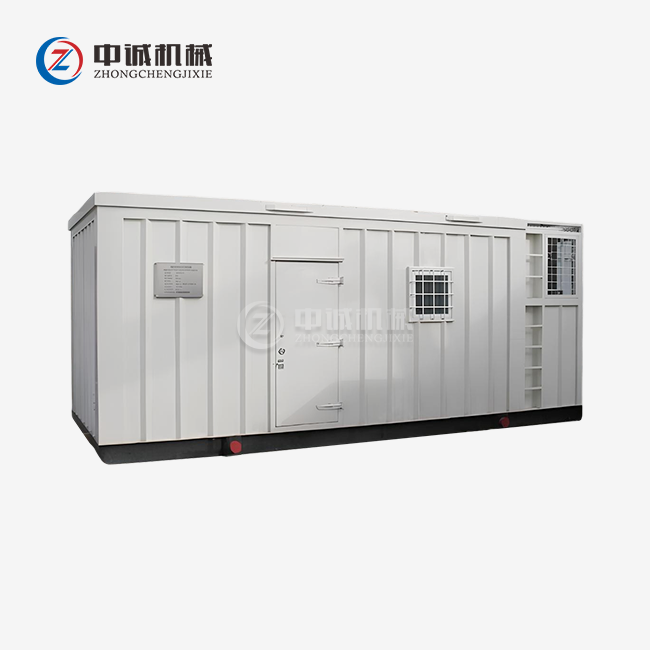
We use our observation booth to help with work like drilling and solids control that needs to be done on-site. The building is on a skid and made of fully welded steel. This lets a crane move it when the rig moves. The main goals of the design are to keep the temperature stable, stop corrosion and earthquakes, and block sound. The cabin comes with standard power and air conditioning, and the operators can see the mud tanks and other tools through the observation windows. Crews use it 24 hours a day to keep an eye on oil fields on land, and it's also used to make new fields. The small footprint also works in well sites that don't have a lot of room. Our team expertly puts things together and is here to help you after the sale. The way we package it is standard for export.
Structural, Layout, and Climate Requirements
Welded Steel Structure, Lifting, and Transport
In faraway places, it's bad for a Mud Logging Cabin before it even gets to the rig. The frame had to deal with noise from the road, crane lifts, wind, snow, and dust. The steel body is fully joined and placed on a skid. This makes one stiff body that a crane can lift and a truck can move from one well to another. It's important to me that everything I make meets all the rules for size, weight, lifting points, and haul routes for trailers and containers before I start making it. It is also important to protect against corrosion, since water and chemicals wear down steel over time. Our design meets the needs for anti-corrosion and seismic safety, and it works well on rough terrain and when you move it around a lot. Describe the haul route to the engineers early on. This way, they can make sure the skid is the right size.
Interior Layout and Sealing
Make sure the people who work in the Mud Logging Cabin can get to what they need. I make sure there is room between the storage, instrument racks, and operator desks so that there is a clear way to the door. People who work on the mud and solids tanks can see what's going on inside from their seats because there are windows. Crews will be able to see what's going on better if the house is placed near the mud tank or solids control equipment. For the safety of electronics, doors, windows, and line holes that are blocked off from dust and rain keep them safe. For walls and floors, the paint should last a long time and be simple to clean. We make sure that the size, layout, and number of windows fit the room on your wellsite and the number of duty staff.
Insulation, Constant Temperature, and Ventilation
Computers and tools may keep putting off heat while they work long shifts. You need to be able to control the temperature, not just want to. The amount of heating and cooling that should be used shouldn't be based on a store setting. They should instead look at the site's high and low temperatures, humidity, amount of sun, dust, crew size, and equipment load. Panels that are insulated also keep heat and noise from leaving. Crews are safe from noise, dust, and extreme heat or cold in our cabin, which has standard airflow and sound and heat insulation. When I turn it on for the first time, I check the noise level, the airflow, the temperature stability, and how easy it is to get to extra filters.
Power, Data, and Safety Requirements
Power Supply and Backup
A Mud Logging Cabin on a remote pad generally gets its power from a rig or site generator. This is why the voltage, frequency, and load capacity need to be written down right away in the design. It is safe for people and things to have surge protection, grounding, and an emergency separation switch. A UPS keeps the networks for communications, alarms, and data collection running for a while longer after the power goes out or is safely turned off. The power supply and airflow in our cabin are standard, which helps the communication and monitoring gear inside work well. Tell your supplier what kind of generator you have. If the supply load and the cabin load don't match up on commissioning day, things could go wrong. Check to see if there is extra room for new instruments.
Data Links and Cable Management
Data is only helpful if the right people see it. In faraway places, people often use satellite, cell phone, Ethernet, radio, or industrial wireless links. You should write down the type of link in the RFQ. I also look at the types of sensor signals, the number of channels, the sampling rate, the amount of storage space, and how well the hardware works with other programs. I leave room for more channels. Monitors and data recorders can be found in the cabin, so the team can write down numbers as they happen. Mark each run of power and signal lines and keep them separate on the inside. Choose glands that will keep the seal in place. It might not seem important, but organizing the wires in a neat way can save time when a monitor stops working at night.
Hazardous-Area Safety and Compliance
It's more important to follow safety rules than to pick out the right tools. There is a US law called NFPA 70 that categorizes dangerous areas by class and division. An oil refinery's API RP 500 also tells it how to classify its areas. Gas atmospheres are split into zones 0 through 2 in IEC 60079-10-1. Some of the rules that pressurized enclosures must follow are NFPA 496 and IEC 60079-13. NIOSH says that 100 parts per million of hydrogen sulfide is directly harmful to health or life. In other words, there should be clear set points for gas detection, alarms, and ventilation. In the RFQ, you should first list any explosion protection needs and make sure you know what kind of well site it is. BV, HSE, and TÜV have all given their approval to our tracking booth. It also meets ISO 9001/14001/45001.
Choosing the Right Mud Logging Cabin Configuration
Portable, Skid-Mounted, or Semi-Permanent
This choice is mostly based on how often you move. For projects with more than one well, skid-mounted Mud Logging Cabins work best because they can be moved by a crane without any damage. When the crews get to the next pad, they can link the utilities again. You can put up more long shows with a semi-permanent machine because it takes up less floor space. Costs and wait times are cut down with standard cabins, but tools and sizes that aren't standard can be fitted into custom units. It is easier to move, put together, and take apart our house on-site because it is built on skids. An easy-to-hook-up frame is important for a cabin that moves around a lot. Make sure the design fits the length of the project, the number of wells, the services that are available, and the number of operators before you ask for a price.
Onshore and Offshore Needs
A mud logging cabin on land and a mud logging cabin at sea have different needs. Onshore units need to be strong enough to be moved by truck, able to keep temperatures in check, and simple to get to. For offshore units to work better, they need to be smaller, have lifting interfaces that can handle heavy loads, and have safety features that are specific to the platform. Our cabin is made to be used in onshore oilfields for jobs like field building and tracking 24 hours a day. Because it is small, it can also be used as a task room at solids control posts and HDD trenchless sites. Early on, let us know if your project will use an offshore platform. That way, we can make sure it meets your needs before you decide on a design. At this point, being honest about the scale keeps your crew safe, your plan on track, and your budget in check.
Customization Based on Real Site Data
Customization works best when needs are written down and not just guessed. We change the cabin windows' size and shape, and arrange them in different ways to fit your crew and the site. Between the ZJ30 class and the ZJ90 class are rigs. The best place for the cabin depends on how the mud system is set up. We make everything in-house and send drawings, flowcharts, and instructions with every order because we own more than a dozen patents and are a direct producer. Technical teams look at every detail when they buy something for a project, which is why paperwork is important. Three days are needed to send out things that are in stock, and fifteen days are needed to serve custom orders. Make sure you send the exact plan for your cabin along with your needs.
Procurement Requirements and Common Mistakes
Writing a Clear RFQ
Scope is the first part of a good RFQ. Tell us if the supplier takes care of the shell, the decoration of the inside, the monitoring equipment, the heating and cooling, the wiring, the gas detection, the installation, the training, and the start-up. Include the site's location, temperature range, description of the dangerous area, type of rig, crew size, delivery address, car weight limits, power source, and data link needs. Then, compare providers based on their technical know-how, track records with certifications, export paperwork, spare parts, and service after the sale. What does it cost to own everything, including shipping, setting up, and keeping it in good shape? A lot of people who are looking for a Mud Logging Cabin for sale skip this step, which makes them do more work than they planned.
Common Mistakes and a Quick Checklist
Before I say "OK" to an order, I check it against these three groups.
• Structure and climate: Check the outside dimensions, the weight, the lifting points, the skid interface, the insulation, the risk of corrosion, and the door and window seals. Find the right size for heating and cooling based on the weather, the number of people working, and the size of the crew. When it gets to the customer, if the system is too small, it will need expensive fixes. Ask the supplier to show you how they figured out the price.
• Power, data, and safety: For safety, power, and data, check the load, voltage, and frequency of the generator. Next, look at the backup power, grounding, surge protection, cable route, and type of data link. You should make sure that the area is marked as dangerous and has the right fire safety, emergency lighting, gas detection set points, and certificates for your site and the local government. Each thing should be added to the list of things to buy.
• Commercial terms: In business terms, you should ask for approved plans, test results, operation instructions, lists of extra parts, training, and more. Look at the warranty, the delivery time, the help with installation, and the supplier's track record of sending goods abroad. A low price doesn't mean much if the seller can't give you parts or answer your questions after the cabin is delivered. Find out who fixes a part that isn't working in the middle of the campaign.
Why a Customized Turnkey Solution Reduces Project Risk
Problems are less likely to happen when the shell, temperature control, electrical work, tools, and records are all taken care of by the same company. That's important in harsh places like the desert or the cold, and it's also important for projects that need special tracking gear. In order to avoid making things more complicated, customization should be based on known working needs. That's why we start with the data from your site. Make sure that the drawings, test reports, manuals, and training records have been approved before they are sent out. The building where ZHONGCHENGJIXIE is located is 6,300 square meters and is certified to ISO 9001, ISO 14001, and ISO 45001 standards. With strategic transportation partners and easy access to the ports of Tianjin and Shanghai, we can send goods all over the world quickly and easily. Plus, our team does all the lifting, setting up, and starting up on-site.
Conclusion
A Mud Logging Cabin for a remote oilfield only functions if its design fits the site. The house should be made of steel that is welded together and set on skids so that it is easy to move and lift. To keep the temperature inside stable, it must also be insulated and have airflow. It must also be sealed so that noise and dust don't get into the crew or instruments. Power, backup power, and data lines must all work with the generator and the way people can talk to each other on site. Rules like NFPA 70, API RP 500, and IEC 60079-10-1 tell us what kinds of areas are dangerous. This is the first step in planning for safety. How it's set up should depend on how often the move takes place and whether it's within the country or to another country. There is a clear RFQ, a three-part checklist, and one responsible seller. These things are less likely to happen over the life of the equipment: rework, delays, and secret costs.
FAQ
What is the difference between a mud logging cabin and a mud logging unit?
The safe, climate-controlled space with the tools is known as a Mud Logging Cabin. For gas detection, sensors, acquisition hardware, software, and more are all added by the unit. Ask each supplier what their quote covers.
How large should the cabin be?
Size is based on the number of people on the crew, the number of racks for instruments, the space you need, and the weight limits on the route you're taking. We change the windows' sizes, shapes, and the way they are laid out inside to fit the space at your wellsite.
Does every site need explosion-protected equipment?
That rule comes from the fact that your spot is in a hazardous area. First, make sure of the rating with your operator or safety team. Then, make it clear in the RFQ what tools are needed.
What should a quotation request include?
Explain where the site is, what kind of power it has, what kind of data link it has, how many people are working there, whether it's a dangerous area, where the delivery is going, what certificates are needed, and when the goal is due. To get a more accurate quote, you need to know more.
What support follows delivery?
We offer a one-year guarantee, professional installation, and help after the sale. Our team also gives you instructions on how to use and take care of the product. We can also teach your staff about how businesses work.
Request a Mud Logging Cabin Quote from ZHONGCHENGJIXIE
Are you planning to dig a well in the middle of nowhere? The person who makes ZHONGCHENGJIXIE is a straight Mud Logging Cabin. Their guarantee lasts for a year, and they've been in business for more than 30 years. They can ship stocked items in three days. It usually takes fifteen days for custom orders to get to you. Tell our engineers about your site at oliver@zcgukong.com, and they will look over what you need. You can find out more at zcsolidscontrol.com.
References
1. NFPA 70: National Electrical Code, 2023
2. NFPA 496: Standard for Purged and Pressurized Enclosures for Electrical Equipment, 2021
3. IEC 60079-13: Explosive Atmospheres – Equipment Protection by Pressurized Room "p" and Artificially Ventilated Room "v", 2017
4. IEC 60079-10-1: Explosive Atmospheres – Classification of Areas – Explosive Gas Atmospheres, 2020
5. API Recommended Practice 500: Classification of Locations for Electrical Installations at Petroleum Facilities Classified as Class I, Division 1 and Division 2, 2012
6. NIOSH Pocket Guide to Chemical Hazards, 2007