Accessories/vibration-isolation-rubber-spring">Vibration Isolation Rubber Spring: For screening lines and mining equipment, a Vibration Isolation Rubber Spring supports the machine's weight and absorbs vibration and shock before they reach the base, platform, or nearby pipes. The correct spring depends on the operating frequency, the amount of deflection required, the rubber compound, and the conditions on site. How does a rubber spring work? How do they stack up against steel coil springs and air springs? How do you choose them and examine them? What should be included in an RFQ? Plant engineers, purchasing managers, and OEMs and distributors can use it to avoid costly mistakes.
Understanding the Vibration Isolation Rubber Spring in Mining Service
What Is a Vibration Isolation Rubber Spring?
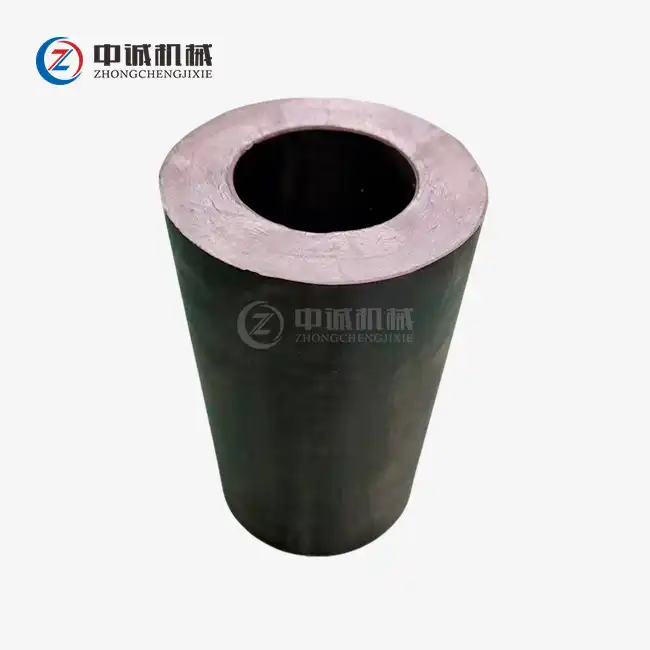
A Vibration Isolation Rubber Spring is a molded elastomer support that supports heavy equipment and keeps noise, vibration, and shock from entering. Often, rubber is vulcanized and bonded to metal plates, sleeves, or housings using natural rubber or EPDM. A rubber spring is not flat like a rubber pad, it has a shape which is definite and it does not collapse when it is loaded over and over again . Unlike a steel coil spring, it stops motion on its own. The internal hysteresis of the rubber converts vibration energy into a small amount of heat. Stiffness is a function of geometry, compound, load direction, and operating frequency, so I always think of selection as an application-specific exercise.
Why Mining Equipment Requires Specialized Vibration Isolation?
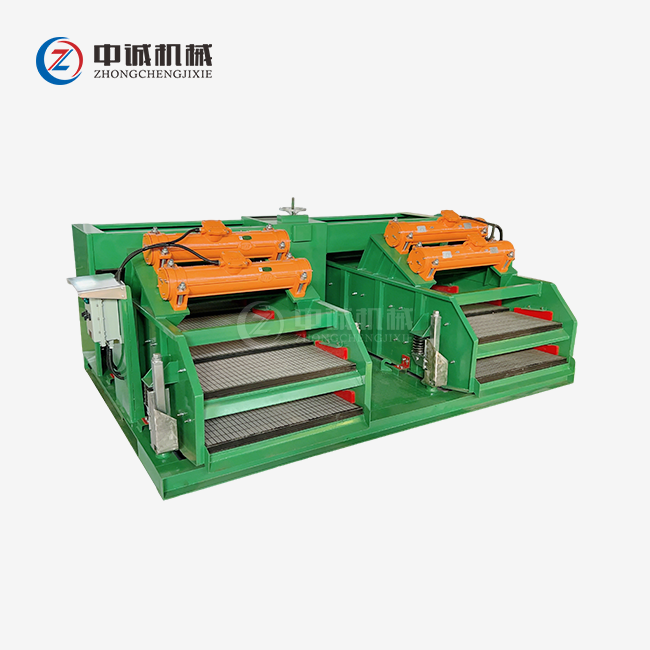
Mining equipment is subjected to heavy loads, continuous cycling, impact, dust, moisture, temperature changes, and uneven material flow. Vibrating screens and feeders can experience excessive side-to-side movement, loose fasteners, cracked welds, and early bearing failure if the support system is not properly specified. The springs support the static weight of the machine as well as the forces produced by the machine being out of balance or hitting something and starting up or stopping the machine. If a spring is not up to the job, it can crack, set under pressure, or come loose. Often they need to be replaced, and this causes a loss of production. It also works on drilling sites where shale shakers and other solids control units work long hours, and every unplanned stop is a cost.
Key Properties and Technical Parameters
Most good rubber springs have a Shore A hardness between 40 and 75, a tensile strength of up to 25 MPa, and an elongation at break of 400 to 600 percent. Depending on the compound, the ratio of their static stiffness to stiffness when they are vibrated is usually between 1.2 and 2.0. Good compounds don't change much in temperature between -40°C and +80°C, but standard units can only handle temperatures up to about 70–80°C for a long time. ASTM D2240 is used for hardness testing, and ISO 4649 is used for abrasion testing. Because these numbers are different for each supplier and compound, you should check them against a datasheet before you place your order.
Design Principles and Performance for Screening Lines
Design Principles: Load, Stiffness, and Frequency
The design of a spring takes into account its ability to hold weight, bend, be stiff, damp, be stable, and last for a long time. As a first step, I figure out how much weight is on each mounting point in both normal and peak conditions. This is because weight doesn't usually spread out evenly. The formula for stiffness is k = F/ε, where F is force and ε is deflection. However, when deflections get bigger, rubber stops being linear. It is thought that fn = (1/2π)√(k/m) is the natural frequency. The Shock and Vibration Handbook by Harris says that isolation works when the machine's excitation frequency is much higher than its natural frequency. It is not possible to judge compound, shape factor, geometry, and damping separately. They must all be looked at together.
Performance for Screening Lines and Heavy Equipment
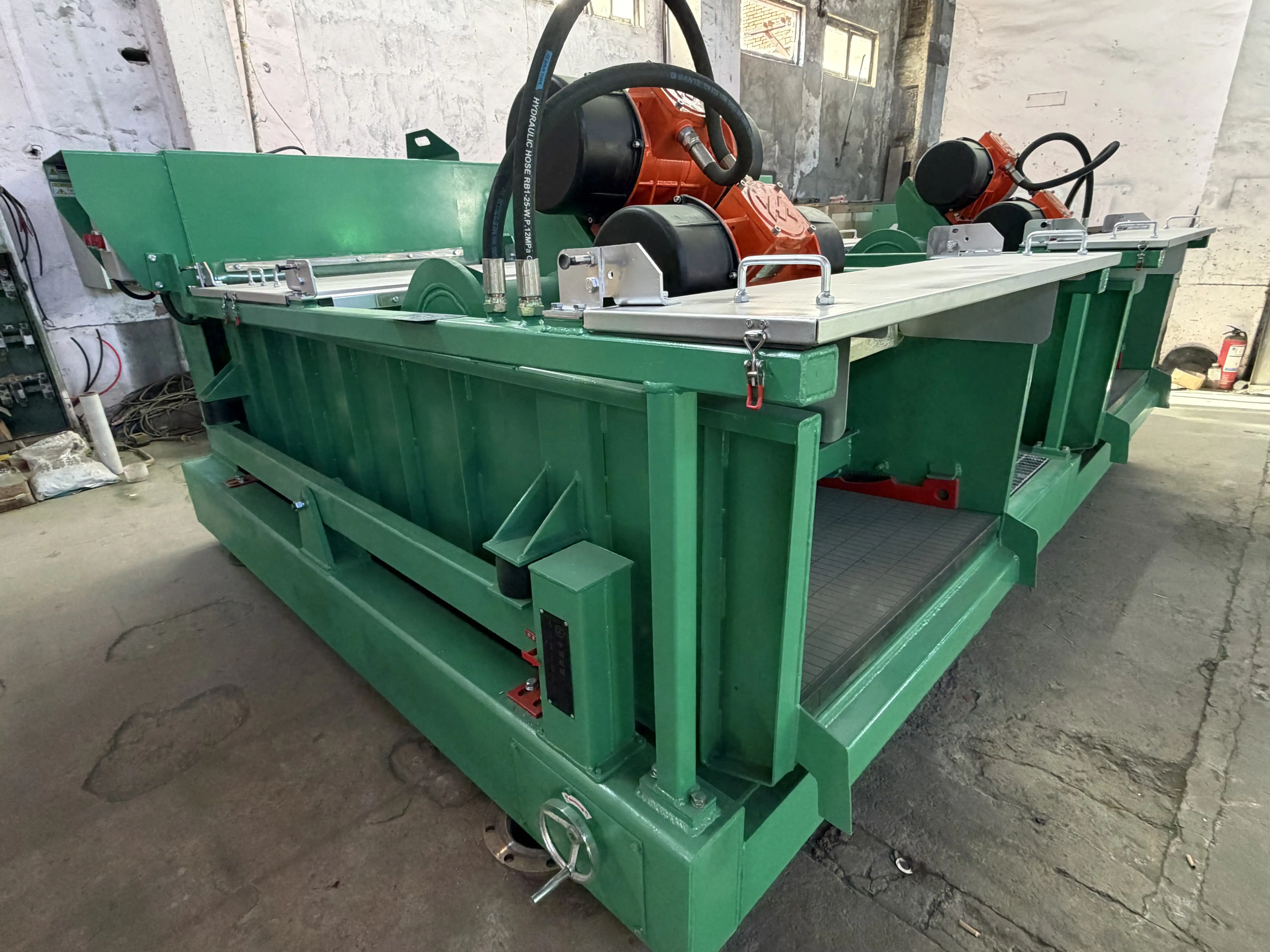
A Vibration Isolation Rubber Spring must meet the specific demands of screening lines and other heavy machinery. Designs with greater deflection isolate low-frequency vibrations more effectively, while those with less deflection provide greater stability where movement or installation space is limited. Controlling the screen's vertical and horizontal movement is also essential to prevent rocking or rolling during sudden feed spikes or uneven loading. Service life depends on operating frequency, deflection, rubber compound, bond quality, temperature, contamination, and installation conditions. The feed method also matters, as a steady belt and a batch dump place different loads on the springs. When properly matched to the machine, the spring reduces structure-borne noise and protects the frames and foundations.
Damping Compared With Steel Springs
Rubber is different when it comes to damping. Most of the time, a steel spring has a damping ratio of about 0.005, while a rubber spring's is between 0.05 and 0.20. That gap lets rubber lose energy more quickly when a machine starts up and stops, and when it goes through its natural frequency. These dampers help keep welds and bearings safe during long shifts. Steel springs still have a very low stiffness and can hold a lot of weight, but they usually need their own dampers and protection against corrosion. Rubber is both supportive and damping in one, and it doesn't need to be oiled. Because of this, it is a good choice for many screening jobs where ease of use and low maintenance are important.
Comparing Alternatives and Choosing the Right Spring
Rubber Springs Versus Steel Coil Springs, Rubber Mounts, and Air Springs
I compare options not just on price, but on how they can be used. Spring steel coil springs are strong and do not require much stiffness but do require additional damping and corrosion protection. Many small rubber mounts take up less space but cannot accommodate the movement and deflection of a vibrating screen. Air springs can be leveled and stiffened, but need air, controls, and special care. In between, there are rubber springs. These are simple, quiet, and maintenance-free. Every choice has its place, so I match the choice to the load, frequency, shock, space, environment, maintenance, and total cost of ownership.
How to Choose a Vibration Isolation Rubber Spring for Mining Equipment
Full data is the first step in making the right choice. These are the first two types of information I need.
-
Machine and load data: Machine model, operating mass, center of gravity, number of mounting points, speed, excitation frequency, vibration amplitude, throughput, and startup conditions. The expected load per spring must include uneven feed, amplification from vibration, and possible overloads, so the spring does not run near its rated limit every shift.
-
Environment and interface data: Temperature, oil, chemicals, moisture, ozone, weather, and abrasion exposure, along with dimensions, bolt patterns, clearances, and mounting interfaces. A spring that fits the load but not the bolt pattern or the oil exposure still fails early, so I verify both before approving any drawing or sample.
Most selection errors can't happen because of these two checks. A supplier should also give you drawings, test data, load-deflection curves, and engineering advice.
Material Selection: Natural Rubber, Neoprene, EPDM, and Nitrile
The selection of compounds should be based on exposure. In clean, moderate environments, natural rubber can bounce back well after being worn down. The neoprene makes the material more weather-resistant and resistant to some oils. EPDM is good with ozone, weather, and water. EPDM will swell up with oil. Nitrile is resistant to oil and fuel, so it is a good choice for equipment close to hydraulic leaks or lubricants. Oil contamination is the most common cause of early failure. Strong UV exposure or overloading over the rated static capacity . For temperatures higher than 70 to 80°C, generally silicone or fluororubber compounds are used. I always get the compound name when I get a quote, then the spec is clear.
Quality Control, Installation, and Replacement
Quality Control Tests for Rubber Springs
Tests written down should be used to ensure quality. The ASTM D395 compression set test is used to determine if the rubber can return to its original shape after being loaded for a long period of time. Under vibration conditions, the stiffness and the damping coefficient, tan ε, are measured using a servo-hydraulic rig. For bonded types, ISO 813 tests for adhesion, to ensure that the adhesive will not come apart under shear stress. Aging tests in an oven simulate the long service life, and precise caliper checks ensure the shape factor matches the calculated spring rate. I ask for these reports from suppliers with every batch, because test records are the best way to show consistency.
Installation and Inspection
Proper installation helps extend the service life of a Vibration Isolation Rubber Spring. The mounting surface should be flat, clean, straight, and free of sharp edges. Tighten fasteners according to the equipment or supplier specifications, using calibrated tools to ensure each bolt reaches the required torque. During commissioning, check bolt security, noise, compression, alignment, and lateral movement. Then inspect regularly for cracks, bulges, tears, debonding, corrosion, permanent deformation, and uneven compression. Since rubber springs do not require greasing, inspection focuses on visual checks and measurements. Record the readings consistently, as trends over several weeks can reveal wear earlier than a single inspection.
When to Replace a Spring and What to Avoid?
If the shape or stiffness of the springs changes in a way that makes the machine less stable, you should replace them. Three mistakes that people often make are putting different types of springs on the same machine, replacing only one worn spring, and putting in a part that looks like another part without checking the load, dimensions, and material. Put in new springs that match so the machine sits level. Also, try to figure out why the old spring broke. An imbalance, misalignment, overload, or oil contamination will destroy a new spring just as quickly. The new part should fix the real issue, not just copy the broken one. Field measurements, vibration data, and the size of the old spring should be used as a starting point for retrofit work.
Applications, Procurement, and Working With ZHONGCHENGJIXIE
Applications in Mining, Industry, and Drilling
Rubber springs are under feeders, conveyors, crushers, pumps, compressors, and generators. They move the screens and scalping screens. Vibrating screens need to be matched for stiffness, deflection, fatigue resistance, and lateral stability. Feeders, however, need extra shock resistance to sudden loads of material. The same springs are used in forging hammers, stamping presses and mining equipment. This isolates the vibrations from the floor to the neighboring CNC machines. Used for corrosion protection and for reducing low-frequency noise in marine engine mounts and rooftop chillers. "I apply the same selection logic to shale shakers and mud circulation equipment that are also dealing with vibrations at drilling sites."
Procurement Guide: Building a Complete RFQ
A full RFQ cuts down on weeks of back and forth. This is the information I put in two blocks.
-
Technical block: Equipment type, machine model, operating mass, number of mounting points, load per mounting point, excitation frequency, vibration direction, required deflection, and dimensions. Add drawings, photos, failed-part samples, or vibration data when available, since they help the supplier recommend a spring rather than guess.
-
Commercial block: Environment, quantity, destination, delivery date, and documentation requirements. Compare suppliers on technical compliance, service life, downtime risk, testing, packaging, and after-sales support rather than unit price alone. Ask about sample approval, change control, and repeat-order capacity before production starts, so both sides share clear terms.
A structured path from requirement to sample validation to production approval lowers the risk of buying something and helps with planning for long-term replacements.
Working With ZHONGCHENGJIXIE
Zhongcheng Machinery Manufacturing Co., Ltd. (ZHONGCHENGJIXIE) is a direct manufacturer, established in 2015, with more than 30 years of experience in this field. Our factory is in Xingping City, Shaanxi, covering an area of 6300 square meters, and we have more than a dozen patents of our own. In 2019, we got our ISO9001, ISO14001, and ISO18001 systems certified. Our products are also certified by BV, TÜV, and HSE. We sell shale shakers with vibrating screens and full Solids Control Systems for ZJ20-ZJ90 rigs. Most in-stock items ship within three days. Custom orders take an average of fifteen days. We provide training, drawings, flowcharts, manuals and a one-year warranty. Tianjin and Shanghai ports are open for worldwide delivery.
Conclusion
A Vibration Isolation Rubber Spring absorbs shock to foundations and frames, absorbs vibration, and supports machine weight, protecting screening lines and mining equipment. To achieve good results, a natural frequency far below the excitation frequency is needed, as well as an accurate load per mounting point and a compound that can withstand exposure to temperature, oil, and ozone. Rubber springs have the advantage of inherent damping and low maintenance. However, in some cases steel and air springs perform better. Test records for compression set, adhesion, and stiffness under vibration should be kept, and they should be installed carefully and checked regularly for long service life. It's easier to buy with less risk when you have a full RFQ and a supplier that provides drawings, data, and customization. If you select on engineering instead of price, you can reduce downtime and replacement costs.
FAQ
How do I find the natural frequency of a rubber spring?
This is clear from static deflection under load. A lower natural frequency is caused by more deflection, which makes isolation better.
Can rubber replace steel springs in hot zones?
Most rubber springs only work up to about 70–80°C. After that, say whether the compound is silicone or fluororubber.
Does a rubber spring need lubrication?
No, it doesn't need to be maintained as mechanical linkages do, but it does need to be checked on a regular basis.
What causes early failure?
Some of the most common reasons are oil getting into a compound that isn't meant to be there, strong UV exposure, and overloading beyond the rated static capacity.
How does damping compare with steel?
Steel springs have a damping ratio close to 0.005, while rubber springs have one between 0.05 and 0.20. This means that rubber gets rid of energy faster.
Request a Vibration Isolation Rubber Spring Quote from ZHONGCHENGJIXIE
Want a company that makes Vibration Isolation Rubber Springs to look over your project? ZHONGCHENGJIXIE at oliver@zcgukong.com needs to know about your load, frequency, and size. As a direct manufacturer, we can make any changes you want. In-stock items are shipped in three days, and custom orders take fifteen days. We also offer full technical documentation and a one-year warranty. Go to zcsolidscontrol.com for more information.
References
1. Harris' Shock and Vibration Handbook, 2010
2. Engineering with Rubber: How to Design Rubber Components, 2012
3. Mechanical Vibrations, 2017
4. Noise and Vibration Control Engineering: Principles and Applications, 2006
5. ASTM D395 Standard Test Methods for Rubber Property—Compression Set, 2018
6. ASTM D2240 Standard Test Method for Rubber Property—Durometer Hardness, 2021