Six things I look for in a Accessories/shaker-screen-plugging-block">Shaker Screen Plugging Block. First, I make sure I know what kind of block it is: an elastomer part or a clamp-style repair unit with a sintered mesh block. Second, I make sure that the screen, shaker model, and fit are all correct. Third, I make sure that the item fits with the mud system. Fourth, I look over the quality control of the supplier. Fifth, I look at the total cost instead of the price per unit. Sixth, I test small amounts of the product before I place a big order. I also say what the real issue is first, like whether it's a broken panel, a blocked opening, or blinding. Then I tell the supplier what kind of shaker it is, how big the screen is, what kind of mud it is, and the temperature.
Start With the Problem You Need to Solve
Plugging, Blinding, and Screen Damage Are Not the Same
A lot of the time, buyers get three problems on the shaker deck that look the same mixed up. When particles that are close to the screen openings get stuck and block the open screening area, this is called plugging. If fine or sticky solids cover the screen, it will blind you. If there is a tear or hole in the screen, solids can get through and into the active mud system. There is more than one way to solve a problem.
Supplier catalogs make things even more complicated. Shaker Screen Plugging Block can refer to either a clamp-on repair unit with a sintered mesh block or an elastomer part that is used inside a screen assembly. Before I compare prices, I always make sure the quote covers both.
Common Causes of Screen Trouble
Screen problems are rarely caused by one thing. “The risk is higher with too many near-size particles, too many solids, contaminated mud or additives that don’t work well together.” The setup of the equipment is also important. Causes of ineffective screening are the use of wrong mesh, uneven feed, too much flow, weak vibration, worn panels and bad tensioning.
When the temperature changes, the viscosity of the fluid changes, and mud that sticks to the mesh can block the sintered surface of a repair block. A second common problem is local wear caused by high-frequency vibration. I look at the whole solids control line, from the flowline to the centrifuge, instead of just blaming the screen because these causes are linked. Standards in the industry, like ISO 13501, look at the processing of drilling fluid as a whole.
Operating Habits That Extend Screen and Block Life
And when you do things the right way, screens and blocks last longer. Cover the entire deck with the feed. Change the angle of the deck and the vibrations according to weight. Don't stuff too much in one panel. Check the viscosity, solids content and oil or water content from time to time to see if anything has changed.
Be careful when setting the clamping force. Fixation problems are often caused by clamps that are too loose, and parts can be strained if they are too tight. Every time the screen changes, check each block for cracks, wear, a loose fit, or permanent deformation. Use cleaning methods that the manufacturer says are safe. These checks don't cost as much as a sudden shutdown.
Set Clear Sourcing Criteria
Compatibility and Dimensions
Fit is most important. Check the brand and model of the shale shaker, the type of screen panel, the position of the deck, and the way it will be mounted. If a part fits one shaker but not another, it might not fit Derrick, Brandt, or another shaker.
If you have a clamp-style Shaker Screen Plugging Block, make sure that the clamping range matches the thickness of your screen. If the thicknesses don't match, the block won't stay in place well. The sintered mesh should be the same size as the main screen's mesh and sit flat on the surface. You should ask for drawings with length, width, height, and contact points shown. Before placing a large order, ask for a sample.
Material Selection
The material of a Shaker Screen Plugging Block determines how long it lasts in the field. Stainless steel sintered blocks are suitable for general drilling operations, while 316L versions offer better resistance to acids and other fluids that can damage standard steel. Choose a block that is strong, corrosion-resistant, and highly wear-resistant.
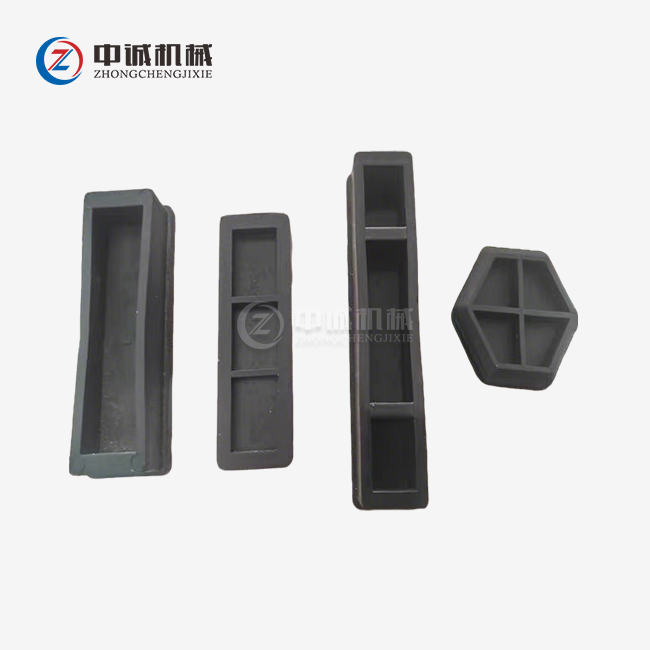
If a supplier has elastomer parts like polyurethane or rubber, find out how well they hold up against chemicals, heat, and wear and tear. The two act in different ways. Choose the right one for the type of mud (oil- or water-based) and the temperature, corrosion, and pressure around it. Get a writing grade on the material so that you can compare quotes fairly.
Comparing Blocks With Alternatives
There are four different things a repair block a new screen panel a screen cleaner and a device that stops blind spots and each one fixes a different problem. A repair block fills a hole in the mesh so the whole thing can keep working. The original area for filtering is also reserved so that the shaker does not have to stop for a long time.
It makes more sense to get a new panel when the mesh is worn down all over. Cleaning tools can help with blindness, but they can't fix tears. Reusable blocks cut down on waste that is made over and over, and disposable parts can make field changes easier. I don't look at the lowest price when I compare options; I look at how they fail, how they are replaced, and how much they cost to own overall.
Match the Block to Field Conditions
Oil-Based, Synthetic-Based, and Water-Based Mud
The chemistry of drilling fluid can make or break a part. Elastomers can get swollen and soft in oil-based and synthetic-based mud because of base oils and emulsifiers. Ask a supplier if they have run ASTM D471 for your type of liquid to see how the rubber material changes after being submerged in it.
Salts, alkaline chemicals, weighting materials, and rough drilled solids are all in water-based mud. These fluids can rust metal parts, which is why there are 316L options that are resistant to acid. If you tell the supplier what kind of mud you have, what additives you use, and how much solids you usually have, they can make a recommendation that fits your needs instead of a general one.
Heat, Vibration, and Solids Loading
Linear-motion shakers today can reach about 7 G, which is a lot of force that tests every joint, clamp, and edge. It's the loose fit and local wear that show up first when there is constant vibration. In deep wells, hot fluid can soften normal rubber, so make sure you write down the temperature rating.
When you use a lot of solids, the edges of blocks and mesh wear down faster because of abrasion. Ask if a type that can withstand high pressure is available for your job, and ask what the clamping range is for the thickness of your screen. Solids that are too big for the mud system can't get in if the block keeps its shape and grip in these conditions. It also keeps centrifuges and desilters further down the line safe.
Offshore and Remote Site Needs
Every missed part costs more on offshore rigs and remote pads. Floating and jack-up rigs have a lot of vibration and are slow to resupply. Before you order, check lead time, storage life, transport protection and packaging.
Because it can get to the ports of Tianjin and Shanghai, ZHONGCHENGJIXIE can ship in-stock items in three days and custom orders in fifteen. For projects in the U.S., I recommend keeping extras of important part numbers at the rig yard, especially in places where emergency freight costs a lot. It is easier to plan spare parts by part number than to try to get a shipment quickly.
Evaluate Suppliers and Verify Quality
What to Look for in a Manufacturer?
It's just as important which supplier you choose as the part itself. If a direct manufacturer has its own engineers, it can answer questions about fit, change sizes, and track a batch. Find out about the company's experience with exporting, quality control, raw materials, and final inspection.
OEM parts are often a reliable choice for ensuring a proper fit. Once quality has been verified, compatible aftermarket parts may help reduce costs or shorten delivery times. ZHONGCHENGJIXIE has more than 30 years of industry experience, over 12 patents, and ISO 9001, ISO 14001, and ISO 18001 certifications. We also hold BV, TÜV, and HSE certifications and design our own products, including Shaker Screen Plugging Block solutions. You can ask any supplier to provide comparable supporting documentation.
Quality Checks Before a Large Order
Check samples or a batch that has already been shipped against the approved drawing. Measurements, surface finish, cracks, bubbles, flash, deformation, and incomplete forming should all be checked. Check that the mesh on a sintered mesh block fits perfectly with the screen surface and is the same size as it was when it was first made.
Different ASTM methods are used to test elastomer parts. D2240 is used to measure hardness, D412 measures tensile strength and elongation, and D471 measures fluid swell. After that, test it in the field with real mud, solids, temperature, and vibration. Check the stability of the installation, the throughput, the movement of solids, and the wear. If you fail on the deck, it costs a lot more to make a full order than to try something short.
Documents and Records
Paperwork protects you from having to re-order. When required, ask for dimension drawings, material lists, inspection reports, batch numbers, production dates, packing lists and certificates. Good record keeping allows your quality team to do supplier audits and ensure consistent results across projects.
ZHONGCHENGJIXIE provides drawings and diagrams of parts, operation and maintenance manuals, training for the industry and a warranty of one year. We also provide technical support 24 hours a day, 7 days a week and on-site installation help. And, if you are doing private label or OEM work, get written confirmation of tool costs, minimum order quantities, sample approval, packaging and the process for repeat orders before you sign.
Build a Procurement Process and Decide
Information a Supplier Needs for an Accurate Quote
A quote is only as good as the information it's based on. Every time someone asks, I send these three sets of information.
-
Equipment details: shaker brand and model, screen type, screen thickness, and installation position. These facts decide the clamping range, mesh size, and outer dimensions, so the supplier can confirm fit before production and prevent a costly mismatch when the part reaches your site. Without them, any quote remains a guess about what your shaker actually needs.
-
Fluid and operating details: mud type, operating temperature, solids conditions, and abrasion level. This information guides material choice, such as stainless steel or 316L acid-resistant construction, and helps the supplier judge corrosion, heat, and wear risks before recommending a specification for your drilling program. It also shows whether a standard part can do the job or a custom one is needed.
-
Commercial details: required quantity, packaging needs, delivery location, and target delivery date. Distributors and repeat users can add annual demand forecasts, so the supplier can plan production, quote agreement terms, and keep stock ready for the critical part numbers you reorder most often. Clear volume and timing data also help the supplier match shipping to your schedule.
An accurate quote can be given by a supplier with these details, which cuts down on emails back and forth.
Compare Total Cost, Not Only Unit Price
The unit price only shows a small part of the total cost. Include the cost of tools, shipping, duties, taxes, packaging, and the rate of replacement that you expect. When you add up the costs of downtime, labor, broken screens, and emergency shipping, they can be higher than the price of the part.
It is sometimes worth buying a block that costs a little more but will survive more than one screen change. Contractors and distributors that have steady demand can establish batch-quality standards, lead times, and minimum order quantities to ensure a consistent flow of parts. Keep extras of important part numbers on hand for jobsites far away.
Choose Between Standard and Custom Supply
Standard products are Good if the shaker model and screen size are the same, the need is immediate and the products are known to work together. Custom manufacturing is best for non-standard equipment, repeat fit problems, tough mud chemistry, high temperatures, unusual wear and tear, private labeling or OEM integration.
Please review the shaker model, screen size, material, testing requirements, quality documents, price, lead time, replacement support, and shipping terms before approving the order. Each item is rated on a scorecard, with weights, so a low price doesn’t hide operational risk. ZHONGCHENGJIXIE is available in stock and custom sizes so you can start with whatever fits and modify as needed for your rig.
Conclusion
So first you need to know what the real problem is to find a Shaker Screen Plugging Block. Different fixes are needed for plugging, blinding and screen damage, and different parts are sold under the same name. Then buyers should check that the screen thickness and fit are compatible with the shaker model. They have to select a material which is compatible with the type of mud, temperature, vibration levels and corrosion. Then they should compare the block to other alternatives, such as a new panel. Checking the supplier’s capability, testing samples in the field, and keeping records reduces the chance of a bad fit or early failure. “Quotes are more accurate when you have clear application data and the total cost including downtime is more important than the unit price. By balancing these factors, screens can keep on functioning and solids too large for the mud system can be kept out.
FAQ
Is a plugging block the same as a screen cleaner?
No, a repair-type block covers up small screen damage so the whole mesh can keep filtering. Sticky solids on the surface can be removed with a cleaner or an anti-blinding device. Make sure you know how to fail before you buy.
Will one block fit every shaker?
Not all the time. Different brands, like Derrick and Brandt, use different types of screens, so first check the model, screen thickness, and clamping range. Fit can be checked with drawings and samples before a large order is placed.
What should I send for a quote?
Send the brand and model of the shaker, the thickness of the screen, where it will be installed, the type of mud, the operating temperature, the amount you need, and where you want it delivered. Giving the supplier all the information they need helps them give you the right material and size on the first reply.
How should I judge supplier quality?
You should ask for certificates, drawings, inspection reports, and batch numbers. Make sure you can drill with a sample before you place a big order.
Request a Shaker Screen Plugging Block Quote From ZHONGCHENGJIXIE
Want to find a Shaker Screen Plugging Block supplier that will work with your engineers directly? ZHONGCHENGJIXIE is a direct manufacturer that has been in business for more than 30 years. Items that are in stock ship in three days, and custom orders get there in about fifteen. There is a one-year warranty on every order. Send an email to oliver@zcgukong.com with your shaker model, screen thickness, and mud type. For more information, go to zcsolidscontrol.com.
References
1. ISO 13501, Petroleum and Natural Gas Industries: Drilling Fluids, Processing Systems Evaluation, 2011
2. Drilling Fluids Processing Handbook, ASME Shale Shaker Committee, 2005
3. Composition and Properties of Drilling and Completion Fluids, Caenn, Darley, and Gray, 2011
4. ASTM D2240, Standard Test Method for Rubber Property: Durometer Hardness, 2015
5. ASTM D471, Standard Test Method for Rubber Property: Effect of Liquids, 2016
6. ASTM D412, Standard Test Methods for Vulcanized Rubber and Thermoplastic Elastomers: Tension, 2016