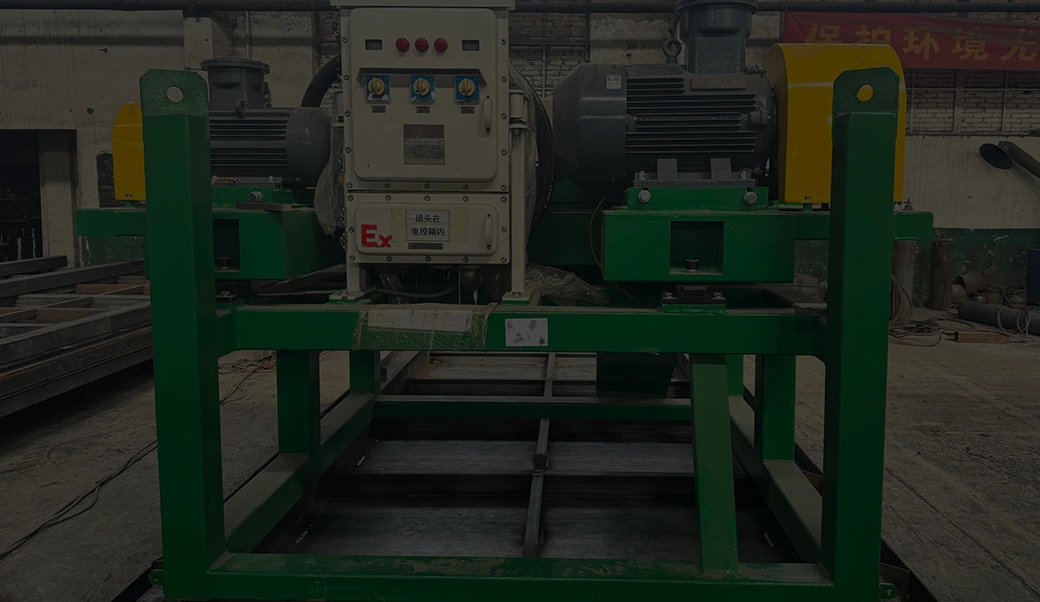
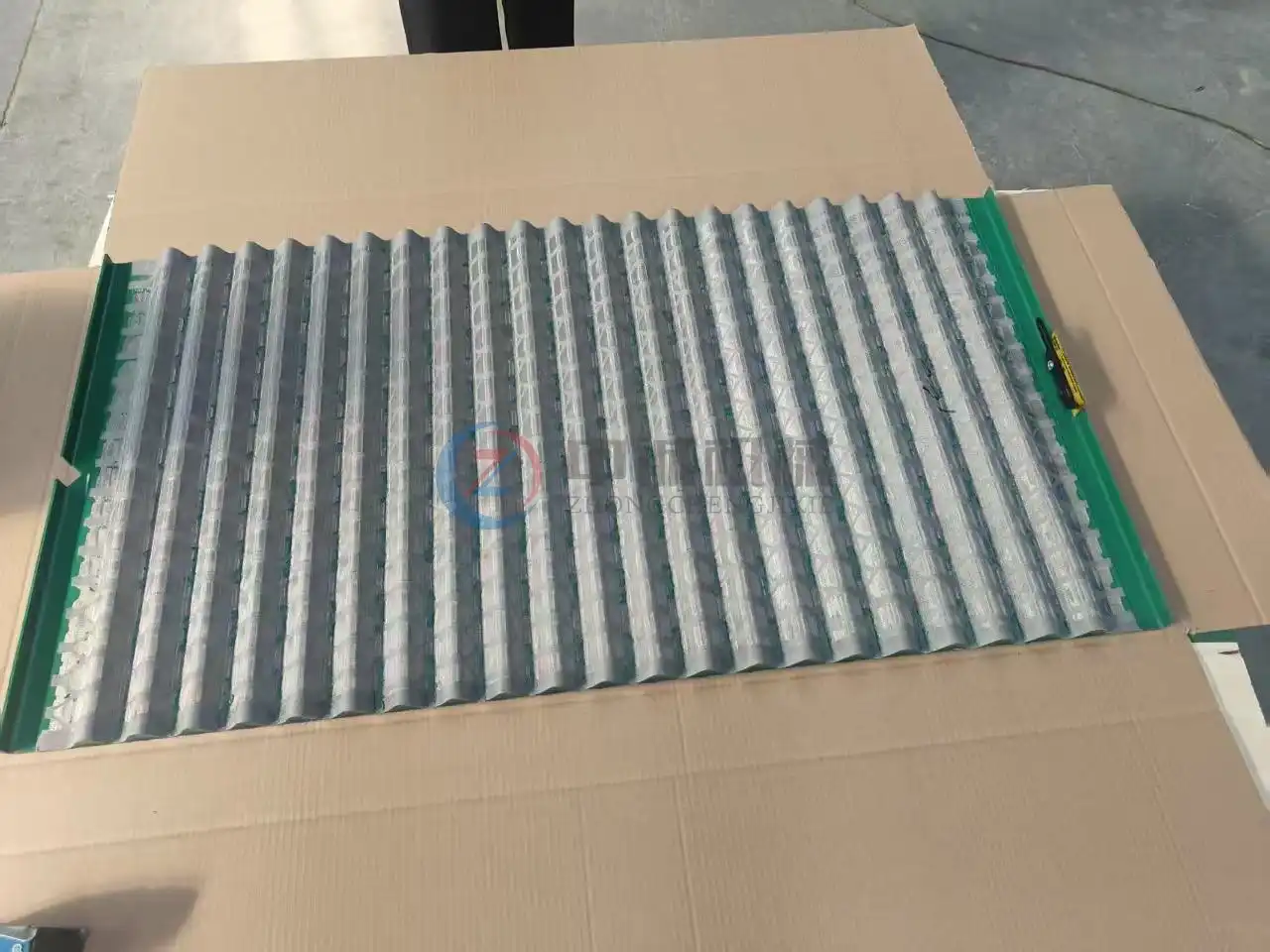
Because crews only need to replace the worn screening panel on a Accessories/hook-strip-flat-shaker-screen">Hook Strip Flat Shaker Screen rather than the entire shaker basket, replacement time is reduced. The hooked edges lock into the shaker's tensioning system to keep the screen tight while it's working, and the new panel can be put up quickly by a crew because the sizes are all the same. Our multi-layer stainless steel mesh is attached to a metal backplate with holes in it. This allows for high throughput and resistance to vibration. We show you how to choose the mesh and size, set it up and keep it in good shape, and what to look for before you buy in this guide.
What a Hook Strip Flat Shaker Screen Is and How It Works?
How the Screen Separates Solids From Mud?
The shale shaker is the first part of a drilling rig's solids control system. The mud from the well comes back up and flows onto the deck that moves. Cuttings are moved across the mesh by the shaker, and drilling fluid flows through the holes and back into the active system. Solids get around the mesh and into the circulating system when a screen tears or blinds. That makes more solids to move and wears out pumps and other equipment faster. A good screen keeps the mud's weight and rheology safe and prevents too much fluid loss. A hook strip panel is not a whole shaker basket; it is just a replacement screening surface. Buyers should be sure of which part they need before they ask for a quote.
Construction of the Flat Hookstrip Panel
Our Hook Strip Flat Shaker Screen incorporates molding into the flat hookstrip construction. Usually, two or three layers of stainless steel wire mesh are bonded to a metal backplate with holes in it for precise separation of the solid phase. The mesh is usually made of SS304 or SS316L stainless steel. This is a support for the structure and helps the panel last longer by spreading the high-frequency vibrations over the panel. The edges are made with strong metal hooks that attach to the tensioning system of the shaker to keep the screen tight. The mesh count is from API 20 to API 325 so that crews can match the panel to the separation target. The layers are glued together to form a panel that crews can handle as a single unit. It is also lighter than stronger frame-type screens.
Core Advantages in the Field
These are the main benefits that our clients want in a replacement panel.
-
Vibration resistance: The perforated metal backplate absorbs and dissipates the effect of high-frequency vibration, and the bonded mesh layers remain adhered to the plate. The screen holds its shape under load, ensuring stable operation through long drilling runs and contributing to the panel’s ability to last through demanding shaker duty in the field.
-
High throughput, no leakage: Multiple layers of mesh balance fluid capacity and separation accuracy, while hooked edges pull the panel tight against the deck. Properly installed by the crews, a close perimeter fit prevents fluid bypass, keeping the cuttings on the screen and allowing clean mud to flow through the mesh rather than around it.
-
Easy Installation: Standardized dimensions and light weight make handling easier than heavier frame types. With urgent changes, the new panel can be fitted, the old one removed, and the tension released in fewer steps, resulting in less downtime. The lower weight also means it's easier to carry and store.
Most problems in the field are caused by these issues: torn screens, fluid bypass, and long changeout times.
Specifications, Dimensions, and Mesh Selection
Specifications to Confirm Before You Order
A Hook Strip Flat Shaker Screen depends on accurate dimensions for proper installation and performance. Mesh quality alone is not enough. If the length, width, hook strip position, or tensioning geometry does not match the shaker deck, the panel may leak or come loose. Buyers should provide the shaker brand and model, a drawing or sample measurements, the API mesh designation, wire material, and required quantity. We also check hook strip dimensions to ensure compatibility with shaker brands such as Brandt, Derrick, and Swaco. Hook strips are generally positioned at 45 to 60 degrees to distribute tension evenly across the deck. Before approving a purchase order, make sure your supplier understands all relevant API specifications and dimensional requirements.
How to Choose Mesh and Material?
The first is form, cutting size, type of drilling fluid, flow rate, and load of solids. A finer mesh will filter out smaller particles but will let through less fluid and will blind more quickly. But a coarser mesh has more fluid flowing through and a larger cut point. The choice must take into account both separation and throughput. The screens are rated in API RP 13C based on the conductance and D100 cut point. Mesh count isn’t the only factor, but weave type, wire diameter, and opening size all contribute to the overall picture. SS304 is commonly used on land as far as material is concerned, and SS316L can withstand stress corrosion from chloride in seawater service. Our engineers will review your shaker model and mud program and recommend a mesh count.
Hook Strip Screens vs. Other Shaker Screen Designs
Flat frame screens are mounted in a different way than hook edge designs. Frame-type screens have a rigid frame and tend to be heavier. They are tensioned so the system keeps the hook strip panel in place and is easier to move and handle. Metal hook strips are stiff enough for heavy-duty tensioning, whereas composite strips may be lighter and less prone to rust. Because each company has different names, a technical drawing is a better way to compare than a product name. As a general rule, replacing just the screen panel is cheaper than replacing the whole basket, assuming the basket, support bars, and tensioning hardware are in good condition. If you do change designs, make sure your shaker can handle hook strip panels.
Installing, Maintaining, and Replacing Screens Quickly
Fast Replacement Procedure
Safety first. Follow lockout/tagout procedures, let hot parts cool down, wear the proper PPE, and stop and separate the shaker. Loosen the tension to get the damaged panel out. Then, inspect the deck surfaces, support bars, rails, wedges, clamps and support bars for any damage or solids packed together. Screens don’t last as long on worn-out support surfaces. Remove any dried mud before installing the new panel. Ensure that the hook strips are fully engaged and evenly tensioned so that there are no folds or unsupported areas. Run a test at low speed to verify that the alignment, edge sealing, vibration stability, and fluid bypass are all OK, and then return to normal speed. If the crew always does things like this, they have the same results and have to make fewer stops.
Maintenance and Troubleshooting
Problems are caught by routine checks before solids get through the screen. Check for ripped or broken wires, tears, hook strips that come off easily, corrosion, layers that come apart, perimeter leakage, and uneven wear. Too much tension, sharp support surfaces, impact loading, or the wrong dimensions are often to blame for early tearing. Most of the time, blinding means that there is too much clay, too little vibration, or bad mud conditioning. Clean it the right way, and don't use close-range, uncontrolled pressure washing, because that can damage the mesh. Cuts can get back into the mud system through a torn screen, so it's important to replace them as soon as possible. Keep track of screen life by rig and well so that you can plan your stock based on how much you actually use it.
Why Hook Strip Panels Cut Downtime?
The panels have to be compatible so that crews can switch out the screening surface. Basket and tensioning hardware can be reused. Pre-approval and standardization of dimensions and mesh specs allow suppliers to verify fit and quote faster. Regional/on-site stock can be used for acute failures. Selecting the proper mesh allows for a steady removal of solids over time and recovery of the drilling fluid, which decreases the amount of mud used. Durable materials will last longer and will not need to be replaced as frequently in harsh or corrosive environments. By planning supplies and having repeatable installation steps, companies that do service and people who operate more than one rig will have more predictable maintenance across locations. We ship our in-stock items within three days and custom orders within fifteen days.
Quality, Compliance, and Supplier Evaluation
Quality Control Checks That Matter
A Hook Strip Flat Shaker Screen should be evaluated through tests that reflect real operating conditions and potential failure modes. We conduct API RP 13C cut point testing (D100) to verify particle separation, conductance testing to measure fluid flow, mesh tension testing to check whether the hook strips distribute tension evenly, bonding strength analysis to detect layer separation, and dimensional inspections of the hook strips. Each test addresses a specific risk. An incorrect cut point can allow solids to pass through, weak bonding can cause layers to separate, and uneven tension can lead to sagging and premature wear. Before placing a large order, ask the supplier for inspection records and datasheets, and request a sample to verify that it meets your requirements.
Certifications and Standards
Our Hook Strip Flat Shaker Screen complies with API RP 13C and ISO 9001. API RP 13C is the same, but it's the American Petroleum Institute. ISO 13501 is the same, but it's about evaluating drilling fluid processing systems. ISO 9001 is about quality management. In 2019, ZHONGCHENGJIXIE was awarded ISO 9001, ISO 14001, and ISO 18001, which are certificates concerning management of quality, environment, and health and safety at work. Our products also meet international standards such as ISO, IEC, ATEX and EAC and are certified by BV, TÜV and HSE. In the case of project-based procurement, buyers often look at these certificates to make sure the supplier is qualified. We suggest you ask for the documents that match your project needs.
Evaluating a Supplier and Total Cost
Don't just look at the unit price. Total cost is also affected by the lifespan of the screen, replacement frequency, freight, downtime, mud losses, and inventory. A cheap screen that does not fit properly or breaks easily can cost more in the long run than one that lasts a long time. ZHONGCHENGJIXIE is a direct manufacturer founded in 2015. The factory covers an area of 6300 square meters, with an annual output of 200 sets of mud circulation systems and oil equipment. Our team has been working in this field for more than 30 years and has more than 12 patents to its name. We will train you, provide drawings, operation and maintenance manuals and warranty for one year. Its exports are aided by the easy access to the ports of Tianjin and Shanghai.
Procurement Guide for Buying Replacement Screens
What to Include in Your Request?
In order for a quote to be accurate, all information must be provided. You can send the brand and model of the shaker, drawing or measurements of the screen, mesh and API designation, wire material and diameter, hook strip design, quantity, type of drilling fluid, destination, delivery schedule, and paperwork to be done. With this information, our engineers are able to confirm the hook strip geometry and mesh before production. This means you won’t need to order the wrong panel. No drawing? Just measure the worn panel and send that along with the shaker model. “Having clean information to start with makes for a quicker quoting cycle and less back-and-forth during the technical evaluation.”
Customization, Delivery, and Supply Planning
Factory direct supply. We can make any size or mesh count you need. As a rule, in-stock items ship within three days, and custom orders ship within fifteen days. Multi rig operators can see how much they will need by looking at screen life, rig count, drilling activity, and emergency demand. Then they can plan deliveries at different times or keep stock in different areas. The distributors and EPC contractors can discuss the projects in the region that require bulk supplies. We also provide drawings, flowcharts, operation and maintenance manuals, and training for the industry. This enables project managers to track installations that occur at various locations.
Where These Screens Work?
Our Hook Strip Flat Shaker Screen can be used for conventional drilling screening both on land and offshore. Shale shaker screens like this are used by drilling contractors and oilfield service companies to keep drilling fluid clean on land rigs. For saltwater use, buyers can ask for SS316L mesh. Crews drilling for natural gas, geothermal energy, and minerals all have to deal with the same kinds of solids. Horizontal directional drilling contractors also have to recycle bentonite slurry across shaker screens. Make sure the mesh count and material match your fluid and formation, and send us a model of your shaker to make sure it fits. We also make Solids Control Systems for rigs in the ZJ class, ranging from the ZJ20 to the ZJ90.
Conclusion
With a Hook Strip Flat Shaker Screen, crews can only replace the worn panel. This cuts down on changeouts and keeps solids control safe. How well it works depends on how well the material, hook strip geometry, mesh count, and sizes are matched to the shaker and the mud program. Tough edges stop bypass, and bonded stainless steel layers on a perforated backplate stop vibration. Screens last longer when they are installed in the same way every time, inspected regularly, and stocked based on how much they are used. Buyers can see proof of quality in the form of cut point, conductance, tension, and bonding checks, as well as compliance with API RP 13C and ISO 9001. A better way to figure out the total cost is to compare screen life, downtime, and mud loss to the unit price.
FAQ
How long does a hook strip shaker screen last?
Service life is different for each rig because it depends on the abrasiveness of the formation, the chemistry of the mud, the flow rate, the vibration, the tension, and the maintenance. Keep track of how long each well and rig's screen lasts, and then use that information to decide how much to stock and when to replace it. Changing out worn panels early also keeps the mud system safe.
What information do you need to confirm the right size?
Send the brand and model of the shaker, the panel's dimensions or a drawing of them, the layout of the hook strips, the API mesh designation, and how the supports are set up. Not just mesh count, but also weave type, wire diameter, and opening size affect API mesh, so giving our engineers all the information they need to make sure of fit and separation before production starts is important.
Do you offer custom screens?
Yes. With factory-direct supply, we can make any size or mesh count you need. In-stock items usually get sent out within three days, and custom orders get sent out within fifteen days. We also give your maintenance team drawings, operation manuals, and a warranty that lasts for one year. Distributors and EPC contractors can also ask for supplies in bulk.
Request a Hook Strip Flat Shaker Screen Replacement Quote
Send your shaker model, drawing, mesh, and quantity to oliver@zcgukong.com at ZHONGCHENGJIXIE. Our engineers will check the fit and get back to you with a quote. As a direct manufacturer of Hook Strip Flat Shaker Screens, we can make them in any size or mesh count, and they will be compliant with API RP 13C and ISO 9001. We can ship stocked items in 3 days, and custom orders usually take 15 days to arrive. For more information on our solids control equipment, go to zcsolidscontrol.com.
References
1. ISO 13501: Petroleum and Natural Gas Industries — Drilling Fluids — Processing Systems Evaluation, 2011
2. Drilling Fluids Processing Handbook, ASME Shale Shaker Committee, 2005
3. Composition and Properties of Drilling and Completion Fluids, Gulf Professional Publishing, 2011
4. Applied Drilling Engineering, Society of Petroleum Engineers, 1986
5. Fundamentals of Drilling Engineering, Society of Petroleum Engineers, 2011
6. ISO 9001: Quality Management Systems — Requirements, 2015